Estimated Reading Time: 12–14 minutes
Key Takeaways
Most flat roofs last 15–30 years, but climate, drainage, and maintenance habits can shorten or extend that range.
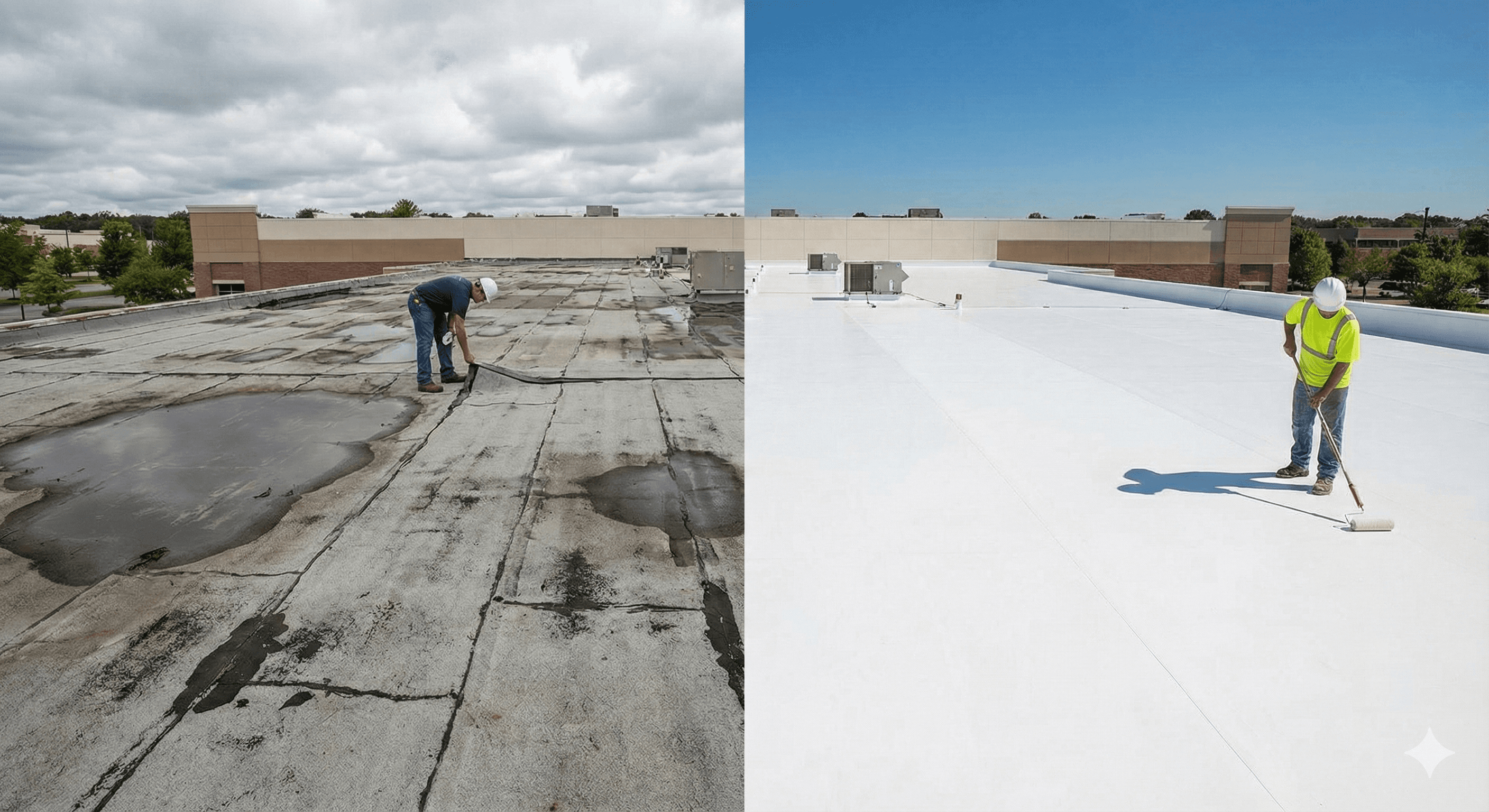
Repairs make sense when leaks are isolated and the membrane is otherwise strong; widespread damage or saturated insulation signals it’s time to replace.
Comparing five years of projected repair costs with a one-time replacement often reveals the smarter investment.
1. The Big Question: Repair or Replace?
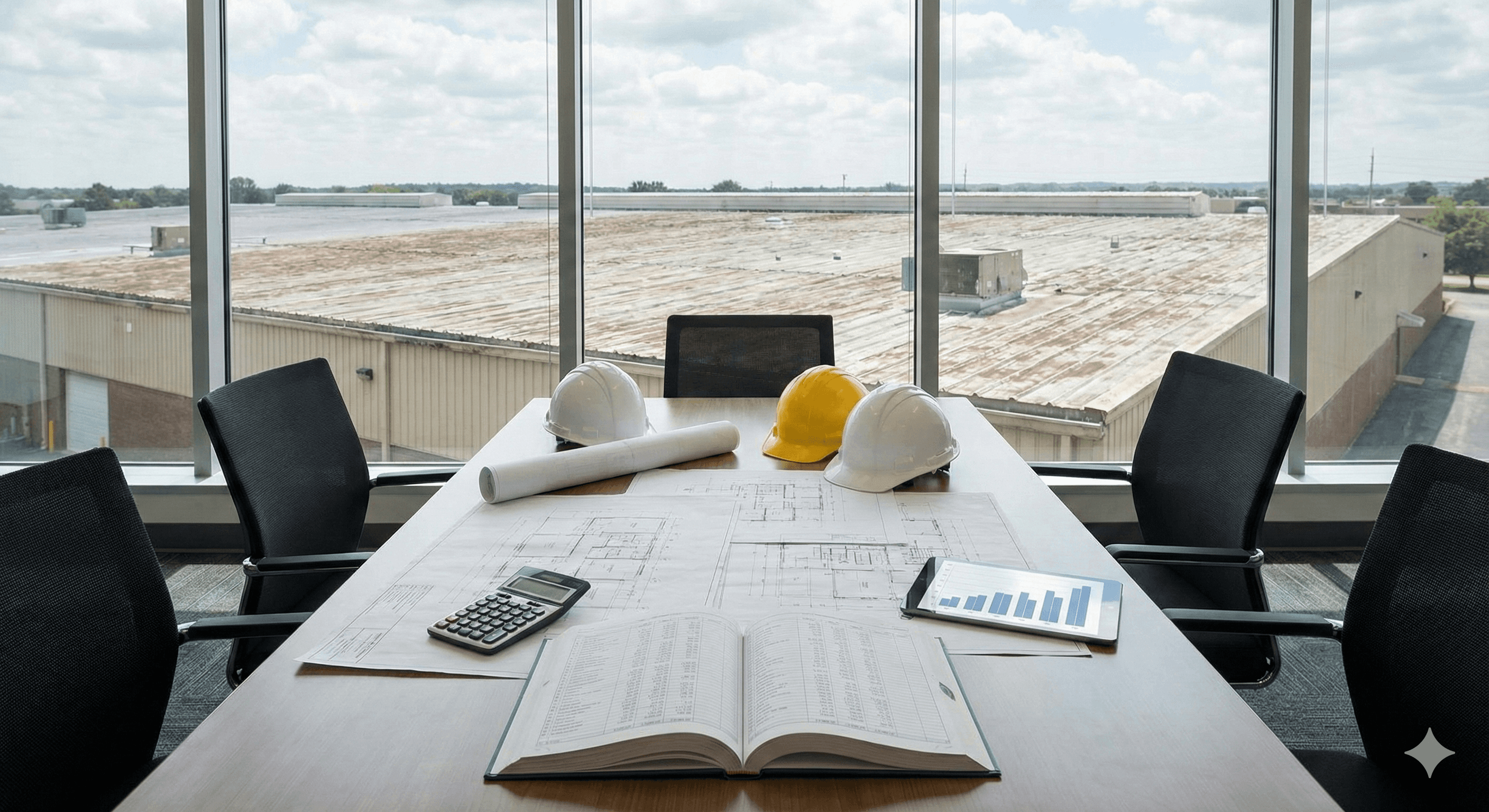
Your roof protects everything beneath it—equipment, inventory, tenants, and staff. Deciding between more repairs or a full replacement affects not only your maintenance budget but also your building’s energy efficiency and resale value. A professional inspection is the essential first step. Without a detailed condition report, you’re making a six-figure decision on guesswork.
2. Understanding Lifespan and Materials
Different systems age at different rates:
Built-Up Roofing (BUR): 20–30 years
Modified Bitumen: 15–25 years
EPDM Rubber Membrane: 20–30 years
TPO or PVC Single-Ply: 20–30 years
Local climate, installation quality, and maintenance frequency all influence these averages. A well-installed roof in a mild region may outperform expectations, while poor drainage or severe weather can cut life expectancy dramatically.
3. Signs Repairs Might Be Enough
Repairs are often the smartest, most economical move when:
Isolated Leaks: One or two small punctures that can be patched.
Localized Flashing Damage: Around HVAC units, vents, or skylights.
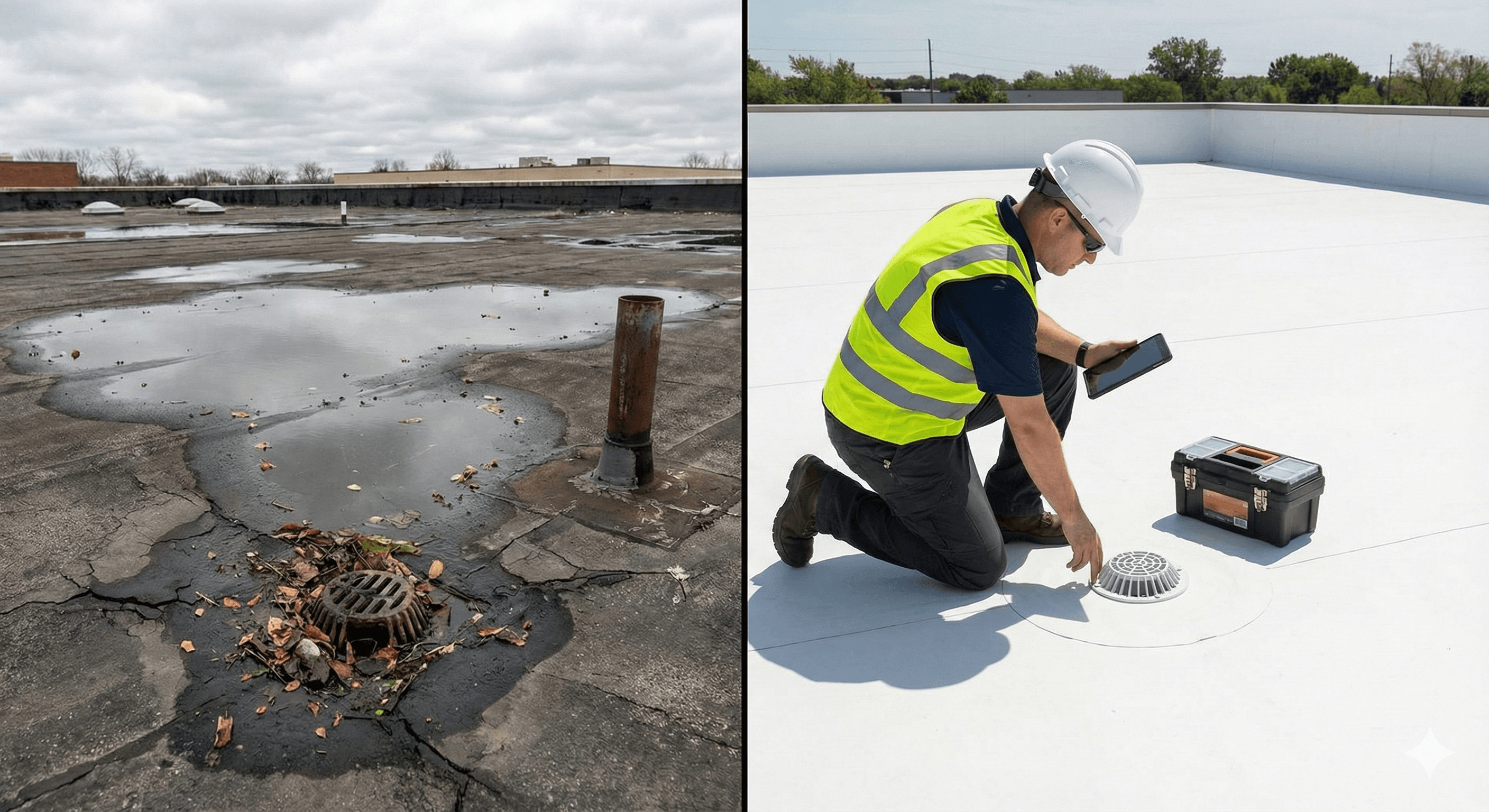
Correctable Ponding Water: Minor low spots that tapered insulation or added drains can fix.
Overall Membrane Health: Strong seams, no widespread blistering, and dry insulation.
Targeted repairs in these situations can buy five or more extra years of service at a fraction of the cost of a new roof.
4. Red Flags That Signal Full Replacement
At some point, repairs become throwing good money after bad. Plan for replacement if you see:
Advanced Age: Nearing or past the expected lifespan.
Recurring Leaks: Multiple leaks that persist despite previous fixes.
Saturated Insulation: Wet or moldy insulation driving up energy bills and degrading indoor air quality.
Widespread Membrane Failure: Extensive blistering, cracking, or shrinkage across large areas.
Structural Concerns: Sagging deck or signs of long-term moisture damage.
5. Crunching the Numbers
Repairs usually cost $4–$8 per square foot, while a full replacement can range from $6–$12 per square foot (or more for complex systems). When you add up recurring leak repairs, interior damage, and higher insurance deductibles, replacement often proves cheaper over a five-year horizon. Factor in the energy savings of modern reflective membranes and added insulation to see the full financial picture.
6. Warranties, Energy Codes, and Future Goals
Manufacturer warranties often expire after a set number of years or when extensive water intrusion occurs. A new roof offers:
Fresh Warranty Protection: Typically 15–30 years.
Energy Upgrades: Thicker insulation or reflective coatings to cut HVAC costs.
Code Compliance: Meeting updated building and energy-efficiency standards.
If you plan to sell, refinance, or attract long-term tenants, a new roof can boost property value and simplify insurance negotiations.
7. Making the Decision
Follow these steps for a confident choice:
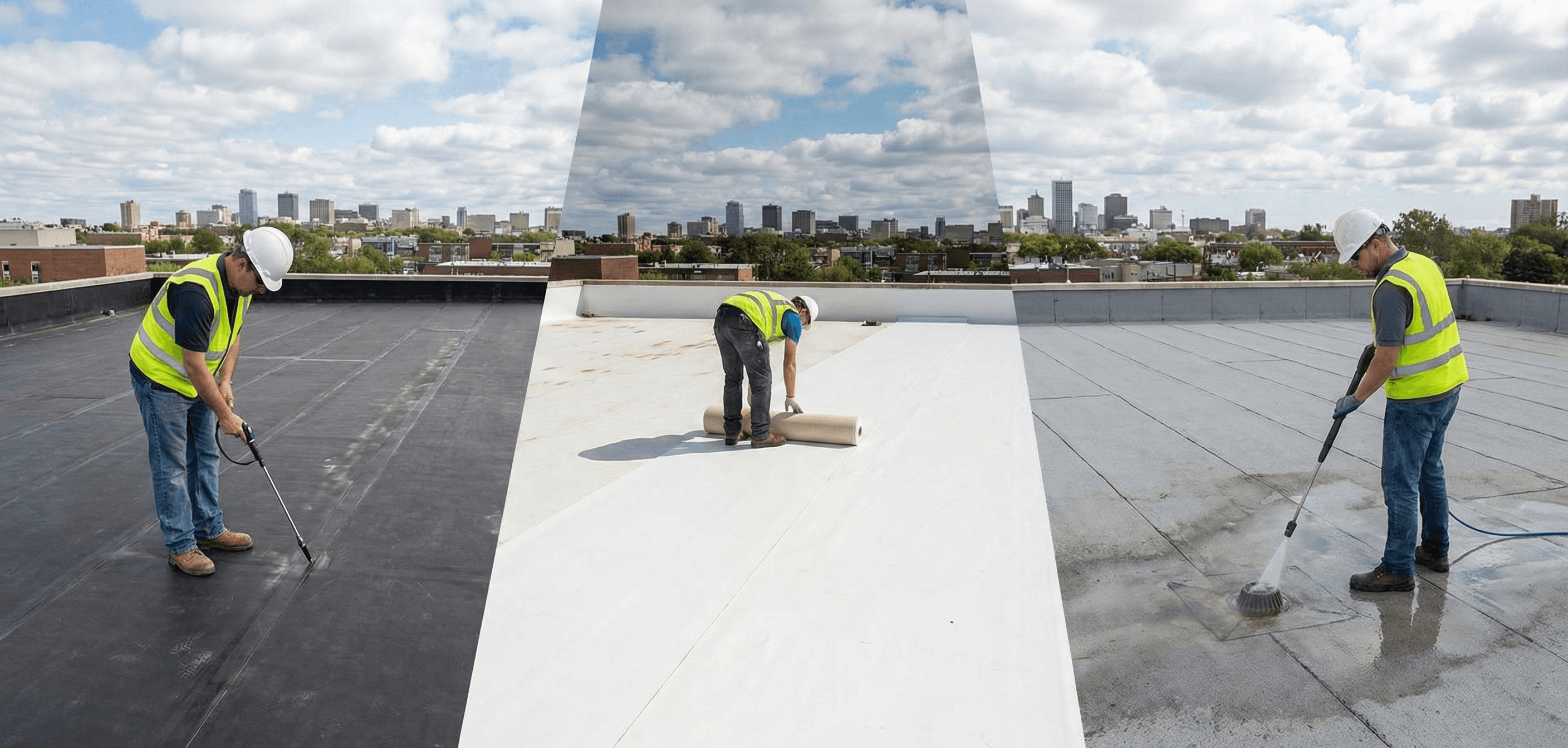
Schedule a Detailed Inspection with a certified commercial roofer.
Request a Written Condition Report including photos and a projected remaining lifespan.
Compare Costs: Evaluate repair estimates against the extra years of service they’ll realistically provide.
Consider Business Impact: Plan around production schedules or tenant needs to avoid expensive downtime.
Plan Financing Early: Explore loans, capital budgets, or tax incentives for energy-efficient upgrades.
8. Checklist: Repair or Replace Decision Guide
Use this list to stay organized while you decide:
Review your roof’s age and expected lifespan.
Schedule a professional inspection and get a detailed report.
Identify all leaks, weak seams, and insulation issues.
Gather at least three written estimates for both repair and replacement.
Calculate five-year repair costs vs. one-time replacement costs.
Check manufacturer warranty terms and expiration dates.
Consider energy savings from upgraded insulation or reflective membranes.
Factor in business disruption and tenant needs.
Secure financing or budget approval before work begins.
9. Conclusion: Plan the Future of Your Roof
An aging flat roof doesn’t have to be a surprise expense. With regular inspections, clear cost comparisons, and a strategic plan, you can choose the smartest path—whether that’s a few more years of reliable repairs or a full replacement that sets you up for decades of worry-free protection. The key is acting early, before small leaks turn into big bills.