Estimated Reading Time: 8 minutes
Summary
Most flat roof failures don’t happen overnight—they develop slowly, often from small issues that go unnoticed. Poor installation, ponding water, heavy foot traffic, weather exposure, and delayed maintenance are the leading reasons commercial flat roofs fail early. The good news? Almost all of these problems are preventable. This article breaks down the top causes of flat roof failure, what they look like, and what building owners can do to stop small issues from becoming expensive emergencies.
Main Points
Poor installation is the #1 cause of premature roof failure—no material can perform well if installed incorrectly.
Ponding water and drainage problems weaken roofing materials and shorten lifespan.
Foot traffic from HVAC technicians causes more roof damage than many owners realize.
Sun, wind, ice, and temperature swings wear out roofs over time—but maintenance reduces their impact.
Deferred maintenance leads to costly leaks, insulation damage, and shortened roof life.
A commercial flat roof is designed to last decades, but only when it’s installed correctly and maintained consistently. Many early roof failures come down to just a few avoidable problems. By understanding the most common causes—and how to spot them—you can prevent leaks, protect your building, and extend the lifespan of your roofing system.
Below are the top issues that cause flat roofs to fail and the simple steps you can take to prevent them.
1. Poor Installation: Mistakes You Should Never Ignore
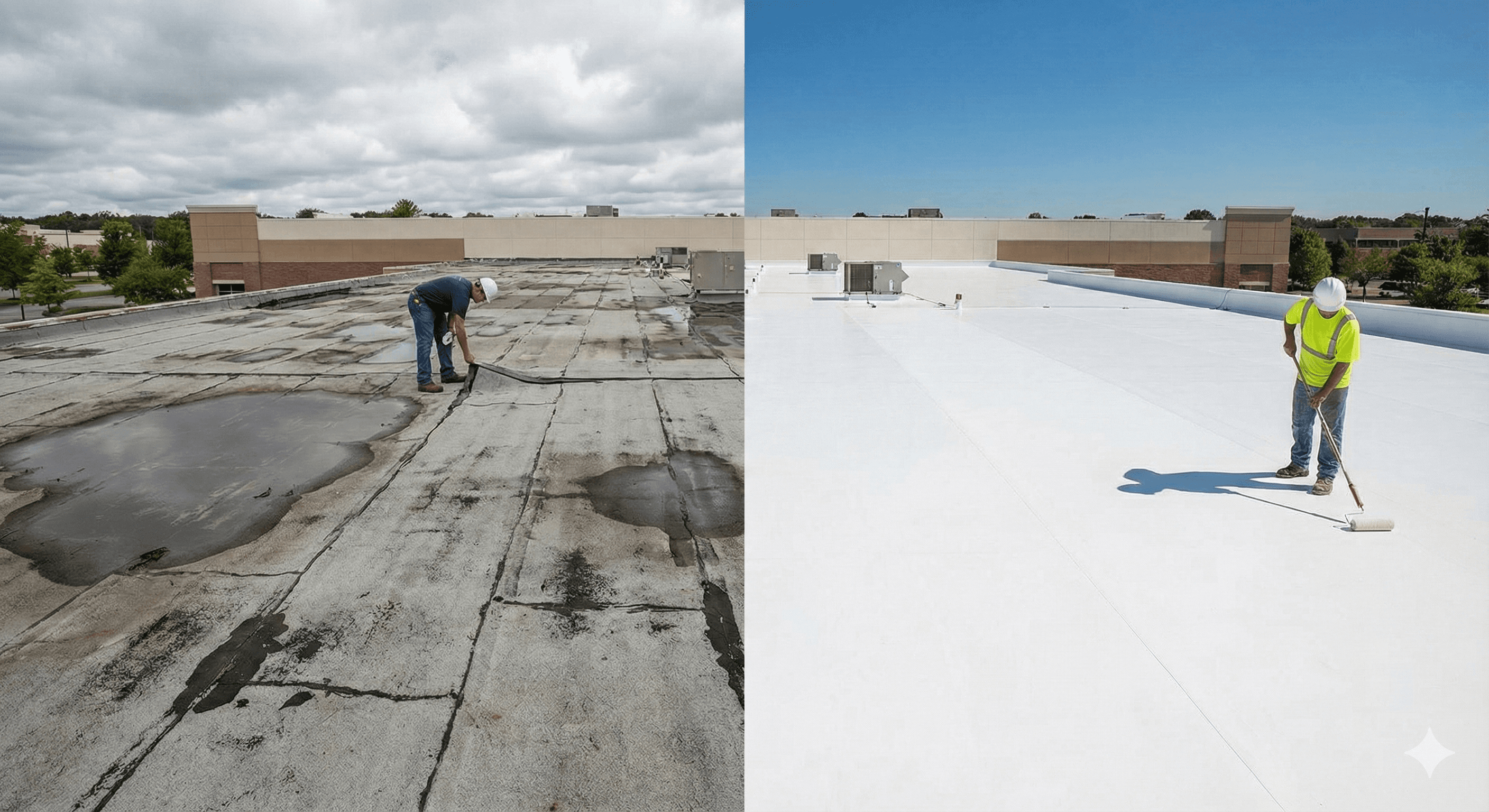
No matter how strong a roofing material is, it can’t perform well if it’s installed incorrectly. Poor installation is, by far, the biggest reason flat roofs fail prematurely.
Common installation issues include:
Incorrect slope (causing water to sit instead of drain)
Weak or poorly welded seams
Improperly installed flashings around edges and penetrations
Inadequate insulation or fastening
Using untrained labor for specialized roofing systems
What this leads to:
Early leaks
Membrane separation
Structural damage from trapped moisture
How to prevent it:
Choose a qualified commercial roofing contractor
Ask for certifications and proof of experience with your roof type
Request photos of similar projects or references
Do not accept bids that seem “too good to be true”
A roof is only as reliable as the team that installs it.
2. Ponding Water and Drainage Errors
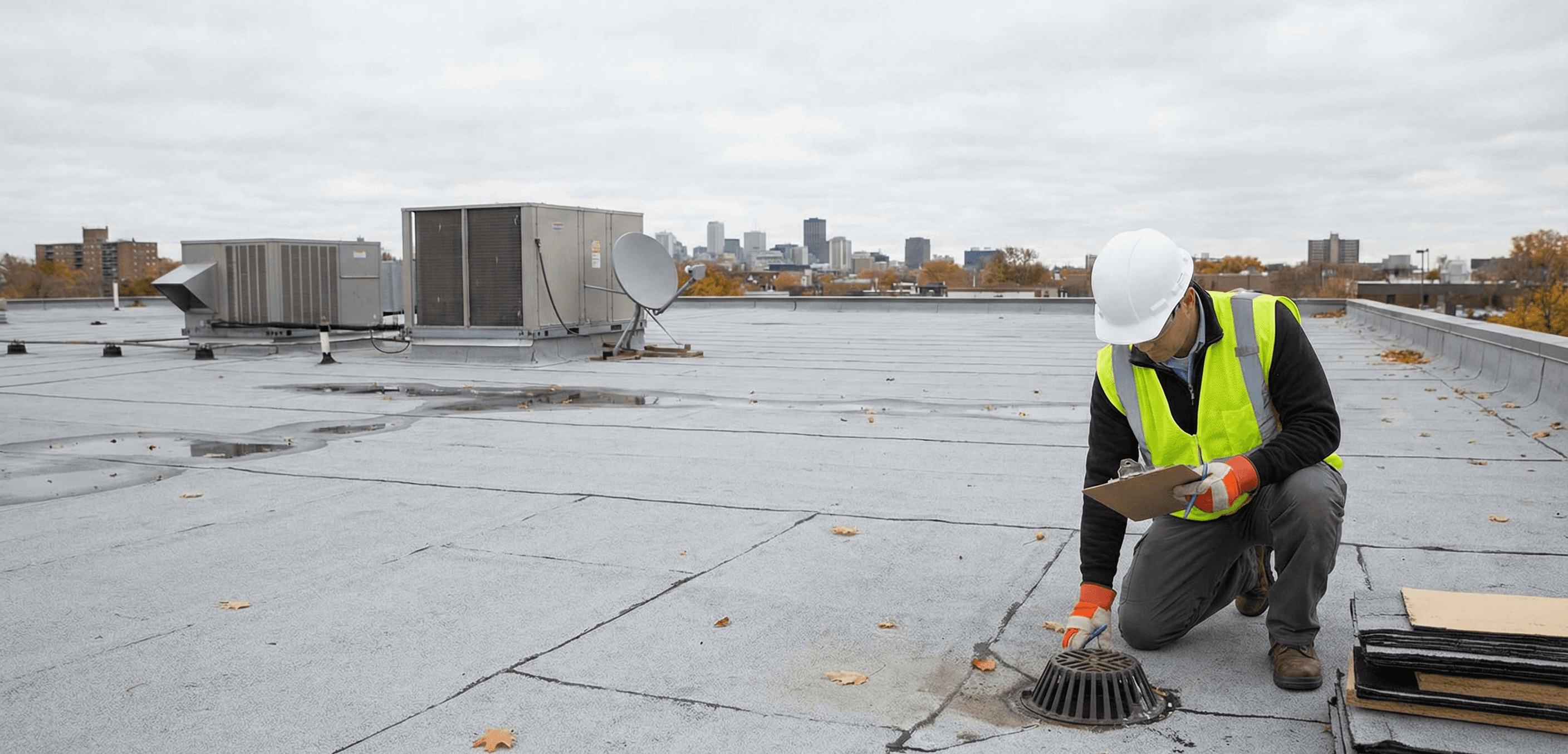
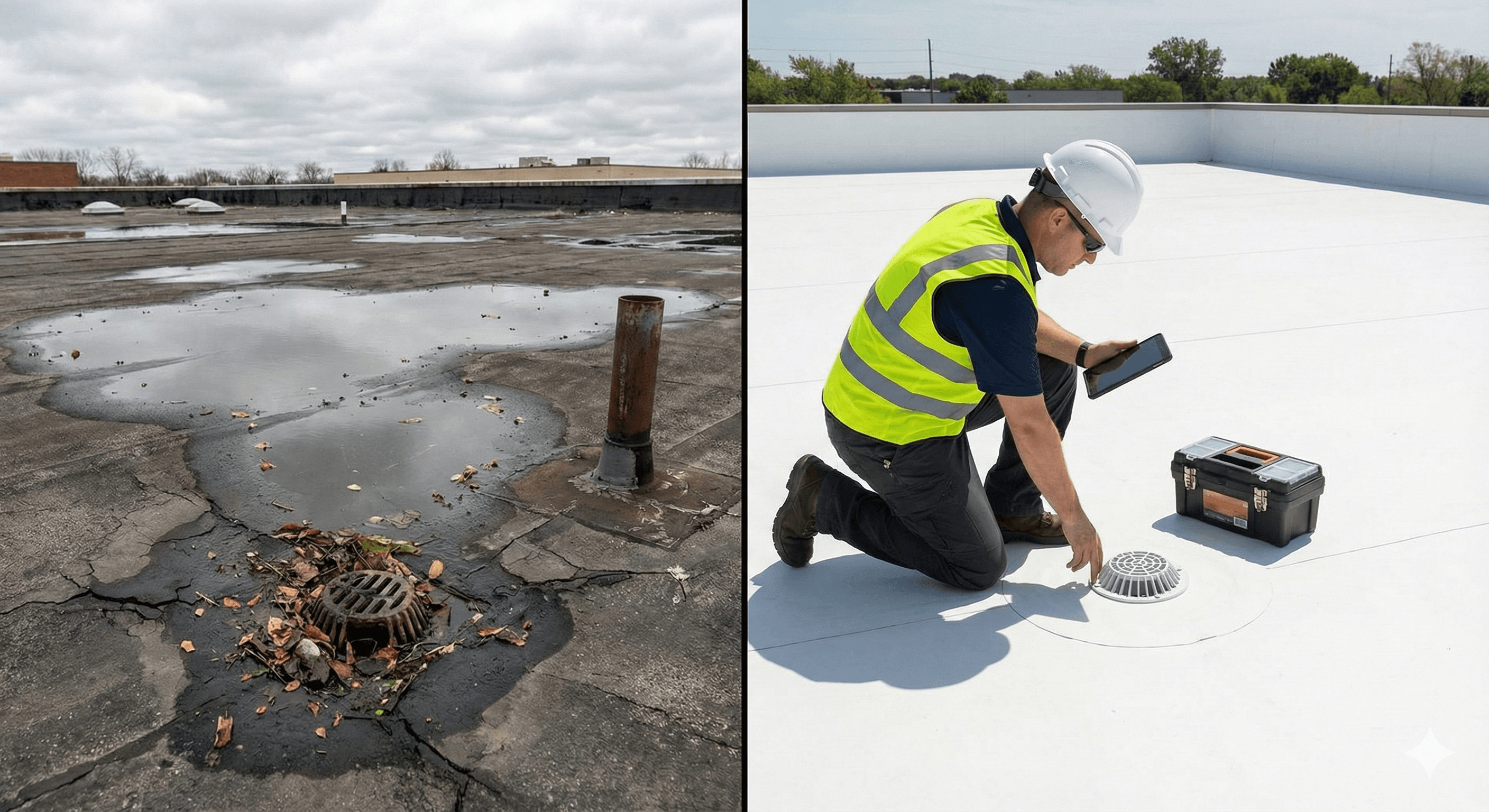
Flat roofs are designed to drain water, even though they look flat. When water sits for more than 24–48 hours, it’s called ponding water, and it is one of the fastest ways to shorten a roof’s lifespan.
What causes ponding water?
Poor slope design
Clogged drains or gutters
Settling of the roof deck
Debris blocking water flow
Why ponding water is dangerous:
Breaks down roofing materials
Creates algae or mold
Increases the risk of leaks
Adds extra weight that strains the structure
Accelerates aging of seams and flashings
Prevention tips:
Clean drains and gutters at least twice a year
Remove roof debris after storms
Have a professional check roof slope and drainage layout
Address ponding early—before it becomes a structural concern
3. Foot Traffic Damage Near HVAC Units
Many building owners are surprised to learn that some of the worst roof damage happens near HVAC systems—not from weather.
Why this happens:
Technicians walk across the roof without protective pathways
Tools get dropped
Panels or sharp equipment scrape the roofing surface
Grease, oils, or chemicals spill onto the membrane
Signs of foot-traffic damage:
Punctures or cuts in the membrane
Scuffed areas
Worn pathways
Crushed insulation or soft spots underfoot
How to prevent it:
Install walkway pads around service areas
Clearly mark safe routes across the roof
Ask HVAC companies to report any accidents immediately
Schedule regular inspections after heavy service work
A few walkway pads can prevent thousands of dollars in membrane repairs.
4. Weather-Related Wear and Tear
Even the best flat roofs take a beating from the weather. Sun, rain, wind, ice, and temperature swings all play a role in long-term wear.
Common forms of weather wear:
UV rays drying out roofing materials
Freeze–thaw cycles causing cracks
Wind lifting edges or flashings
Heavy snow adding weight
Ice forcing water under seams
What this leads to:
Surface cracks
Brittle or shrinking membranes
Loose flashings
Premature aging
Prevention tips:
Schedule spring and fall inspections
Apply protective coatings when recommended
Remove excessive snow or ice (done by professionals)
Repair small issues before seasonal weather worsens them
Weather will always be a factor—but maintenance reduces its impact dramatically.
5. The Financial Impact of Deferred Maintenance
Delaying maintenance is one of the costliest mistakes building owners make. A small crack, a loose seam, or a clogged drain may not seem urgent, but these minor issues lead to major damage if ignored.
What deferred maintenance often causes:
Interior water damage
Mold growth
Insulation saturation (reducing energy efficiency)
Rusting or damage to mechanical equipment
Full roof replacement years earlier than expected
The cost difference:
Small repair: a few hundred dollars
Water-damaged insulation: thousands
Early roof replacement: tens—or hundreds—of thousands
How to avoid these expenses:
Follow a seasonal maintenance schedule (spring + fall)
Keep a photo log of roof conditions
Repair issues promptly
Build a long-term roof budget for upkeep and future replacement
Regular maintenance is always cheaper than emergency repairs.
Conclusion: Most Flat Roof Failures Are Preventable
Flat roofs don’t fail overnight—they fail when small issues go unnoticed and unaddressed. By understanding the top causes of roof failure and taking simple preventive steps, building owners can dramatically extend the life of their roof and avoid costly disruptions.
The best protections you can put in place are:
A professional-quality installation
Good drainage
Controlled foot traffic
Seasonal inspections
Prompt repairs
If you’re unsure about the condition of your roof—or if any issues mentioned in this article sound familiar—it may be time to schedule a professional inspection. Catching problems early doesn’t just save your roof; it protects your entire building.