Estimated Reading Time: 12–14 minutes
Key Takeaways
Most flat roof failures start small—tiny gaps, slow drains, or subtle cracks—long before leaks appear inside.
Early detection through routine inspections is the best defense against costly structural damage.
Promptly contacting a qualified roofer at the first sign of trouble can save thousands and preserve your warranty.
Why Early Detection Matters
A flat roof protects everything beneath it—inventory, equipment, tenants, and staff. But because the surface isn’t pitched like a traditional roof, water and debris tend to linger. A tiny seam separation or clogged drain can go unnoticed for weeks, leading to soaked insulation, structural rot, and interior leaks. Regular inspections and a partnership with a trusted roofing contractor are the most effective ways to catch these issues before they require a full replacement.
Ponding Water
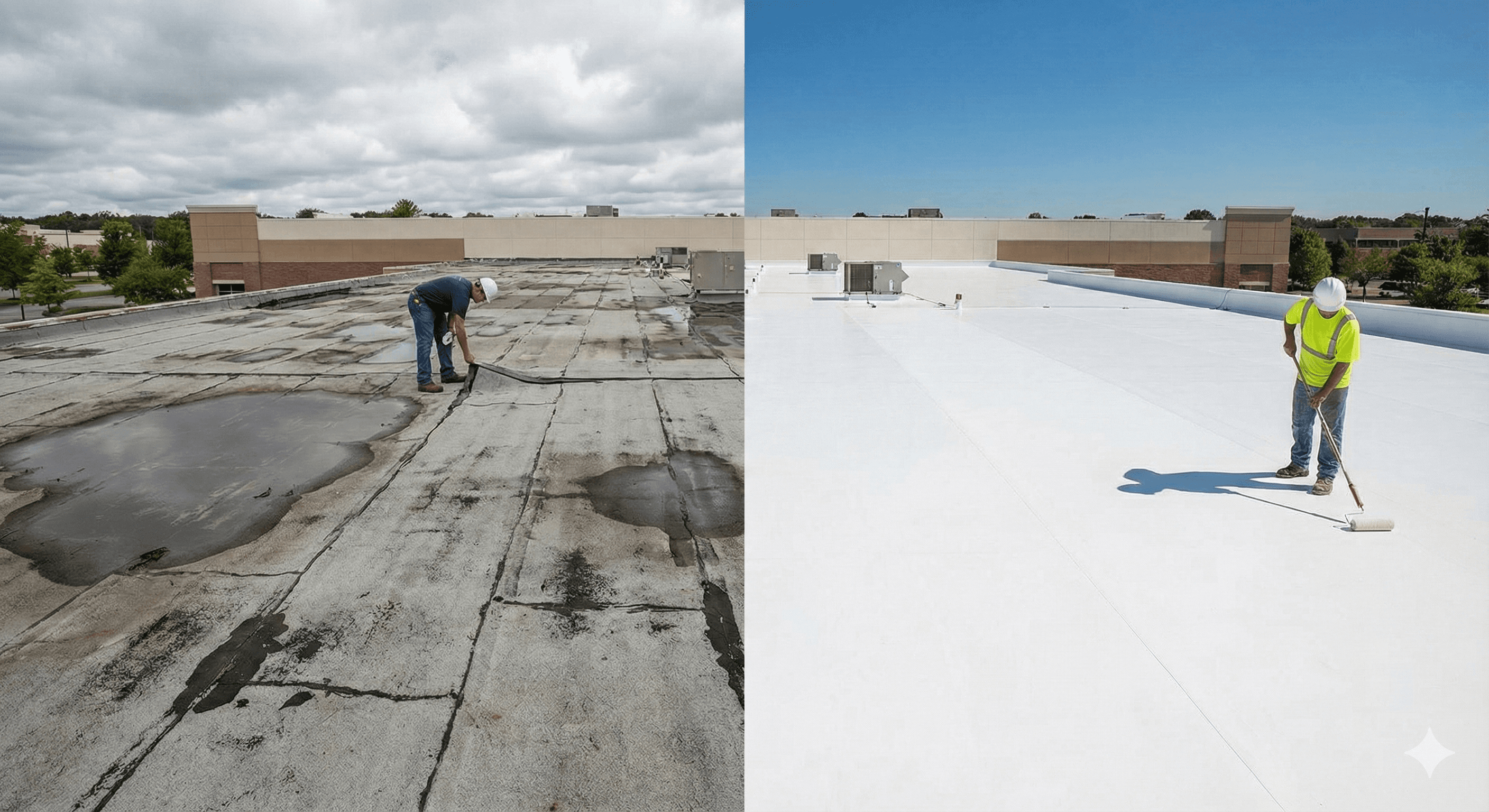
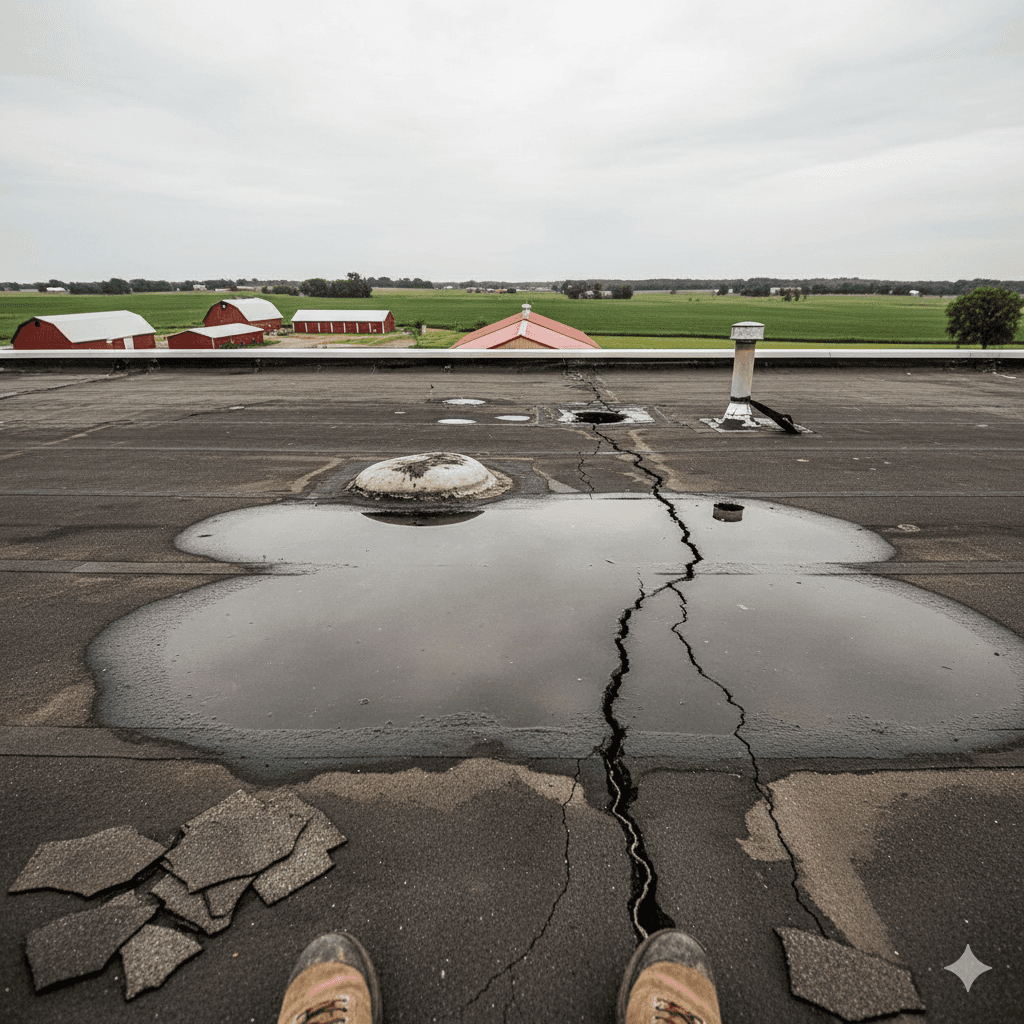
Water that remains on a roof for more than 48 hours is more than a nuisance—it’s a silent threat. Insufficient slope, compressed insulation, or blocked drains all allow water to collect in low spots. Over time, the added weight strains the decking and accelerates membrane deterioration. You might spot shimmering puddles, algae growth, or dark stains that mark where water sits after every storm. If these signs appear, call a roofer to evaluate drainage and, if necessary, install tapered insulation or additional drains.
Membrane Damage and Punctures
Your roof membrane is tough but not invincible. Foot traffic from HVAC technicians, dropped tools, sharp debris, and even hail can create small punctures. These openings allow water to infiltrate insulation and decking. During inspections, look for blisters, tears, or areas where the membrane feels soft or spongy underfoot. Walk pads near frequently serviced equipment reduce the risk of accidental damage.
Flashing Failures
Flashing seals the transitions where the roof meets walls, vents, and HVAC units. Temperature swings cause expansion and contraction that can loosen or crack these seals. When flashing fails, water slips behind the membrane and penetrates the building envelope. Signs include rusted or lifted metal edges, visible gaps, or water stains around rooftop penetrations. Catching flashing issues early is critical because leaks at these points can travel far from their source, making them tricky to diagnose later.
Drainage and Gutter Issues
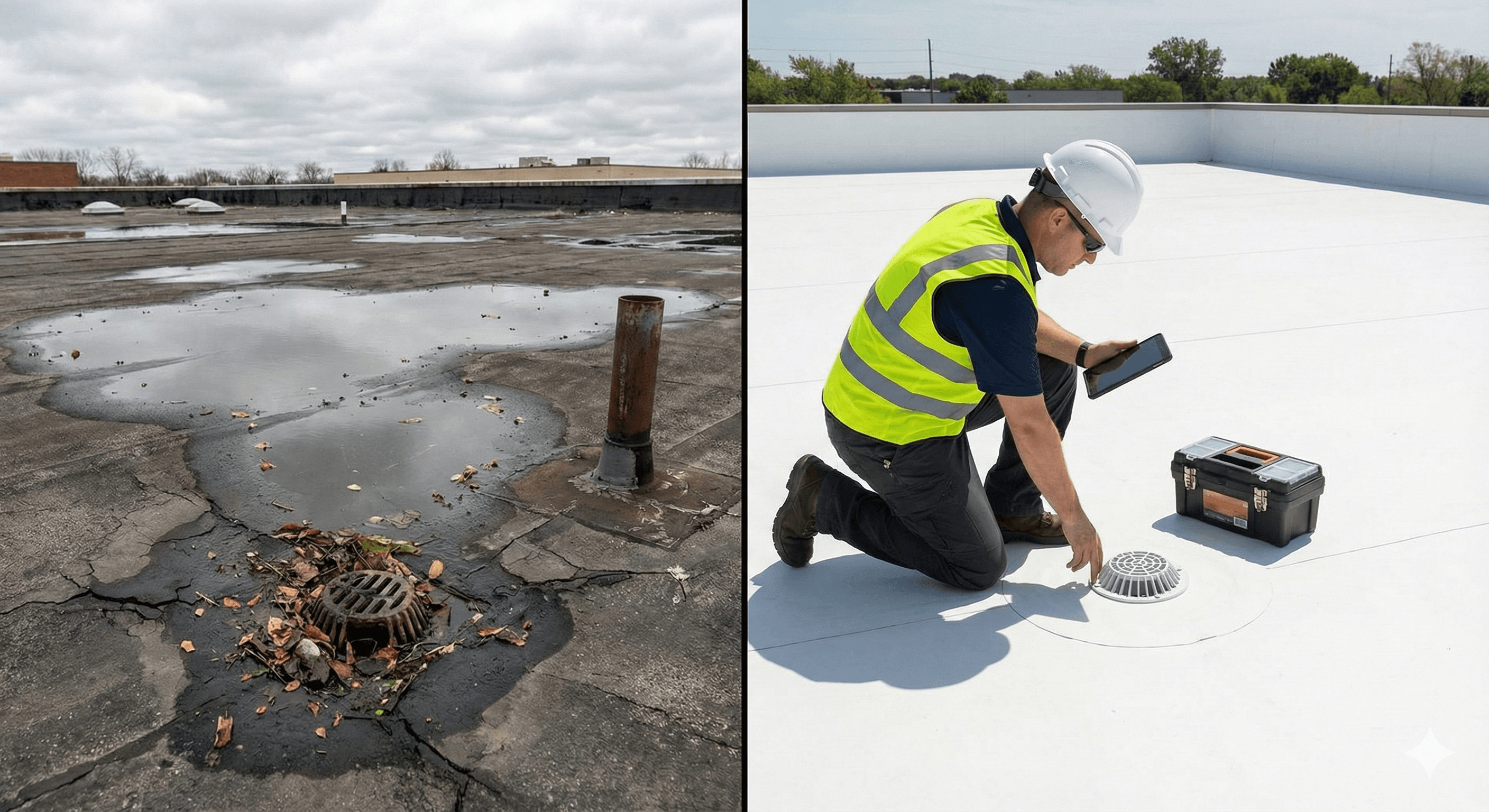
Clogged or undersized drains and scuppers keep water on the roof longer than intended. Debris such as leaves, branches, or even roofing granules can block flow, especially after heavy storms or in autumn. Watch for overflowing gutters, slow-draining water after rain, or vegetation sprouting near drains—clear signs of trouble. Routine cleaning and inspection of the entire drainage path, from roof surface to downspout outlet, are essential.
Shrinkage and Seam Separation
Single-ply membranes like EPDM and TPO can contract over time, especially when exposed to extreme temperature changes. This shrinkage pulls at seams and flashing, creating tension that eventually opens gaps. Look for stretched corners, visible fasteners, or seams that appear raised or split. Early repairs prevent these openings from expanding and letting water seep beneath the membrane.
UV and Weather-Related Degradation
Constant sunlight and harsh weather slowly break down roofing materials. UV rays dry out adhesives and make membranes brittle, while freeze–thaw cycles create micro-cracks. Over years, the surface may fade, chalk, or feel crumbly to the touch. Reflective coatings can help slow this process, but regular inspections remain vital to catch early signs of deterioration.
Interior Warning Signs
Sometimes the first clues appear inside the building. Water stains on ceilings, unexplained musty odors, or sudden increases in heating and cooling costs can all indicate moisture infiltration or wet insulation. If these symptoms show up, inspect the roof immediately—even if you can’t see visible damage from the ground.
Prevention and Maintenance Tips
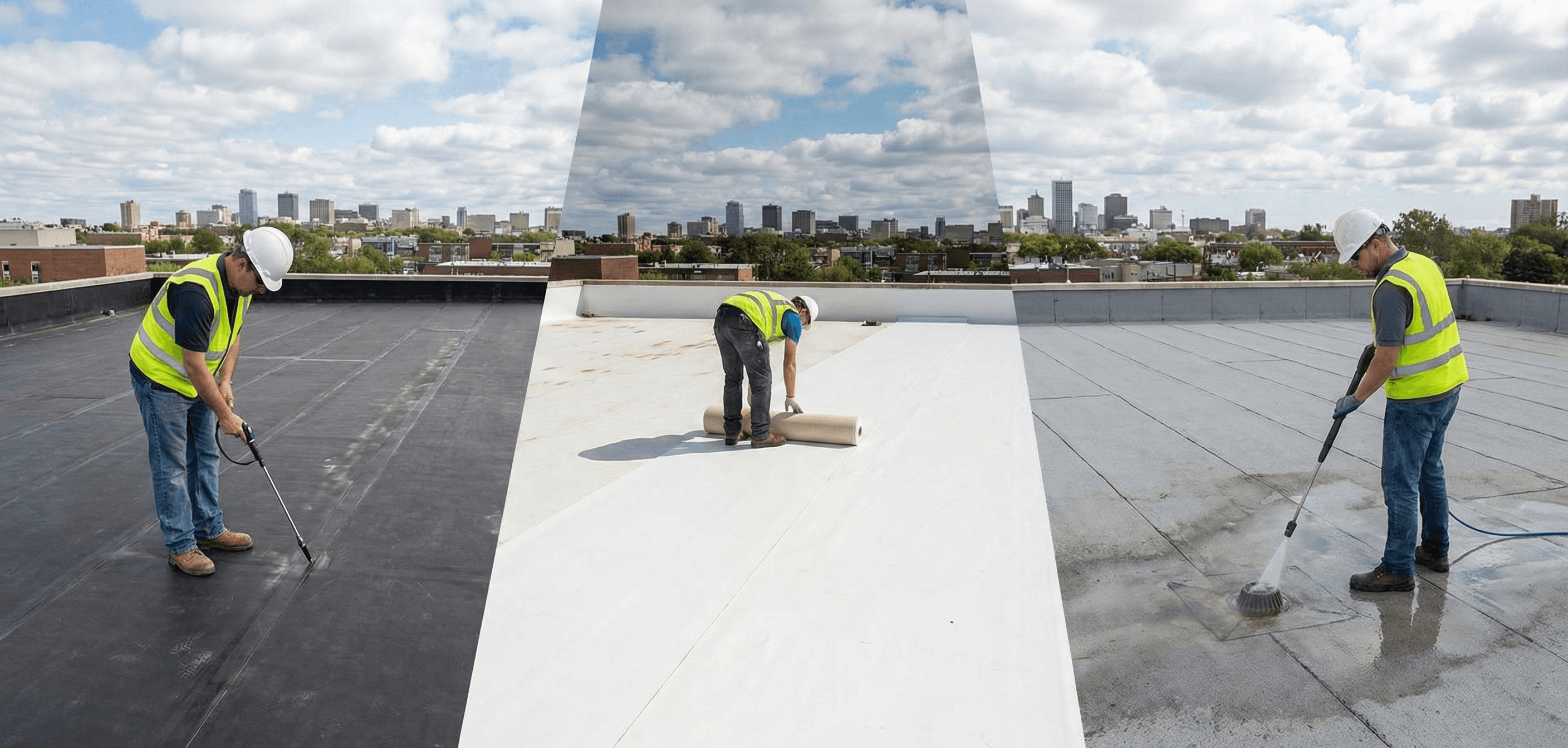
Schedule professional inspections at least twice a year—spring and fall—and after major storms.
Keep drains, scuppers, and gutters clear to prevent ponding water.
Limit unnecessary foot traffic and use walk pads near HVAC equipment.
Address small repairs right away rather than waiting for the next inspection.
Consider reflective or elastomeric coatings to protect against UV damage and extend service life.
Act Early to Prevent Permanent Damage
Waiting until water drips through the ceiling is the most expensive mistake a building owner can make. By the time leaks show indoors, water has often traveled unseen through insulation, decking, and support structures—causing hidden rot, corrosion, and mold growth that can cost far more to fix than the roof itself. Moisture trapped beneath the membrane can also void manufacturer warranties, leaving you with the full bill for a premature replacement. Taking action at the first sign of trouble keeps small issues from becoming structural emergencies.
Contacting a qualified roofer early allows them to uncover and correct problems before they become irreversible. Even something as minor as a small puddle after rain or a soft spot underfoot can signal a much larger issue below the surface. A proactive inspection can turn what might become a five-figure repair into a simple, inexpensive fix.
Key reasons to call a professional right away:
Stop Hidden Water Damage – Early detection prevents moisture from saturating insulation, weakening roof decking, and rusting structural steel.
Protect Warranty Coverage – Most manufacturers require documented maintenance and timely repairs. Delays can void warranties and shift all costs to the owner.
Avoid Mold and Indoor Air Issues – Moisture trapped inside roofing layers fosters mold growth, which can spread into interior spaces and create health hazards.
Reduce Repair Costs – Fixing a small puncture or resealing flashing is far cheaper than replacing entire roof sections or interior finishes.
Preserve Energy Efficiency – Wet insulation loses its R-value, forcing HVAC systems to work harder and increasing utility bills.
Prevent Business Disruption – Emergency leaks can damage equipment, inventory, and tenant spaces, leading to costly downtime.
What to watch for between professional inspections:
Persistent puddles or ponding water more than 48 hours after rainfall.
Unusual soft spots when walking the roof.
Cracks, gaps, or peeling around flashing and seams.
Interior signs such as musty odors, ceiling stains, or unexplained HVAC spikes.
Calling a roofing professional as soon as these warning signs appear is not just smart maintenance—it’s the difference between a quick service visit and years of costly, irreversible damage. A full-service roofer can inspect, repair, and even revitalize the roof, extending its life and protecting the entire building investment.
Conclusion
Flat roof problems rarely start big. They begin with slow drainage, a tiny seam gap, or a small puncture—issues that are easy to miss until water starts dripping inside. By understanding the common threats and spotting them early, you can extend your roof’s lifespan, protect the building below, and save significant money over the long run.
Next Step: Partner with a full-service roofing contractor who offers inspections, maintenance programs, and roof revitalization. Acting quickly at the first sign of trouble is the surest way to keep your flat roof performing for decades.