Estimated Reading Time: 12–14 minutes
Key Takeaways
Regular professional inspections identify small problems before they compromise the entire system.
Consistently clearing drains and scuppers stops ponding water, the most common cause of early roof failure.
Timely, high-quality repairs, paired with protective coatings and a documented maintenance program, can extend service life by 5–10 years and lower lifetime costs dramatically.
Maintenance Is the Smartest Insurance
Flat roofs endure relentless punishment from every season. Sunlight dries membranes and weakens adhesives. Rain collects in low spots and freezes into damaging ice. Wind tears at flashing and seams. Without a plan, these forces shorten lifespan and invite sudden leaks. Routine, scheduled maintenance is a small expense compared with emergency calls, interior water damage, or an unexpected six-figure replacement. By building a relationship with a trusted roofing contractor and following a structured routine, you can preserve the roof’s integrity and keep budgets predictable.
Step 1 – Schedule Thorough Professional Inspections
Every roof should be examined at least twice a year—once in the spring after snow and ice have melted and once in the fall before cold weather returns. A trained technician inspects every seam, checks the flashing around vents and HVAC units, and tests drainage paths for blockages.
Key actions include:
Scheduling spring and fall inspections, plus additional checks after major storms.
Examining seams, flashing, penetrations, and drains for early signs of wear.
Inspecting insulation for moisture and documenting all findings with photos and a written report.
Why it matters:
Early detection of damage prevents small issues from escalating into costly repairs.
Detailed records help maintain manufacturer warranties and support insurance claims.
Step 2 – Keep Drains, Scuppers, and Gutters Clear
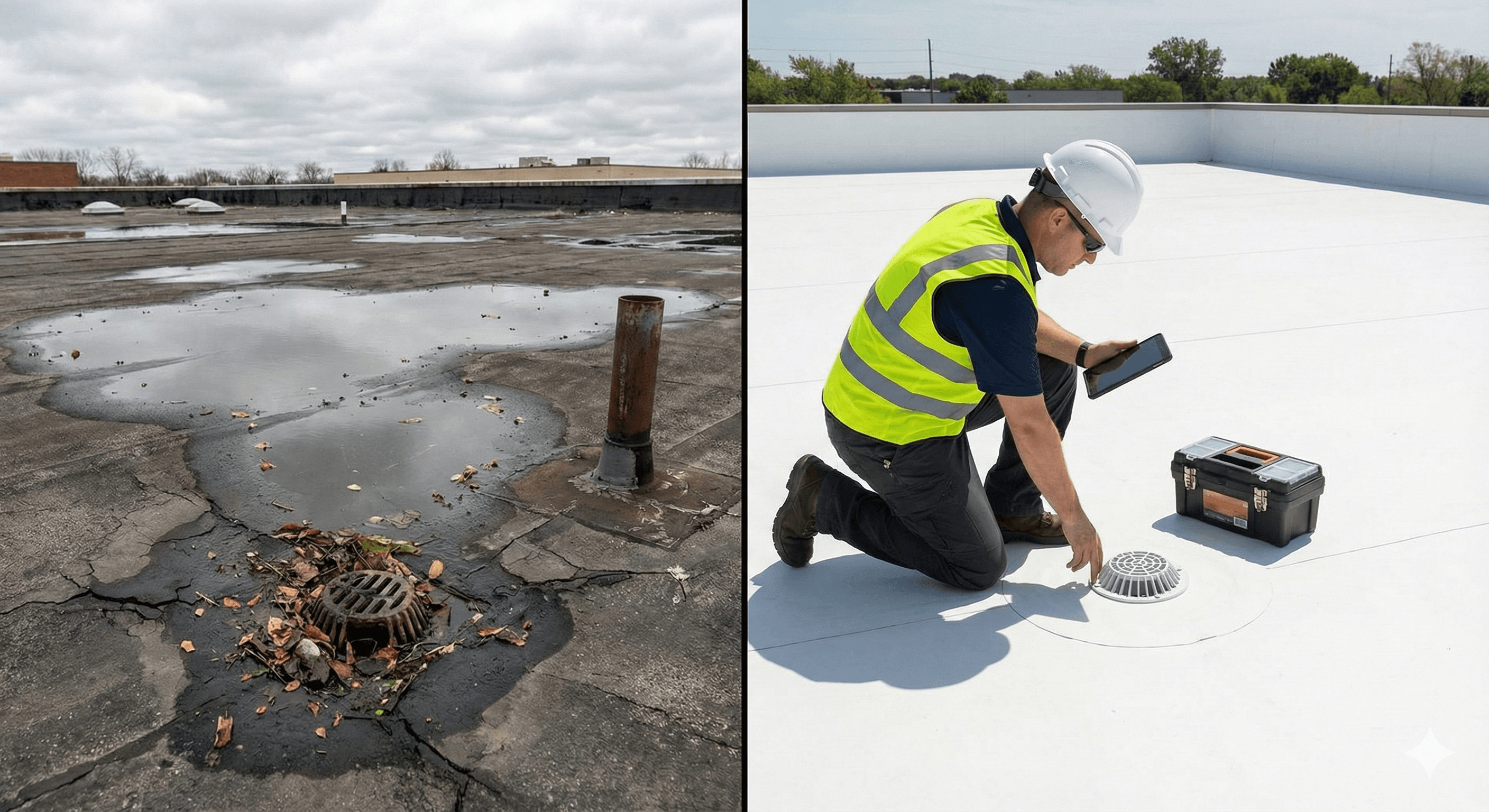
Standing water is the silent killer of flat roofs. Even a shallow pool left for more than forty-eight hours accelerates deterioration and adds dangerous weight.
Key actions include:
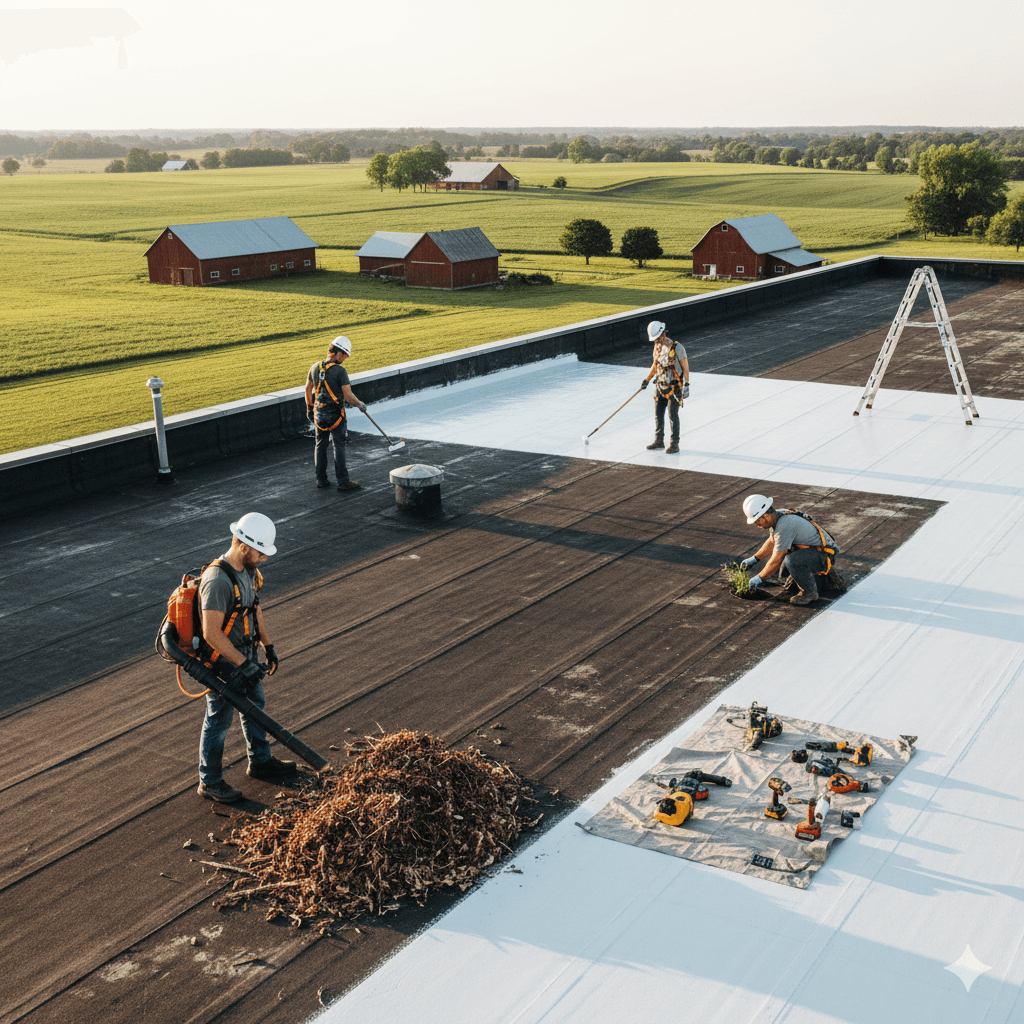
Removing leaves, twigs, and debris from drains and scuppers on a regular schedule.
Verifying that strainers are securely in place and free of sediment.
Checking downspouts to ground level to confirm unobstructed flow.
Measuring how quickly water disappears after rainfall to identify potential sagging or insulation compression.
Why it matters:
Proper drainage eliminates ponding that can degrade membranes and overload the roof deck.
Clean drains reduce the risk of leaks and structural damage during heavy storms.
Step 3 – Repair Every Sign of Damage Immediately
Tiny punctures, loose flashing, or peeling seams might seem minor, but water needs only the smallest opening to cause extensive damage.
Key actions include:
Patching punctures or small tears as soon as they’re discovered.
Re-sealing or re-welding seams that have started to separate.
Replacing deteriorated flashing around vents, skylights, and HVAC units.
Scheduling emergency repairs after severe wind or hail events.
Why it matters:
Quick repairs prevent moisture from saturating insulation and corroding structural elements.
Prevents leaks that could disrupt operations or damage valuable equipment.
Step 4 – Apply Protective Coatings or Sealants
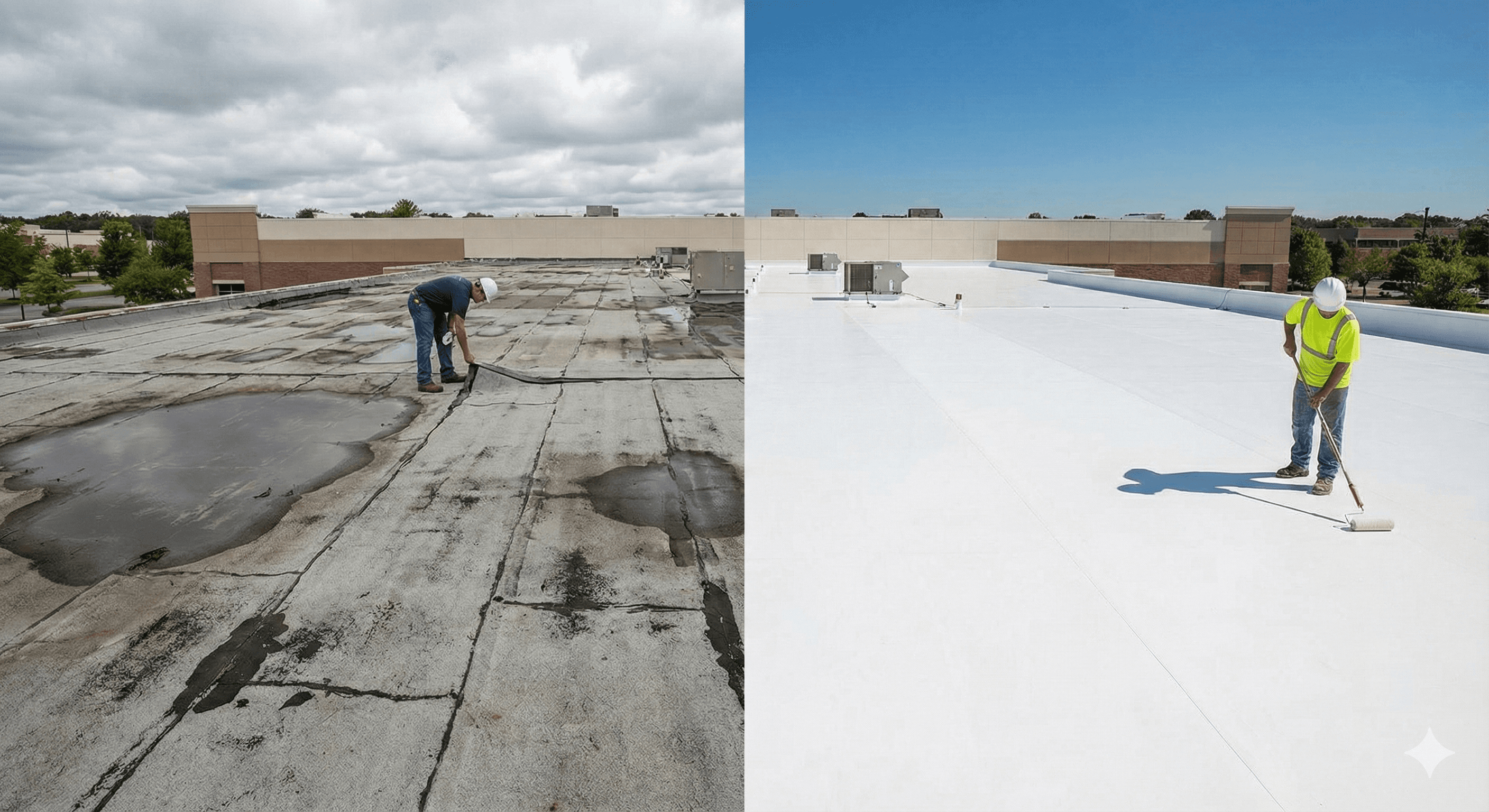
Reflective or elastomeric coatings create an additional barrier between your membrane and the elements, reducing surface temperatures and protecting against thermal expansion.
Key actions include:
Consulting a professional roofer to select the right coating for your roof type.
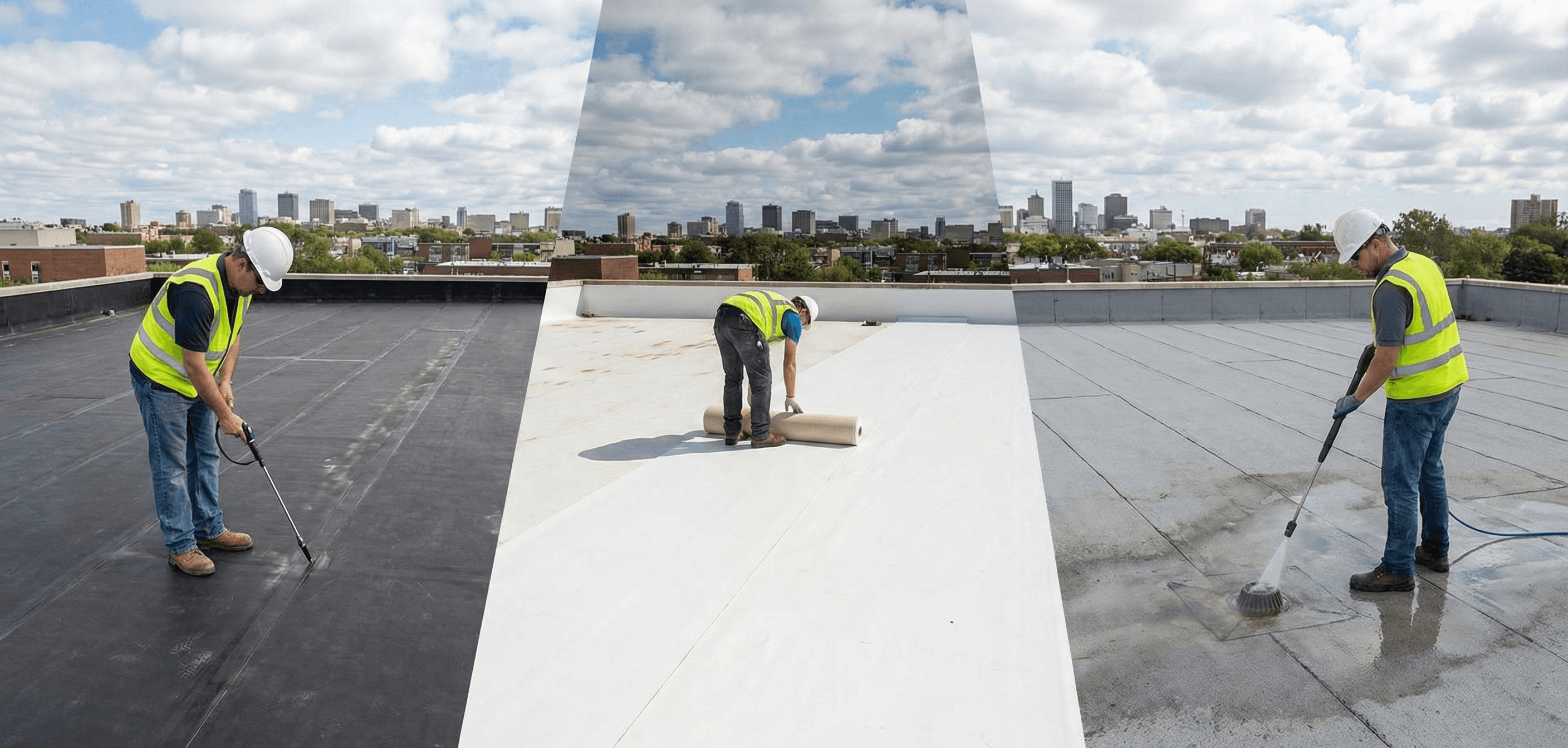
Cleaning and repairing the roof thoroughly before application to ensure adhesion.
Applying coatings every 5–10 years as recommended by the manufacturer.
Considering energy-efficient “cool roof” coatings to lower HVAC costs.
Why it matters:
Reduces UV damage and slows membrane aging.
Extends service life and can renew or extend manufacturer warranties.
Step 5 – Establish a Formal Maintenance Plan
The final step is creating a structured program that keeps all the previous steps on track.
Key actions include:
Drafting a written plan that lists inspection dates, cleaning routines, and repair procedures.
Documenting every visit with photos and invoices to maintain a “health record” of the roof.
Including warranty requirements, emergency contacts, and long-term budget forecasts.
Assigning responsibility for rooftop access to prevent accidental punctures from other service providers.
Why it matters:
A documented plan ensures consistency even if property management staff changes.
Simplifies insurance claims and improves property value by proving diligent care.
Partner With a Full-Service Roofing Contractor
Choose a roofer who offers installation, repairs, maintenance, and roof revitalization. A contractor familiar with your roof’s construction can respond quickly to emergencies, apply protective coatings at the right time, and recommend upgrades that extend service life. Long-term relationships also lead to priority scheduling during storms and a complete maintenance history for warranties and future buyers.
Conclusion and Next Steps
Extending the life of a commercial flat roof is not complicated, but it does require commitment. Professional inspections, meticulous drainage management, immediate repairs, protective coatings, and a formal maintenance plan can add a decade of service while lowering energy bills and avoiding disruptive leaks.
Action Plan:
Schedule a comprehensive inspection with a reputable full-service roofing contractor.
Discuss a maintenance agreement that includes regular cleanings, detailed reports, and options for revitalization coatings.
Keep meticulous records and follow the plan consistently to ensure your roof protects your business—and your budget—for many years to come.