Estimated Reading Time: 4 minutes
Key Takeaways
Higher R-value = better insulation. It measures a material’s resistance to heat flow.
Climate zone, roof type, and building codes determine the recommended R-value for your project.
Proper installation is as important as the rating itself—gaps or moisture can reduce real-world performance.
Why R-Value Matters
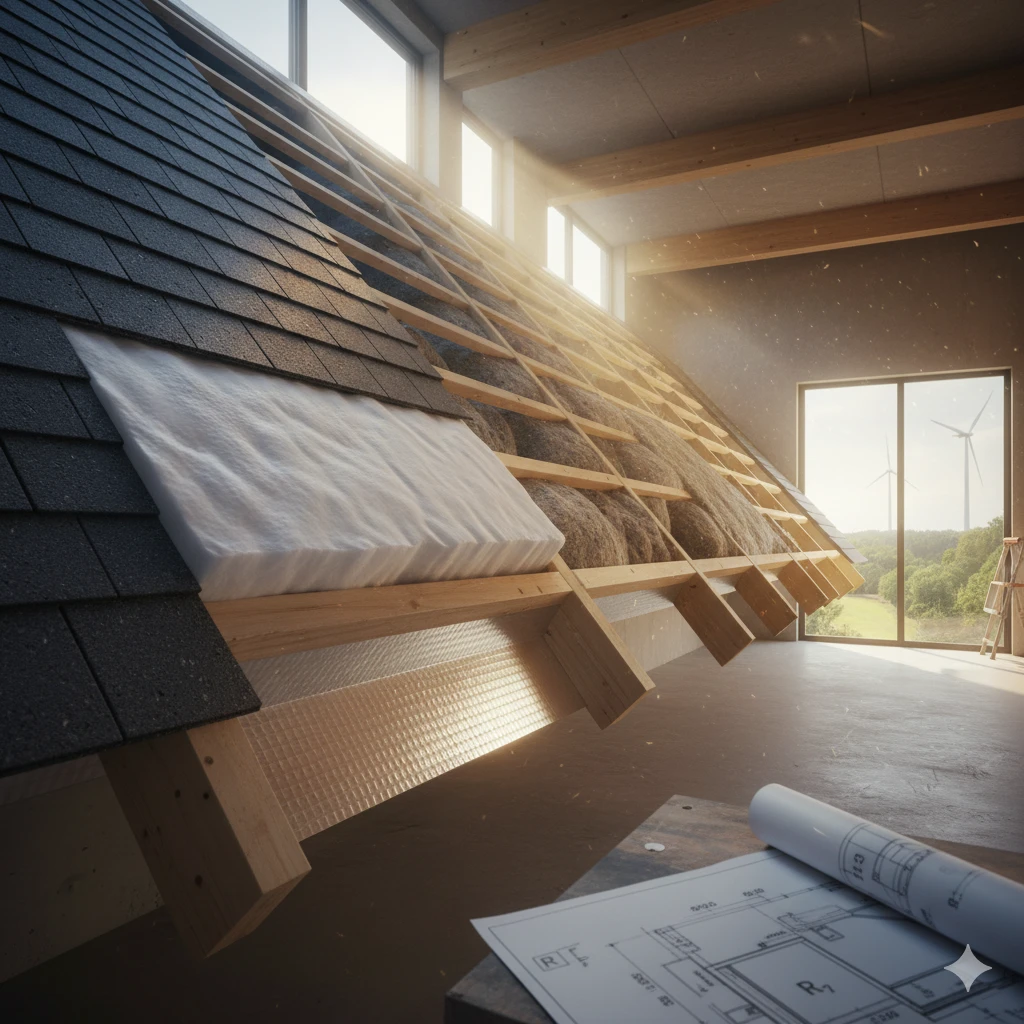
R-value stands for “thermal resistance.” It tells you how well a material slows down the transfer of heat. The higher the R-value, the better the insulation performs. In summer, a high R-value roof keeps cool air inside; in winter, it keeps warm air from escaping. This translates to lower energy bills, less strain on HVAC systems, and a more comfortable interior environment.
For commercial flat roofs or residential attics, insulation is your first line of defense against extreme temperatures. If your insulation underperforms, you’ll feel it in rising utility costs and inconsistent indoor temperatures.
How R-Value Is Measured
R-value is expressed as the amount of thermal resistance a material provides per inch of thickness. The formula compares the difference in temperature across the material with the amount of heat that passes through it.
Polyisocyanurate (Polyiso): ~R-6 per inch
Extruded Polystyrene (XPS): ~R-5 per inch
Expanded Polystyrene (EPS): ~R-4 per inch
Fiberglass Batt: ~R-3.2 per inch
Spray Foam (Closed Cell): ~R-6 to R-7 per inch
Adding thickness increases total R-value. For example, two inches of polyiso delivers roughly R-12.
Recommended R-Values by Climate Zone
Building codes and energy guidelines specify minimum R-values based on climate. In much of the Midwest—Northern Indiana and Southern Michigan included—commercial flat roofs typically need R-25 to R-30 or higher to meet current energy codes. Colder regions may call for R-35 or more, while warmer southern climates can be slightly lower.
Always check local building codes and Energy Star recommendations. Meeting or exceeding these standards ensures compliance and maximizes efficiency.
Factors That Influence Effective R-Value
The number printed on an insulation product assumes ideal conditions. In real-world installations, several factors can reduce actual performance:
Moisture: Wet insulation loses its ability to resist heat flow, sometimes cutting effective R-value in half.
Installation Quality: Gaps, compression, or poorly sealed seams create “thermal bridges” where heat escapes.
Aging: Some materials settle or degrade, lowering R-value over time.
Roof Design: Multiple layers, venting, and vapor barriers all affect overall thermal resistance.
Because of these variables, a professional installation and regular maintenance are critical.
R-Value and Energy Savings
Each additional increment of R-value improves thermal performance and lowers heating and cooling costs. Upgrading a 10,000-square-foot flat roof in Northern Indiana or Southern Michigan from R-15 to R-30 can reduce annual energy bills by 20–30%—often $2,000–$5,000 per year depending on utility rates and building use. Many projects achieve a payback period of five to eight years, especially when combined with available tax credits and utility rebates.
Choosing the Right Insulation
Not all insulation is created equal. Consider R-value per inch, cost, fire rating, and moisture resistance:
Polyiso: High R-value and excellent fire performance; widely used in commercial flat roofs.
XPS/EPS: Good balance of cost and moisture resistance.
Mineral Wool: Outstanding fire resistance and soundproofing, but heavier and slightly lower R-value.
Spray Foam: Seamless coverage and very high R-value, ideal for eliminating air leaks.
A roofing contractor can recommend the best material for your roof type and climate.
Installation Best Practices
Even the best insulation won’t perform if it’s poorly installed. Key steps include:
Conducting an energy audit to determine target R-value and locate thermal bridges.
Using vapor barriers to keep moisture from degrading insulation.
Ensuring continuous coverage with no gaps or compression.
Coordinating insulation upgrades with a roof replacement to minimize disruption and labor costs.
Common Mistakes to Avoid
Undersizing R-value to save money upfront, which increases energy costs long-term.
Skipping Building Codes or ignoring manufacturer specifications, which can void warranties.
Neglecting Maintenance: Allowing small leaks or standing water can quickly ruin insulation and wipe out its R-value benefits.
Conclusion & Action Plan
R-value is more than a technical detail—it’s the key to a roof that performs efficiently and lasts longer. By understanding how R-value works and ensuring proper installation, you can cut energy bills, protect your building, and stay comfortable through every season.
Next Steps:
Schedule an Energy Audit: Determine your current R-value and where heat is escaping.
Compare Materials: Weigh R-value per inch, cost, and moisture resistance.
Plan an Upgrade: Pair insulation improvements with roof maintenance or replacement to maximize ROI.
With the right insulation and attention to R-value, you’ll create a building that’s energy-efficient, comfortable, and cost-effective for decades to come.