Estimated Reading Time: 9 minutes
The biggest mistake commercial building owners make with flat roof maintenance is waiting for visible problems before taking action. By the time you see water stains on your ceiling or pooling water on your roof, you're already looking at thousands in repair costs instead of hundreds in prevention.
Most facility managers treat flat roofs like they're bulletproof. They're not. A flat roof that goes without proper maintenance will fail 3-5 years earlier than one that gets regular attention. For a commercial building, that's the difference between a $15,000 maintenance budget and a $75,000 emergency replacement.
The good news? Every mistake on this list is preventable. More importantly, fixing these errors doesn't require a roofing degree—just a shift from reactive to proactive thinking.
Mistake #1: Skipping Bi-Annual Inspections
Most building owners inspect their flat roof only when something goes wrong. That's like checking your car's oil only when the engine seizes.
What this looks like: You last climbed on your roof when the previous tenant moved out two years ago. You figure "no news is good news" and assume everything's fine because you don't see water damage inside.
Why people do this: Flat roofs seem low-maintenance compared to pitched roofs. No missing shingles to spot from the ground. No obvious wear patterns visible from below. The problems are hidden until they become disasters.
The real cost: A small puncture that could be sealed with $50 worth of materials becomes a section replacement costing $2,500 when water infiltrates the insulation layer.
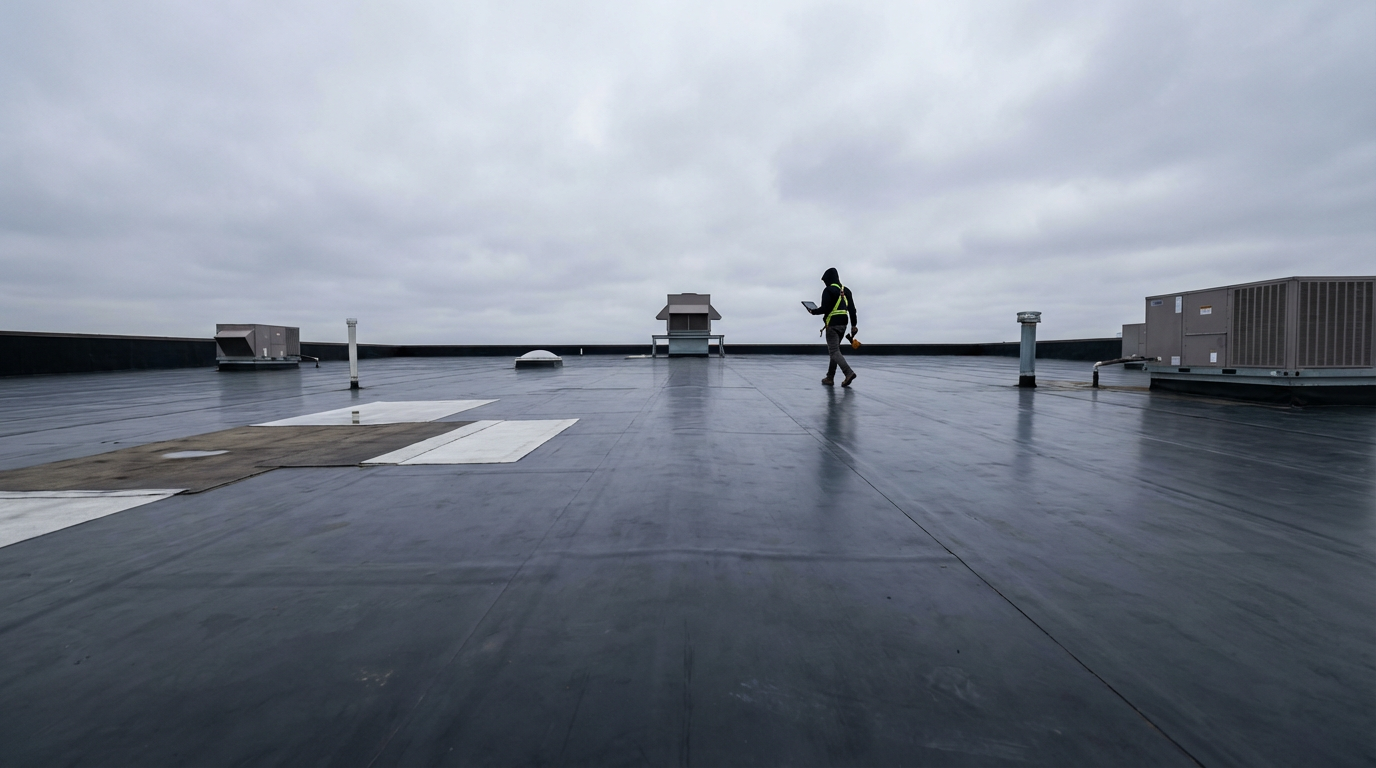
What to do instead: Schedule professional inspections every spring and fall. Your inspector should check membrane condition, drainage systems, flashing integrity, and penetration seals. Document everything with photos and maintain a repair history.
Warning signs you're making this mistake: You can't remember the last time someone was on your roof, you have no maintenance records, or you're discovering problems only when tenants complain about leaks.
Mistake #2: Ignoring Drainage Issues
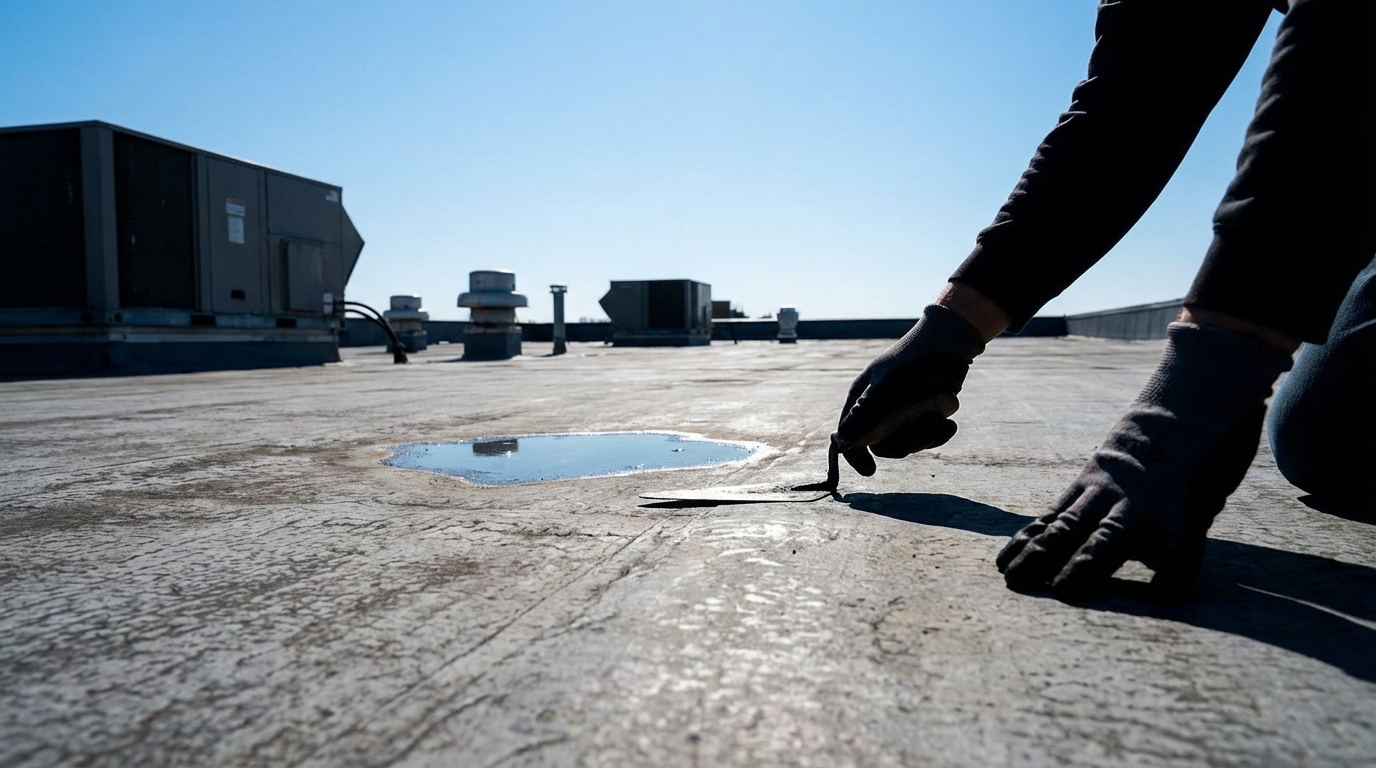
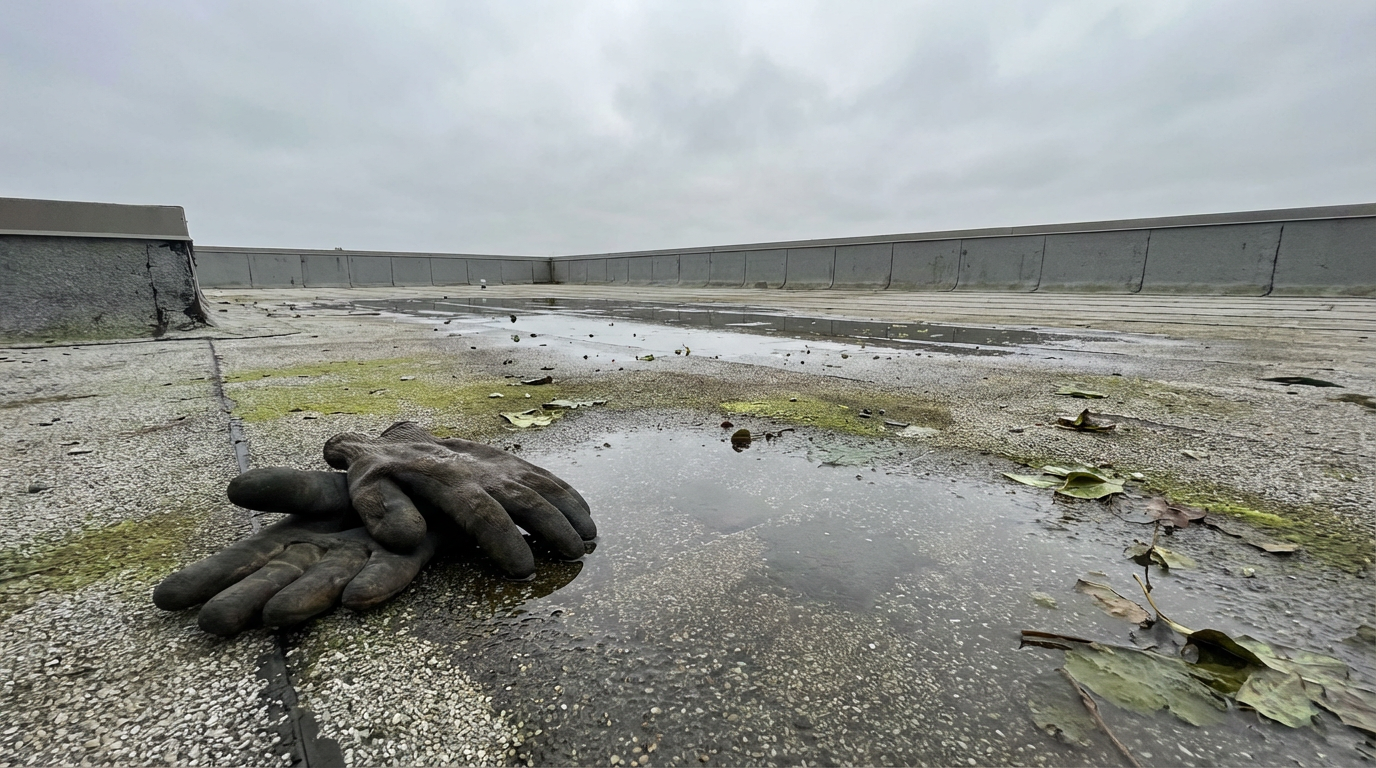
Standing water is flat roof enemy number one. Yet building owners routinely ignore puddles that persist 48 hours after rainfall, thinking they'll eventually evaporate.
What this looks like: You notice water pooling in certain areas after storms but figure it's normal for flat roofs. Maybe you even joke about your "rooftop pond."
Why people do this: They don't understand that "flat" roofs aren't actually flat—they have a slight slope to direct water toward drains. Standing water indicates slope problems, blocked drains, or structural settling.
The real cost: Standing water accelerates membrane deterioration, adds structural load, creates freeze-thaw damage in winter, and provides breeding grounds for mosquitoes and algae.
What to do instead: Address drainage issues immediately. Clear blocked drains, remove debris, and consider tapered insulation systems to improve slope. Any water that doesn't drain within 48 hours needs professional attention.
Warning signs you're making this mistake: You see the same puddles in the same spots after every rain, drains are clogged with leaves or debris, or you notice water stains around drain areas inside your building.
Mistake #3: DIY Repairs on Critical Components
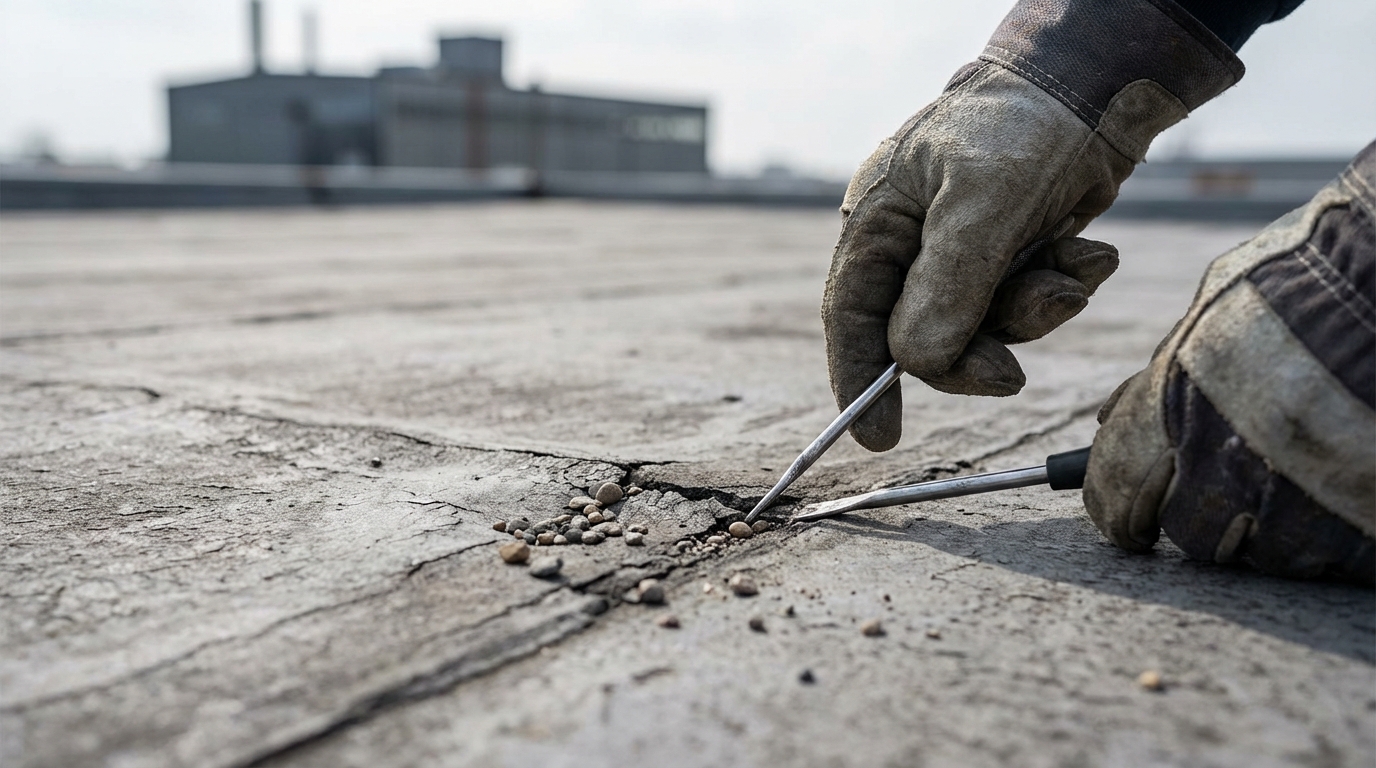
Flat roof repairs look deceptively simple. Slap some sealant on a crack and call it fixed, right? Wrong. Amateur repairs often cause more damage than the original problem.
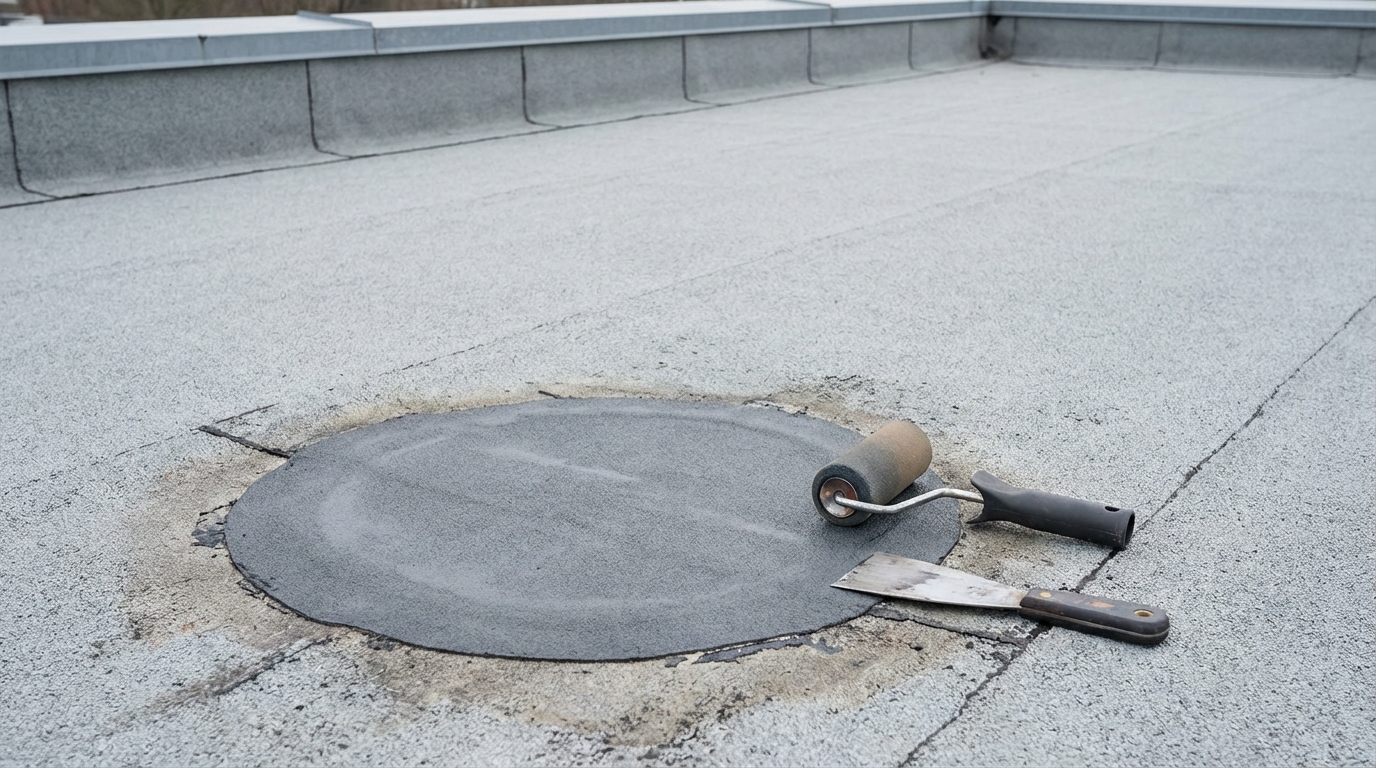
What this looks like: Your maintenance crew patches visible cracks with hardware store caulk, applies roofing cement over wet surfaces, or uses incompatible materials that don't bond properly with your existing membrane.
Why people do this: Emergency repairs feel urgent, professional help seems expensive for "small" problems, and basic patches appear straightforward.
The real cost: Improper repairs void warranties, trap moisture that causes hidden damage, and often fail within months, requiring complete section replacement.
What to do instead: Handle only basic maintenance like debris removal and drain cleaning in-house. For anything involving the membrane, flashing, or structural components, call professionals. The labor cost is minimal compared to fixing botched repairs.
Warning signs you're making this mistake: Your "temporary" patches keep failing, you're making multiple repairs to the same areas, or you're using generic sealants instead of membrane-specific materials.
Mistake #4: Neglecting Flashing and Penetrations
Ninety percent of flat roof leaks start at flashing or penetrations—not the main membrane. Yet these critical areas get the least attention during routine maintenance.
What this looks like: You focus on the large membrane areas while ignoring the seals around HVAC units, vent pipes, and roof edges. You assume that because flashing was installed correctly, it stays correct forever.
Why people do this: Flashing problems aren't obvious until they fail catastrophically. The main membrane looks more important because it covers more area. Penetration maintenance requires getting close to equipment that might be running.
The real cost: A failed flashing seal can dump hundreds of gallons directly into your building during a single storm. Water enters at ceiling level and spreads horizontally before becoming visible, causing extensive hidden damage.
What to do instead: Inspect every penetration and flashing detail during each maintenance visit. Check for cracked sealants, loose fasteners, and separation gaps. Re-seal proactively before problems develop.
Warning signs you're making this mistake: You see rust stains around metal flashing, sealants are cracked or pulling away, or you notice water damage near equipment or at building edges.
Mistake #5: Using the Wrong Materials for Your Climate
Northern Indiana's freeze-thaw cycles destroy flat roofs that aren't designed for thermal movement. Using materials rated for warmer climates is a recipe for premature failure.
What this looks like: You choose repair materials based on price rather than compatibility with your existing system and local weather conditions. You use southern-rated products or generic sealants not designed for temperature extremes.
Why people do this: All flat roof materials look similar, climate ratings aren't clearly marked on retail products, and cheaper options seem like smart savings.
The real cost: Materials that can't handle thermal expansion crack within the first winter, requiring complete re-work. Incompatible materials may not bond properly, creating immediate failure points.
What to do instead: Use only materials specifically rated for your climate zone and compatible with your existing membrane type. When in doubt, consult with commercial flat roof repair specialists who understand local conditions.
Warning signs you're making this mistake: Repairs fail quickly after installation, you see cracking along repair lines after cold weather, or materials are pulling away from the existing membrane.
Mistake #6: Postponing Minor Repairs
Small problems become big problems exponentially on flat roofs. A hairline crack that costs $200 to fix today becomes a $5,000 section replacement next year.
What this looks like: You create a mental list of "small repairs to handle later" and keep adding to it without actually scheduling the work. You prioritize visible interior issues over roof maintenance that seems less urgent.
Why people do this: Minor roof issues don't disrupt business operations, the problems aren't visible to customers or tenants, and emergency repairs always seem to take priority over preventive work.
The real cost: Water infiltration spreads horizontally through insulation layers, creating damage far beyond the original problem area. What starts as a small membrane repair becomes insulation replacement, structural drying, and interior restoration.
What to do instead: Set aside specific budget and time for minor repairs every quarter. Treat small problems as urgent as major ones—they're just major problems that haven't finished developing yet.
Warning signs you're making this mistake: Your repair list keeps growing but never shrinks, you're always planning to "get to it next month," or you discover problems have worsened since you first noticed them.
Mistake #7: Skipping Professional Maintenance Plans
The biggest long-term mistake is treating flat roof maintenance as a series of one-off repairs instead of implementing a comprehensive prevention program.
What this looks like: You call roofers only when problems arise, you don't have maintenance records or schedules, and you're constantly surprised by repair needs that seem to come out of nowhere.
Why people do this: Maintenance contracts feel like unnecessary overhead when nothing's currently broken. Emergency repairs seem more cost-effective than ongoing service agreements.
The real cost: Reactive maintenance costs 3-5 times more than preventive programs. Emergency repairs disrupt business operations, void warranties, and lead to premature roof replacement.
What to do instead: Establish a relationship with Industrial Roofing Services Michiana professionals who understand commercial flat roof systems. Regular maintenance programs catch problems early, maintain warranties, and provide predictable budgeting.
Warning signs you're making this mistake: You can't predict when roof problems will occur, repair costs keep surprising you, or you're dealing with the same issues repeatedly.
Quick Reference: Flat Roof Maintenance Checklist
Monthly (or after severe weather):
- Clear debris from drains and gutters
- Check for standing water
- Inspect accessible flashing and penetrations
- Document any changes with photos
Quarterly:
- Professional inspection of entire roof system
- Address minor repairs immediately
- Update maintenance records
- Review upcoming seasonal preparation needs
Annually:
- Comprehensive professional assessment
- Plan major maintenance or improvements
- Review and update maintenance contracts
- Budget for next year's preventive work
Frequently Asked Questions
How often should I inspect my commercial flat roof?
Professional inspections twice yearly (spring and fall) plus monthly visual checks for debris and drainage issues. After severe weather, inspect immediately for damage.
Can I handle any flat roof maintenance myself?
Basic tasks like debris removal and drain cleaning are safe for building maintenance staff. Anything involving the membrane, flashing, or structural components requires professional expertise to avoid voiding warranties.
What's the biggest red flag that my maintenance program isn't working?
Recurring problems in the same areas indicate underlying issues aren't being addressed. If you're making multiple repairs to the same spots, you need professional assessment of the root causes.
How much should I budget for flat roof maintenance?
Plan for 2-4% of your roof replacement cost annually for preventive maintenance. A $50,000 roof should have a $1,000-2,000 annual maintenance budget to maximize its lifespan.
Do maintenance contracts really save money compared to emergency repairs?
Yes. Preventive maintenance typically costs 60-70% less than reactive repairs. More importantly, it prevents business disruption and extends roof life by 40-50%.
What happens if I ignore these maintenance mistakes?
Minor issues compound into major problems requiring emergency flat roof repair, interior damage restoration, and premature roof replacement. The total cost often exceeds 3-5 times what preventive maintenance would have cost.
The path forward is straightforward: stop treating your flat roof like it maintains itself. Start with a professional assessment to understand your current condition, then implement a regular maintenance schedule. Your roof is protecting your biggest business investment—treat it accordingly.
Don't wait for the next storm to reveal problems you could have prevented. A commercial roofer in Elkhart Indiana can assess your current maintenance gaps and help you avoid these costly mistakes before they impact your operations.