Estimated Reading Time: 6 minutes
Key Takeaways
Quality insulation lowers heating and cooling costs and eases strain on HVAC equipment.
Improved thermal control reduces expansion and contraction, extending the roof’s lifespan.
Rebates, tax credits, and increased property value help offset initial costs, often delivering payback in as little as five years.
In Northern Indiana & Southern Michigan, upgraded insulation can often save $1.25 to $3.50 per square foot per year in energy costs for many commercial buildings.
Why Insulation Matters
Flat roofs face extreme temperature swings, from scorching summer sun to winter ice. Without proper insulation, that heat and cold transfer directly into the building, forcing HVAC systems to work harder. Good insulation acts like a thermal shield, stabilizing interior temperatures and protecting the roof structure from damaging expansion and contraction. The result: lower energy bills, longer roof life, and greater comfort for everyone inside.
Understanding Flat Roof Insulation
Several materials are used to insulate commercial flat roofs, each with unique properties:
Polyisocyanurate (Polyiso): High R-value per inch and excellent fire resistance.
Expanded Polystyrene (EPS): Budget-friendly with good moisture resistance.
Extruded Polystyrene (XPS): Strong, dense, and durable for heavy-traffic roofs.
Mineral Wool: Superior fire resistance and soundproofing.
Spray Foam: Seamless coverage that fills gaps and minimizes air leakage.
The R-value—how well a material resists heat flow—is key. Higher R-values mean better insulation and greater energy savings. Your roofing contractor can recommend the ideal thickness and material for your climate zone and building use.
Financial Benefits, Local Savings & ROI
Energy Savings
In Northern Indiana and Southern Michigan, where heating dominates winter energy use and cooling adds up in summer, upgrading a flat roof from minimal insulation (say R-10–R-15) to more robust insulation (e.g., R-25–R-30) can often provide 20–30% savings on heating and cooling costs. For a 10,000 sq ft commercial building with average energy bills of $12,000–$18,000/year, that’s typically $2,400–$5,400 in savings annually.
Tax Credits & Incentives
Michigan utilities (like Consumers Energy, DTE) and Indiana utility programs often offer rebates for energy efficiency upgrades including insulation. Additionally, federal tax incentives can cover part of the cost. These incentives can reduce the “net cost” of insulation upgrades by 10–30% in many cases. For instance, material + labor costs for insulating a 10,000 sq ft flat roof might be $25,000–$40,000; after incentives, the net cost might drop to $20,000–$30,000.
Reduced HVAC Wear
When your building stays closer to ideal internal temperature (less heat loss in winter & less heat ingress in summer), HVAC equipment runs less frequently and more efficiently. This often results in fewer breakdowns and extended lifespan of equipment. In these regions, an insulation upgrade often reduces HVAC running hours by 10–25%, translating into maintenance and replacement savings over time valued at hundreds to a few thousand dollars annually, depending on system size.
Increased Property Value
Buildings rated for better energy efficiency often attract higher lease rates or sale values. In Southern Michigan / Northern Indiana markets, properties with lower operating costs can command 2–5% higher valuations, especially in times of rising energy prices or stricter building codes.
Extending Roof Lifespan
Insulation does more than save money on utilities—it protects the roof itself. By reducing thermal expansion and contraction, insulation minimizes stress on seams, flashing, and membranes. A stable roof temperature prevents cracks, leaks, and premature aging. Moisture-resistant insulation also blocks condensation that can rot decking or corrode metal supports. Fewer freeze–thaw cycles and less trapped moisture mean your roof can last years beyond its expected service life.
Environmental Impact
Lower energy consumption translates to a smaller carbon footprint. Pairing upgraded insulation with reflective “cool roof” coatings or even a green roof system can further reduce heat gain and improve sustainability credentials—an advantage for businesses aiming to meet ESG or LEED goals.
Cost Factors and Payback Period
Upfront Costs: In Northern Indiana / Southern Michigan, insulating a 10,000 sq ft flat roof with a decent R-value increase (say from R-15 to R-30) generally costs $2–$6 per sq ft for materials + labor, depending on insulation type and thickness.
Payback Timeline: Based on energy savings (as noted above), with typical energy rates in the region, you might expect a payback period between 4 to 8 years—often shorter if energy prices rise or if incentives and rebates are well utilized.
Installation Best Practices
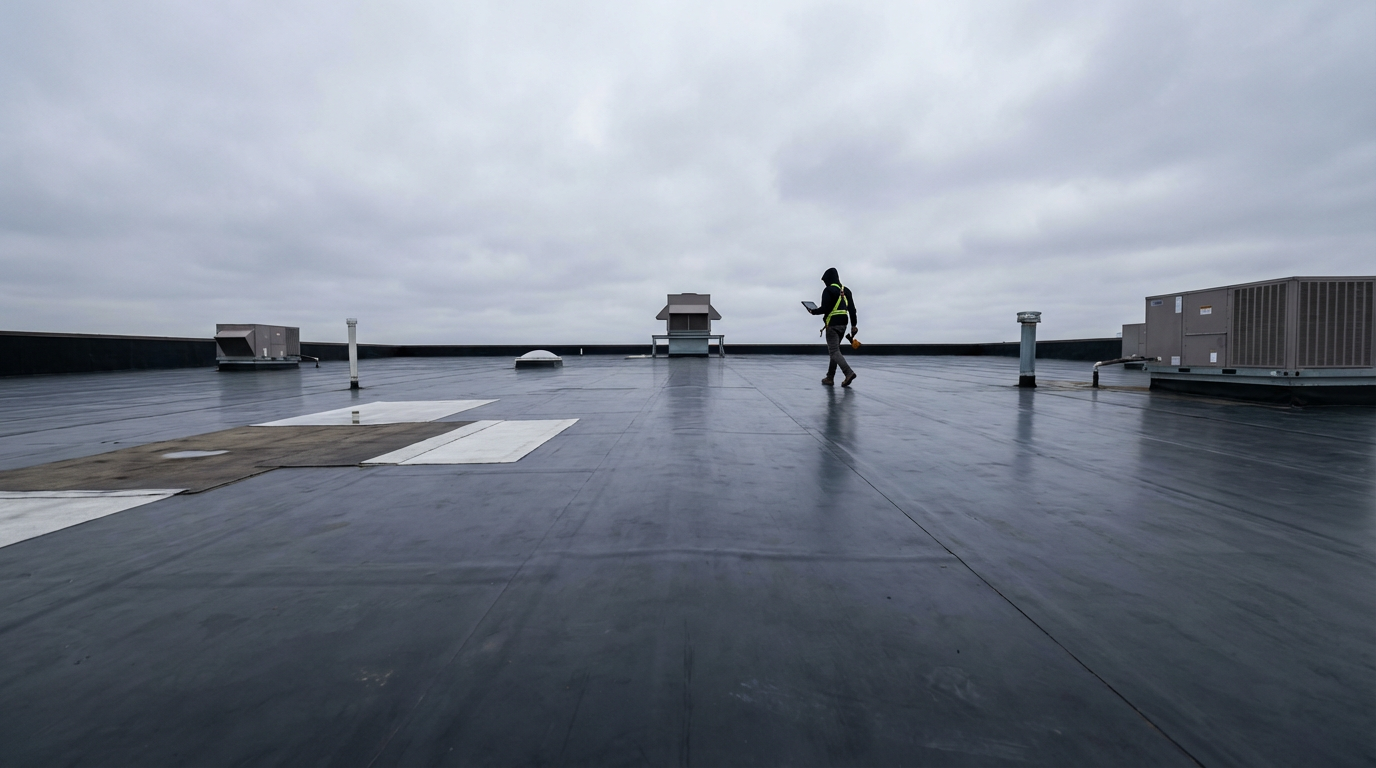
A professional energy audit is the first step. Contractors evaluate current insulation levels, identify thermal bridges, and recommend the right R-value. Proper installation is critical: seams must be sealed to prevent moisture traps, and fasteners must not create cold spots. Many owners coordinate insulation upgrades with a roof replacement or major repair to minimize disruption and labor costs.
Common Mistakes to Avoid
Skimping on R-Value to save money upfront—especially risky in Northern Indiana / Southern Michigan where both winter heating and summer cooling are significant.
Ignoring building codes or warranty rules; make sure your insulation upgrade and roof system remain compliant.
Covering existing leaks or structural damage; moisture in underlying materials undermines the benefits of insulation and leads to failure.
Partnering With the Right Contractor
Look for a commercial roofer experienced in both installation and energy-efficient design. Ask for:
Manufacturer certifications and references.
Detailed proposals with R-value calculations and payback estimates.
Documentation to claim rebates and tax incentives.
A reputable contractor will also offer maintenance plans to keep the insulation dry and effective for decades.
Conclusion & Action Plan
Upgrading flat roof insulation is more than a comfort improvement—it’s a financial strategy that pays for itself. Lower energy bills, extended roof life, and increased property value create a compelling return on investment that few other building upgrades can match.
Next Steps:
Schedule a professional energy audit to evaluate current insulation levels.
Research available federal, state, and utility incentives in Northern Indiana & Southern Michigan.
Request bids from certified commercial roofing contractors experienced with insulation upgrades.
If your roof is around 10,000 sq ft, you could see $2,000–$5,000+ in annual savings once the upgrade is complete—meaning the project likely pays for itself in around 4–8 years. That’s a powerful return for protection and comfort that lasts decades.