Estimated Reading Time: 6 minutes
Roof Overlay vs. Full Replacement: How to Know Which You Actually Need
Tru-Kote Roofing Systems | Commercial Flat Roofing | Elkhart, IN
When a commercial flat roof starts showing signs of wear, one of the first questions building owners ask is:
“Can I install a new roof over the existing one, or do I need a complete replacement?”
It’s a fair question. After all, a roof is a significant investment, and no property owner wants to spend more than necessary. However, choosing the wrong option can lead to larger expenses down the road.
In some situations, a roof overlay can extend the life of your existing system while reducing upfront costs. In others, a full replacement is the only solution that will properly protect your building.
Understanding the difference between these two approaches can help you make a confident and financially sound decision.
What Is a Roof Overlay?
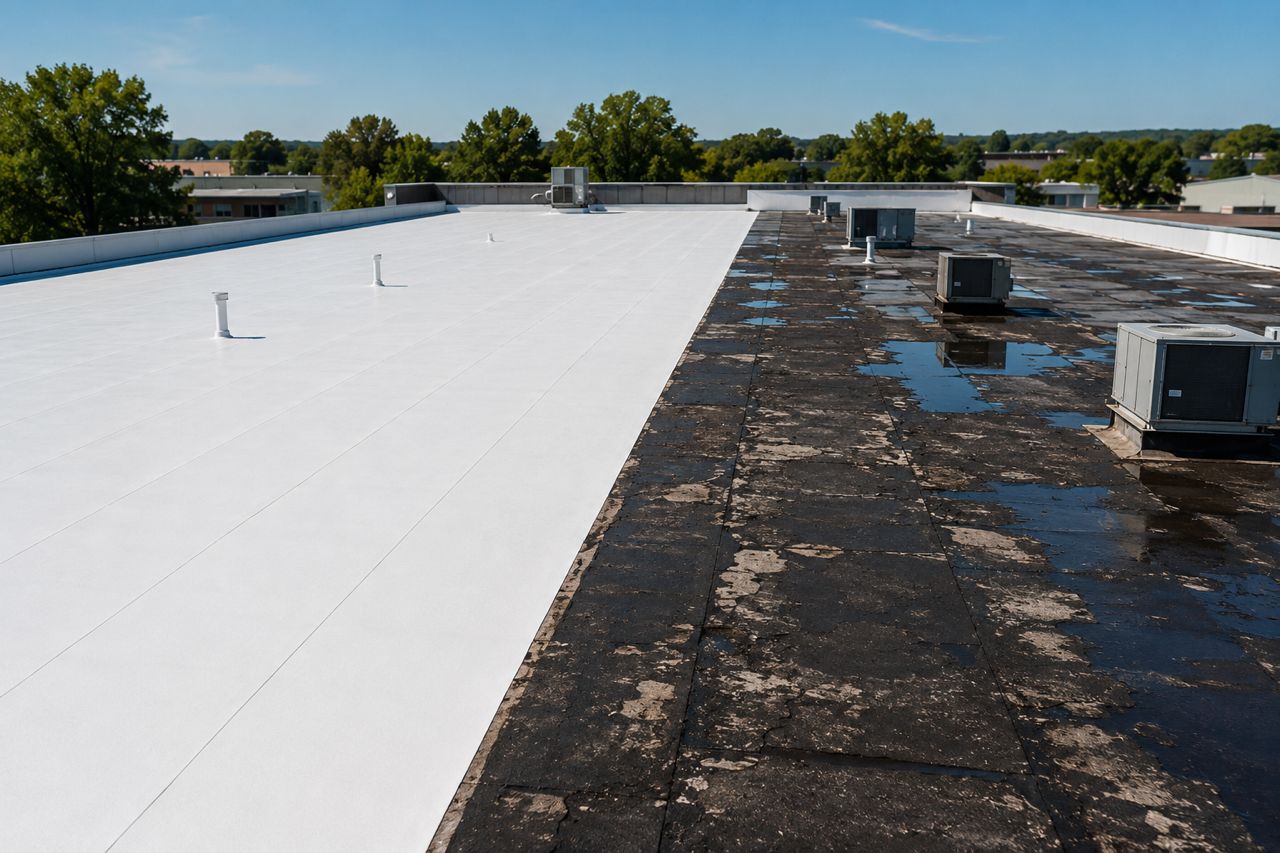
A roof overlay, sometimes called a roof recover, involves installing a new roofing membrane over an existing roof system without removing the original roof.
For commercial flat roofs, this often means installing a new TPO, PVC, or EPDM membrane over the current roofing assembly.
Property owners are often attracted to overlays because they typically:
Require less labor
Create less disruption to building operations
Generate less construction waste
Can be completed more quickly than a full replacement
When the existing roof is still structurally sound, an overlay can be a practical way to extend roof life while postponing a larger capital expense.
What Is a Full Roof Replacement?
A full roof replacement involves removing the existing roofing system down to the roof deck.
Once exposed, the deck and insulation can be inspected for moisture damage, deterioration, or structural concerns before a completely new roofing system is installed.
Although this process requires more time and investment, it provides several important advantages:
Hidden damage can be identified and repaired
Wet insulation can be removed
Drainage issues can be corrected
The new system begins with a clean foundation
Manufacturers often provide stronger warranty coverage
For aging or heavily damaged roofs, a full replacement frequently offers the greatest long-term value.
When a Roof Overlay Makes Sense
A roof overlay may be a suitable option when all of the following conditions are present:
The Existing Roof Has Only One Layer
Many building codes limit the number of roofing layers that can be installed on a commercial building. If a roof already has multiple layers, an additional overlay may not be permitted.
The Roof Is Structurally Sound
The existing roof membrane should be generally intact without widespread deterioration, severe blistering, or major separation.
Moisture Intrusion Is Minimal
Small isolated problem areas can often be repaired before an overlay is installed. However, widespread moisture beneath the roof system is a different story.
The Roof Deck Is In Good Condition
The deck should be free from soft spots, corrosion, rot, or structural weakness.
Budget Constraints Require A Short-Term Solution
For some building owners, an overlay can provide additional years of service life while allowing time to plan and budget for a future replacement.
When these conditions exist, a professionally installed overlay can be a cost-effective solution.
When a Full Replacement Is the Better Choice
While overlays have their place, there are situations where a complete replacement is the smarter investment.
Saturated Insulation
When water enters a roof system, insulation often absorbs and retains moisture.
Installing a new membrane over wet insulation traps that moisture inside the system, where it can continue causing damage.
This can lead to:
Reduced energy efficiency
Mold growth
Corrosion
Premature roof failure
Multiple Existing Roof Layers
If a roof has already been recovered in the past, adding another layer may not meet building code requirements and can place unnecessary weight on the structure.
Extensive Roof Deterioration
Widespread membrane failure, open seams, large areas of ponding water, and recurring leaks often indicate that the roofing system has reached the end of its useful life.
Structural Damage
Soft decking, sagging sections, or visible structural concerns must be addressed before any new roofing system is installed.
An overlay cannot solve structural problems.
Chronic Drainage Issues
If your roof consistently experiences standing water due to poor slope or drainage design, a replacement may provide the opportunity to correct those underlying issues.
Why Professional Moisture Testing Matters
One of the biggest challenges in commercial roofing is that much of the damage isn’t visible from the surface.
A roof can appear relatively healthy while hiding moisture beneath the membrane.
This is why professional roofing contractors often use moisture detection methods such as infrared roof scans.
These inspections help identify:
Wet insulation
Hidden leaks
Areas of trapped moisture
Developing problem areas
Without proper testing, it is difficult to determine whether an overlay is truly appropriate.
Comparing Long-Term Value
Many property owners focus primarily on upfront cost.
While that is understandable, the better question is often:
“Which option provides the best long-term value?”
An overlay may cost less initially, but if hidden moisture or structural problems remain, those issues can continue to worsen beneath the new membrane.
In contrast, a replacement addresses underlying problems before they become more expensive repairs.
The lowest-cost option today is not always the least expensive option over the next ten to twenty years.
Questions To Ask Before Making A Decision
Before committing to either option, ask your roofing contractor:
Has the roof been tested for moisture?
How many roofing layers currently exist?
Is the insulation dry and performing properly?
Are there any deck or structural concerns?
Are there drainage issues that should be corrected?
What warranty options are available for each solution?
The answers to these questions often make the best choice much clearer.
Frequently Asked Questions
Is a roof overlay always cheaper?
Typically, yes. However, lower upfront cost does not always translate into lower lifetime cost if hidden problems remain within the roofing system.
How long can a roof overlay last?
When installed over a suitable roof system, an overlay can provide many additional years of service. Actual lifespan depends on the condition of the existing roof and the roofing material used.
Can every commercial roof receive an overlay?
No. Roof condition, moisture levels, building code requirements, and structural considerations all play a role in determining eligibility.
How do I know which option is right for my building?
The best way to determine the right solution is through a professional roof inspection that includes moisture detection and a thorough assessment of the roof system.
Make The Right Decision With A Professional Assessment
Every commercial roof is different. What works for one building may not work for another.
Before investing in a roof overlay or full replacement, it’s important to understand the true condition of your roof and the factors affecting its performance.
At Tru-Kote Roofing Systems, we help commercial property owners throughout Northern Indiana and Southwest Michigan evaluate their options with honest recommendations based on the condition of the roof—not simply the size of the project.
If you’re unsure whether your building needs an overlay or a complete replacement, contact Tru-Kote Roofing Systems today to schedule a professional roof assessment.