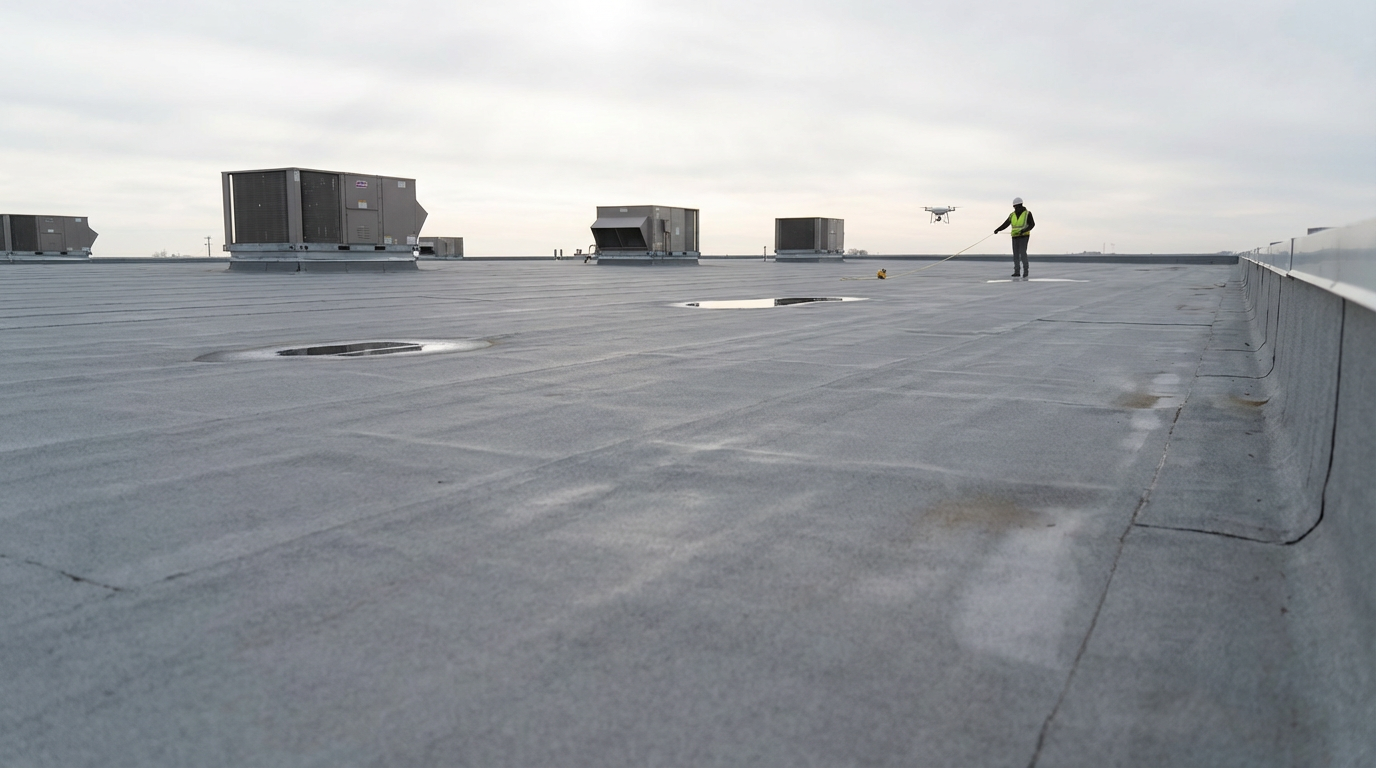
Estimated Reading Time: 6 minutes
For commercial flat roof inspection, hire a professional—unless you're only checking for obvious debris after a minor storm. DIY inspections miss 80% of the problems that turn into expensive emergencies, and walking on your roof without proper training can void warranties and create new damage. Here's why professional inspection pays for itself.
Your flat roof protects everything inside your building. When facility managers try to save money with DIY inspections, they often end up spending 10x more on emergency repairs that could have been prevented. Professional commercial flat roof inspection catches problems early, extends roof life, and keeps your building dry when it matters most.
What Makes Flat Roof Inspection Different
Flat roofs hide their problems. Unlike pitched roofs where issues show up as obvious leaks or missing shingles, flat roof problems develop slowly beneath the surface. Membrane degradation, ponding water, and flashing failures can exist for months before you notice interior damage.
Commercial buildings face additional challenges. Larger surface areas mean more potential failure points. HVAC units, skylights, and rooftop equipment create penetrations that need specialized attention. A warehouse roof in Northern Indiana deals with snow loads, freeze-thaw cycles, and summer heat that stress materials in ways homeowners never see.
The stakes are higher too. A residential roof leak might damage some drywall. A commercial roof failure can shut down operations, damage inventory, and trigger insurance claims that affect your premiums for years.
DIY Inspection: What You Can (and Should) Do
DIY inspection works for basic maintenance checks. After storms, you can safely inspect from the ground or through accessible areas to look for:
Obvious debris - branches, trash, or equipment that's clearly out of place
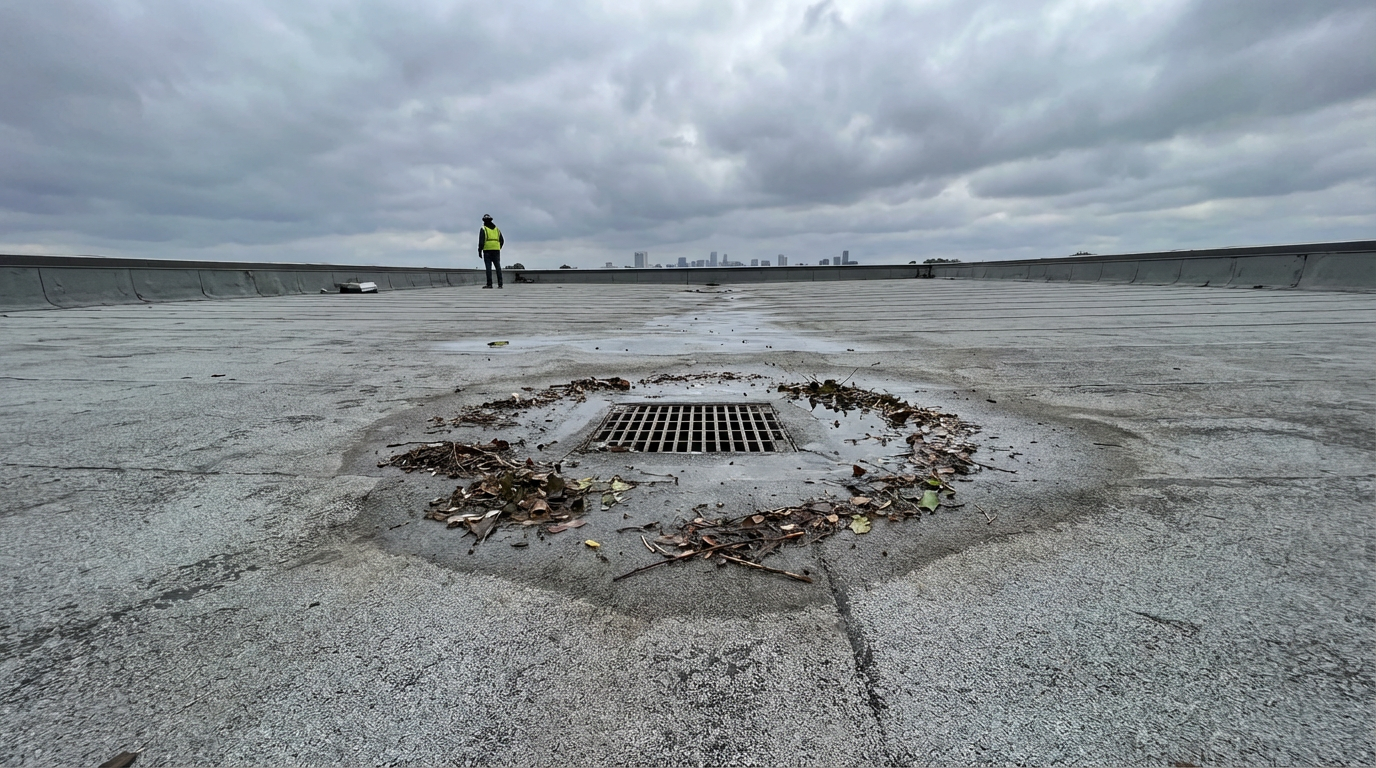
Visible ponding - standing water more than 48 hours after rain
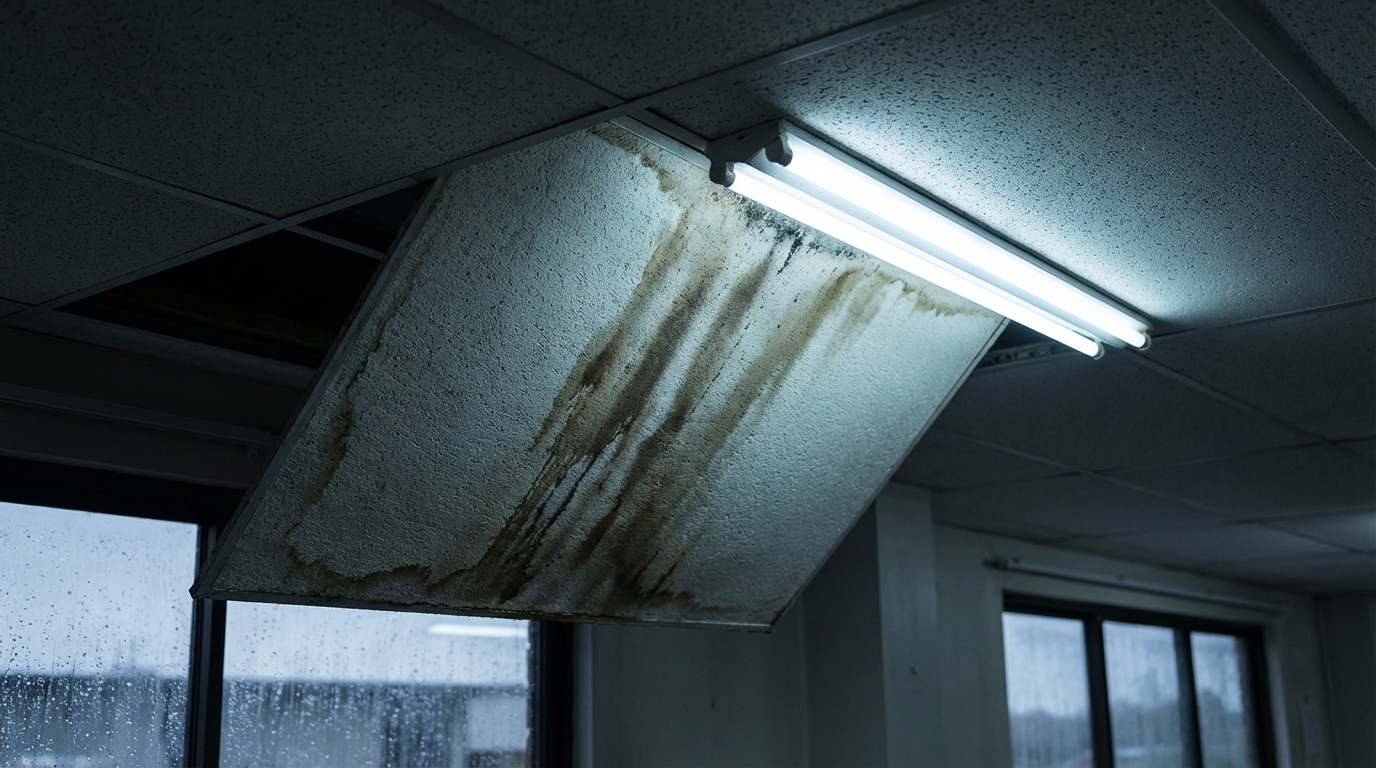
Interior signs - water stains, drips, or musty odors inside the building
Gutters and drains - clogs or overflow during rain
These ground-level checks help you spot immediate problems that need attention. But they're just the beginning. DIY inspection misses the subtle signs that predict major failures.
The Limits of DIY
Walking on a flat roof requires knowledge of load limits, safe pathways, and membrane types. EPDM rubber roofs can puncture from sharp objects or concentrated weight. TPO and PVC membranes have seams that fail when stressed incorrectly. Modified bitumen systems need different inspection techniques than single-ply membranes.
Most facility managers lack the training to identify early membrane degradation, improper flashing installation, or structural issues that show up as subtle roof surface changes. You might see a small bubble in the roofing material and think it's cosmetic. A professional knows that bubble indicates moisture infiltration that will spread and eventually cause structural damage.
Professional Inspection: What You're Really Paying For
Professional industrial roofing services Michiana companies bring systematic inspection processes that catch problems before they become emergencies. Here's what separates professional inspection from DIY attempts:
Specialized Equipment and Training
Infrared cameras detect moisture beneath the membrane that's invisible to the naked eye. Core sampling tools verify insulation condition without major disruption. Professionals know how to walk safely on different membrane types and can access areas around HVAC equipment that untrained personnel should avoid.
Certified inspectors understand building codes, manufacturer specifications, and warranty requirements. They know which problems need immediate attention versus issues you can address during planned maintenance windows.
Comprehensive Documentation
Professional inspections include detailed reports with photos, measurements, and prioritized repair recommendations. This documentation proves invaluable for insurance claims, warranty work, and budget planning. You get a roadmap for maintaining your roof rather than just a list of current problems.
Many commercial roofers provide digital inspection reports that track changes over time. This historical data helps predict when major roof components will need replacement, allowing you to budget appropriately rather than facing surprise capital expenses.
Cost Analysis: DIY vs Professional
DIY inspection costs your time plus potential safety risks. Professional inspection typically runs $300-800 for commercial buildings, depending on size and complexity. That seems expensive until you consider what missed problems cost:
Emergency leak repair - $2,000-5,000 plus business interruption
Interior damage - $5,000-50,000 depending on what gets wet
Premature roof replacement - $8-15 per square foot when caught late vs. $2-4 for preventive repairs
Insurance deductibles - Often $5,000-25,000 for commercial properties
Professional inspection pays for itself if it catches one moderate problem early. The real value comes from extending your roof's useful life through proper maintenance scheduling.
Hidden Costs of DIY Gone Wrong
Walking on your roof incorrectly can void manufacturer warranties. Many commercial roofing warranties require professional inspection and maintenance to remain valid. DIY damage often isn't covered by insurance, leaving you responsible for repairs that could have been prevented.
Safety incidents create additional liability. Worker's compensation claims, OSHA violations, and potential lawsuits make DIY roof access a significant business risk for most commercial properties.
When DIY Makes Sense (Rare But Real)
DIY inspection works in specific situations:
Small, accessible buildings - Single-story retail spaces with easy roof access and simple flat roof systems can be safely inspected by trained maintenance staff.
Post-storm debris checks - Removing obvious debris after minor storms doesn't require professional expertise, though you should still have professionals assess any damage.
Between professional inspections - Monthly visual checks from the ground help you spot obvious problems between annual professional inspections.
Buildings with full-time maintenance staff - Large facilities with trained maintenance teams can handle routine inspections if staff receive proper training on roof safety and problem identification.
The Professional Inspection Process
Understanding what professional inspection includes helps you evaluate proposals and ensure you're getting comprehensive service:
Structural Assessment
Professionals check for proper drainage, structural integrity, and load-bearing capacity. They identify areas where ponding water indicates structural settling or inadequate slope. This structural analysis prevents problems that DIY inspection never catches.
Membrane and Flashing Evaluation
Detailed examination of roof membrane condition, seam integrity, and flashing performance requires specialized knowledge. Professionals know how different materials age and can predict when components will need replacement based on current condition.
Flashing around penetrations, edges, and equipment requires particular attention. These areas fail first and cause the most expensive damage when they leak. Professional inspection includes testing flashing integrity and identifying areas that need preventive maintenance.
Equipment and Penetration Review
HVAC units, skylights, and other rooftop equipment create unique challenges. Professionals verify that equipment supports are properly installed, flashing remains intact, and vibration hasn't caused damage over time.
Choosing the Right Professional Service
Not all commercial roofer in Elkhart Indiana companies provide the same inspection quality. Look for contractors who offer:
Certified inspectors with manufacturer training on your roof system type
Comprehensive reporting including photos, measurements, and repair priorities
Maintenance recommendations beyond just identifying current problems
Emergency response capability for problems that need immediate attention
Established local contractors understand regional weather patterns and common failure modes for buildings in your area. They can provide realistic timelines for repairs and help you plan maintenance around your business schedule.
Creating an Inspection Schedule
Professional inspection frequency depends on your roof age, type, and local conditions. Most commercial flat roofs benefit from:
Annual comprehensive inspection - Complete professional assessment including infrared scanning and detailed documentation.
Bi-annual basic inspection - Visual assessment of obvious problems,