Estimated Reading Time: 9 minutes
A flat roof leak becomes an emergency the moment water reaches your building's interior or threatens electrical systems. Period. This isn't about minor drips you can catch with a bucket—it's about situations that demand immediate action to prevent catastrophic damage to your property, inventory, and operations.
Most commercial property managers wait too long to call for emergency flat roof repair because they underestimate how quickly a "small" leak can escalate. By the time water is dripping onto your warehouse floor or pooling near electrical panels, you're already in crisis mode. The key is recognizing the warning signs before you reach that point.
The Clear Line Between Routine Repair and Emergency Response
Here's the definitive threshold: Any flat roof leak that poses immediate risk to people, property, or business operations is an emergency. This means:
Water near electrical systems - Even minor moisture around panels, outlets, or equipment creates shock and fire hazards
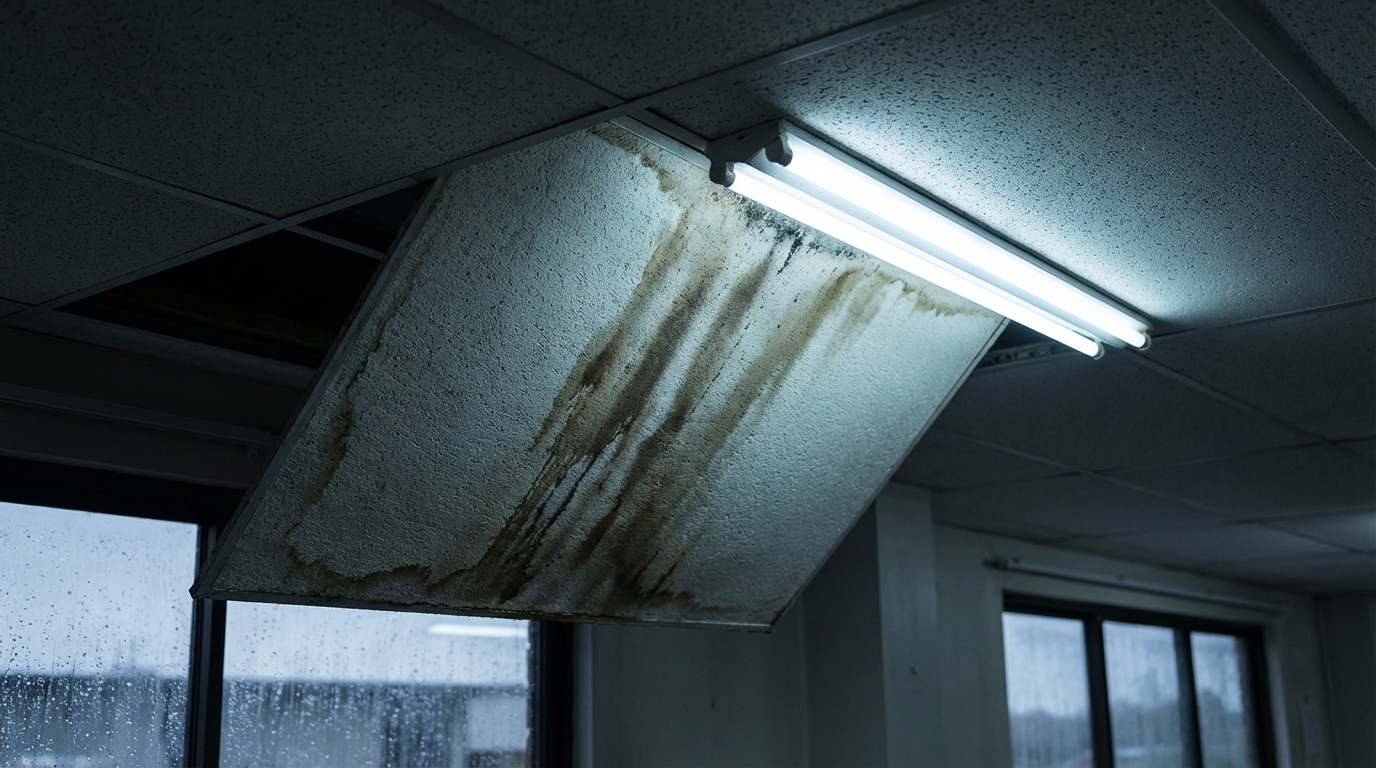
Active interior dripping - Water entering your building damages everything it touches and grows exponentially worse
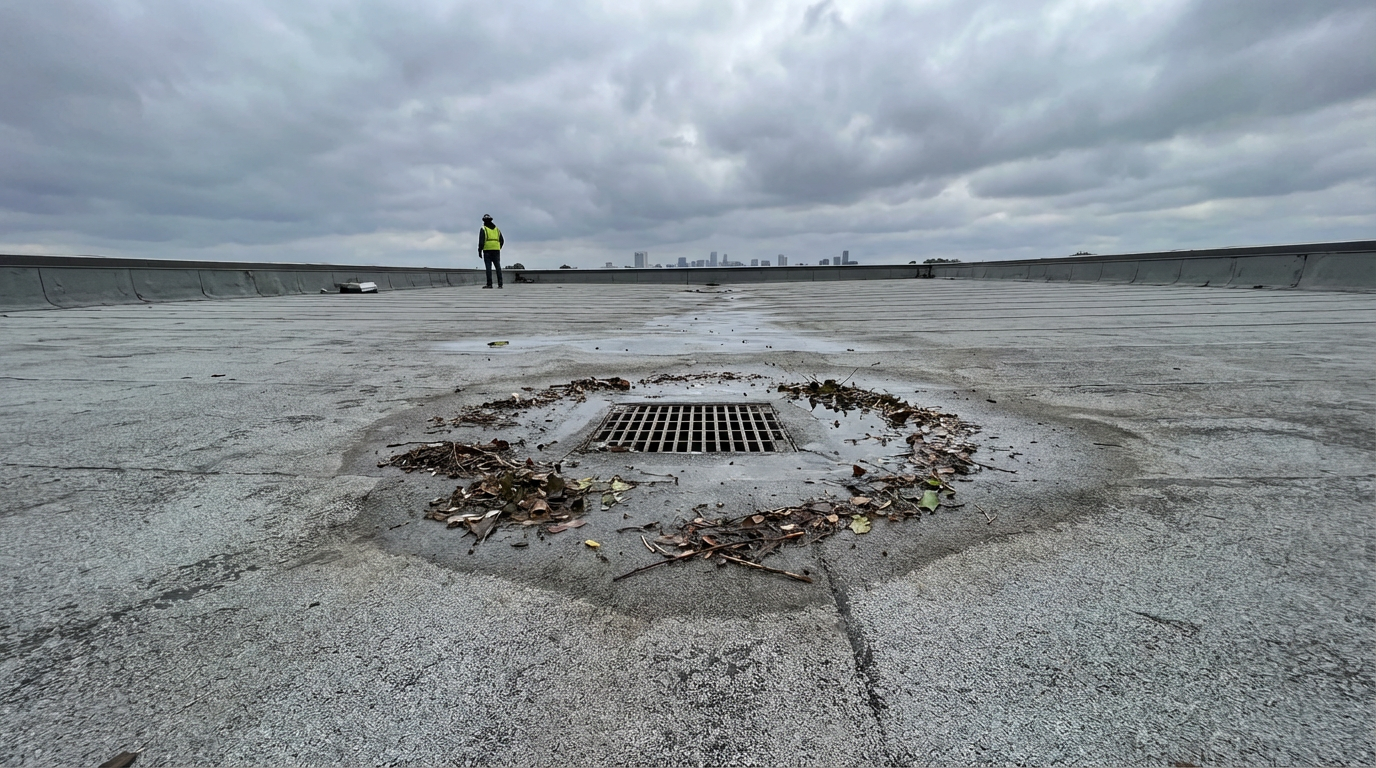
Pooling water on the roof surface - Standing water that doesn't drain within 48 hours indicates structural or drainage problems
Visible sagging or deflection - Your roof structure is compromised and could collapse
Storm damage with exposed decking - Open areas allow unlimited water intrusion
Everything else falls into routine maintenance territory. A stain on your ceiling that's been there for months? Not an emergency. A small bubble in your membrane that's not leaking? Schedule regular repair.
Why Speed Matters More Than You Think
Water damage follows an exponential curve, not a linear one. What starts as a $500 repair can become a $50,000 disaster in a matter of hours. Here's the timeline that catches most facility managers off guard:
Hour 1-6: Water finds the path of least resistance through your roof assembly. You might not even know there's a problem yet.
Hour 6-24: Water reaches interior spaces. Ceiling tiles, insulation, and drywall begin absorbing moisture. Electrical hazards develop.
Day 1-3: Mold growth begins in warm, humid conditions. Inventory damage accelerates. Business operations may be disrupted.
Day 3+: Structural damage becomes likely. Insurance claims get complicated. You're looking at weeks of repairs instead of hours.
The math is brutal but simple: Emergency response costs more per hour than routine repair, but the total cost stays manageable. Delayed response turns a roofing issue into a building restoration project.
The Emergency Response Framework That Actually Works
When you're dealing with an emergency flat roof situation, follow this exact sequence. Don't skip steps or change the order—this framework has been tested across hundreds of commercial properties in Northern Indiana and Southwest Michigan.
Step 1: Immediate Safety Assessment (First 15 Minutes)
Your first priority isn't the roof—it's preventing injury and electrical hazards. Turn off power to any areas where water is present or likely to reach. Evacuate personnel from affected zones. Document everything with photos for insurance purposes, but don't spend more than a few minutes on this initially.
Step 2: Emergency Containment (Next 30 Minutes)
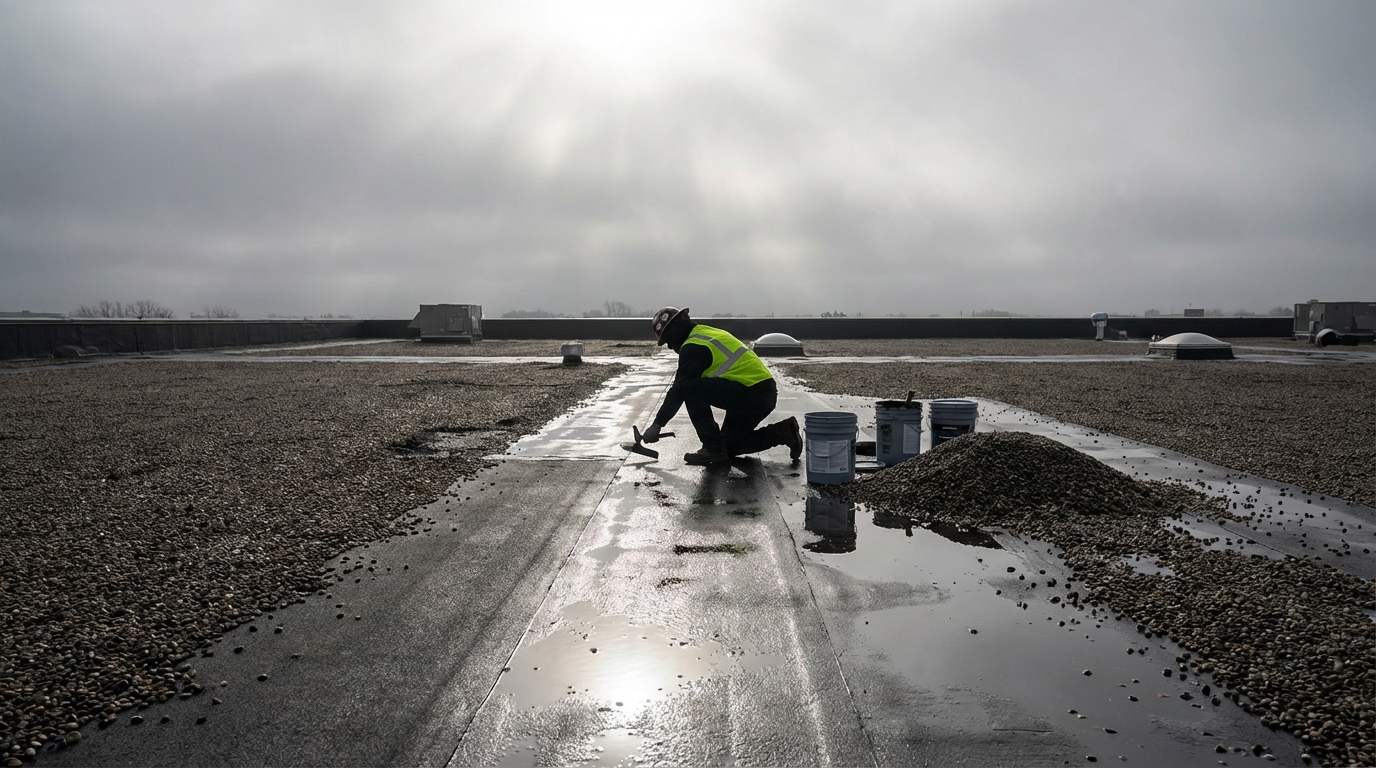
Stop additional water from entering your building. This might mean placing tarps over damaged roof areas, setting up temporary drainage, or redirecting water away from critical equipment. The goal isn't a permanent fix—it's buying time for proper repair.
Step 3: Professional Assessment (Within 2 Hours)
Contact a certified commercial roofer in Elkhart Indiana or your local area immediately. Emergency response teams can typically arrive within 1-2 hours and provide temporary weatherization while planning permanent repairs. Don't attempt to diagnose structural issues yourself.
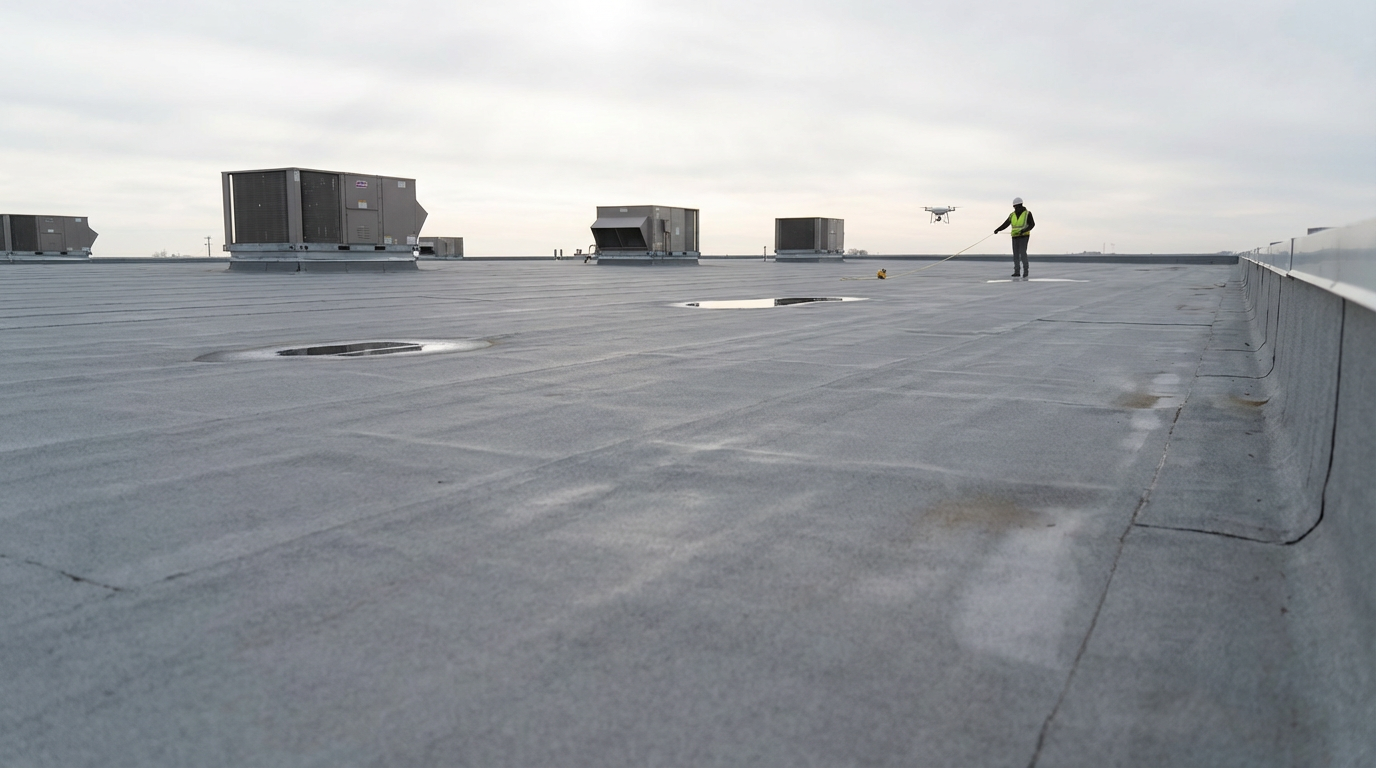
Professional roofers bring specialized equipment like thermal imaging cameras to identify the full extent of water intrusion, not just the visible damage. This prevents the common mistake of fixing the symptom while missing the root cause.
Why Most Emergency Responses Fail
The biggest mistake facility managers make is treating emergency flat roof repair like routine maintenance. They call their regular contractor, wait for a convenient appointment, and hope the problem doesn't get worse. This approach fails because:
Emergency repairs require different materials and techniques. Temporary weatherization uses specialized membranes and sealants designed for immediate water-stopping, not long-term durability. Your regular maintenance crew might not carry these products.
Weather windows matter more in emergencies. You can't wait for perfect conditions when water is actively entering your building. Emergency teams work in conditions that would postpone routine repairs.
Documentation requirements are stricter. Insurance companies scrutinize emergency claims more carefully. Professional emergency response teams know exactly what documentation you'll need and can provide detailed reports that support your claim.
The Hidden Costs of Delayed Response
Most property managers focus on the obvious costs—roof repair and water damage restoration. But delayed emergency response creates hidden expenses that often dwarf the initial repair costs:
Business interruption costs compound daily. If your warehouse can't operate safely, you're losing revenue while still paying fixed costs. A retail location with ceiling leaks loses customers immediately.
Inventory replacement often costs more than the original roof repair. Water-damaged products, equipment, and materials typically aren't salvageable, especially if contaminated by roofing materials or insulation.
Insurance deductible escalation happens when initial damage spreads. What starts as a roofing claim becomes a building claim, often triggering higher deductibles and more complex approval processes.
Code compliance upgrades get triggered when repairs exceed certain thresholds. Emergency repairs that could have been completed under maintenance allowances might require full roof replacement if delayed too long.
How to Prevent Emergency Situations
The best emergency response is prevention. Commercial flat roof repair becomes emergency repair when routine maintenance gets deferred. Here's the prevention framework that works:
Quarterly visual inspections catch 80% of problems before they become emergencies. Look for ponding water, membrane bubbles, flashing separation, and drain blockages. These are early warning signs, not cosmetic issues.
Annual professional inspections identify structural and system issues that visual checks miss. Thermal imaging, core samples, and adhesion testing reveal problems developing within your roof assembly.
Immediate storm response prevents weather damage from becoming water damage. After significant storms, have your roof inspected within 24-48 hours. Storm damage that's addressed immediately rarely becomes an emergency.
Drainage system maintenance eliminates the most common cause of flat roof emergencies. Blocked drains and gutters cause water backup that overwhelms even healthy roof membranes.
When to Call Professionals vs. Handle In-House
Your maintenance team can handle some emergency containment, but they shouldn't attempt repairs. Here's the clear dividing line:
Your team can: Place tarps and temporary coverings, redirect water flow, shut off utilities, document damage, and clear drains of obvious debris.
Professionals must: Assess structural integrity, perform membrane repairs, diagnose leak sources, provide weatherization that will last more than 24 hours, and document damage for insurance purposes.
The temptation to "fix it ourselves" is strong, especially when emergency service rates are 2-3 times normal repair costs. But improper emergency repairs often void warranties, complicate insurance claims, and create bigger problems than the original leak.
Emergency Response for Different Roof Types
Not all flat roofs respond to emergencies the same way. Your response strategy should match your roof system:
EPDM and TPO Membranes
Single-ply membranes fail suddenly rather than gradually. Small punctures can become large tears in high winds. Emergency repairs typically involve patch kits and temporary sealing, but these materials require specific surface preparation that takes time.
Modified Bitumen Systems
These multi-layer systems often develop leaks at seams and flashings. Emergency repairs can be more durable because heat-welded patches bond well to existing material, but they require specialized equipment.
Built-Up Roofing (BUR)
Older BUR systems typically leak through multiple small failures rather than single large ones. Emergency response focuses on surface sealing and drainage improvement rather than membrane replacement.
Metal Roofing
Metal roof emergencies usually involve fastener failure or panel separation. Temporary repairs use specialized sealants and mechanical fasteners, but proper repair requires matching materials and thermal expansion considerations.
Frequently Asked Questions
How quickly should I expect emergency roof repair response?
Professional emergency roofing teams should arrive within 1-2 hours during business hours and 2-4 hours after hours. Initial weatherization should be completed within 6 hours of the call, with permanent repairs scheduled based on weather conditions and material availability.
Will my insurance cover emergency roof repairs?
Most commercial policies cover emergency repairs when they prevent additional damage, but coverage varies significantly. Document everything, get written estimates, and contact your insurance company within 24 hours. Emergency weatherization is usually covered; permanent repairs depend on the cause of the original damage.
Can I prevent my flat roof emergency from happening again?
Most emergency situations result from deferred maintenance rather than sudden failures. Regular inspections, proper drainage maintenance, and prompt attention to minor issues prevent 90% of emergency calls. The key is treating your roof as a system that needs ongoing care, not a permanent installation.
How much more do emergency repairs cost than regular maintenance?
Emergency response typically costs 2-3 times normal repair rates due to after-hours labor, expedited materials, and specialized equipment. However, delaying emergency response often results in total costs 10-20 times higher than immediate action due to secondary damage and business interruption.
Should I try temporary fixes while waiting for professional help?
Simple containment measures like tarps and water diversion are appropriate, but avoid attempting membrane repairs or structural assessments. Improper temporary repairs can worsen the problem and may void warranties or complicate insurance claims.
How do I know if my roof emergency requires evacuation?
Evacuate immediately if you see ceiling sagging, hear cracking sounds, notice electrical sparking near water, or observe rapid water accumulation. When in doubt, err on the side of safety—property can be replaced, but people cannot.
Taking Action Before Crisis Strikes
Emergency flat roof situations test your preparation, not just your roof. The properties that handle emergencies best have established relationships with qualified contractors, documented maintenance procedures, and clear response protocols.
Your flat roof emergency response plan should include contact information for certified Industrial Roofing Services Michiana contractors, utility shutoff procedures, and documentation requirements for insurance claims. But most importantly, it should emphasize prevention through regular maintenance and prompt attention to minor issues.
Don't wait for an emergency to test your response plan. The middle of a crisis is not the time to research contractors, learn about your insurance coverage, or figure out how to safely shut off electrical systems. Preparation today prevents panic tomorrow.