Estimated Reading Time: 9 minutes
Professional flat roof repair is the right choice for 90% of commercial building owners in Northern Indiana and Southwest Michigan. Here's the truth: flat roofs are complex systems where a small mistake can cost thousands in water damage, and the skills required take years to develop properly.
Your building is likely your biggest investment. A botched repair job doesn't just waste money—it puts your entire operation at risk. While DIY might seem tempting for budget reasons, the math rarely works out when you factor in materials, tools, time, and the very real possibility of making the problem worse.
Why Professional Flat Roof Repair Wins
Professional roofers bring three things you can't replicate: specialized knowledge, proper equipment, and accountability. When you hire an industrial roofing services Michiana contractor, you're not just paying for labor—you're buying expertise that prevents costly mistakes.
Consider this scenario: A small puncture in your EPDM membrane seems straightforward to patch. But a professional knows to check for underlying moisture damage, ensure proper adhesion temperatures, and verify that the patch material is compatible with your existing membrane. Miss any of these factors, and your "simple" repair becomes a major leak six months later.
Professional contractors also carry insurance and warranties. If something goes wrong with their work, they fix it at no cost to you. When you do it yourself, every mistake comes out of your pocket.
The Hidden Costs of DIY
DIY flat roof repair seems cheaper until you add up the real costs:
Materials: Professional-grade roofing materials aren't sold at hardware stores. You'll pay retail prices for inferior products.
Tools: Proper flat roof repair requires specialized equipment—torches, rollers, membrane welders—that cost hundreds to rent or thousands to buy.
Time: What takes a professional crew 4 hours might take you an entire weekend, assuming you don't hit complications.
Risk: One mistake can turn a $500 repair into a $5,000 replacement project.
A commercial roofer in Elkhart Indiana has relationships with suppliers, owns the right tools, and can complete repairs efficiently. The apparent savings of DIY evaporate quickly when you factor in these hidden costs.
When DIY Might Make Sense (The 10% Exception)
There are limited scenarios where DIY flat roof maintenance makes sense, but they're not repairs—they're preventive actions:
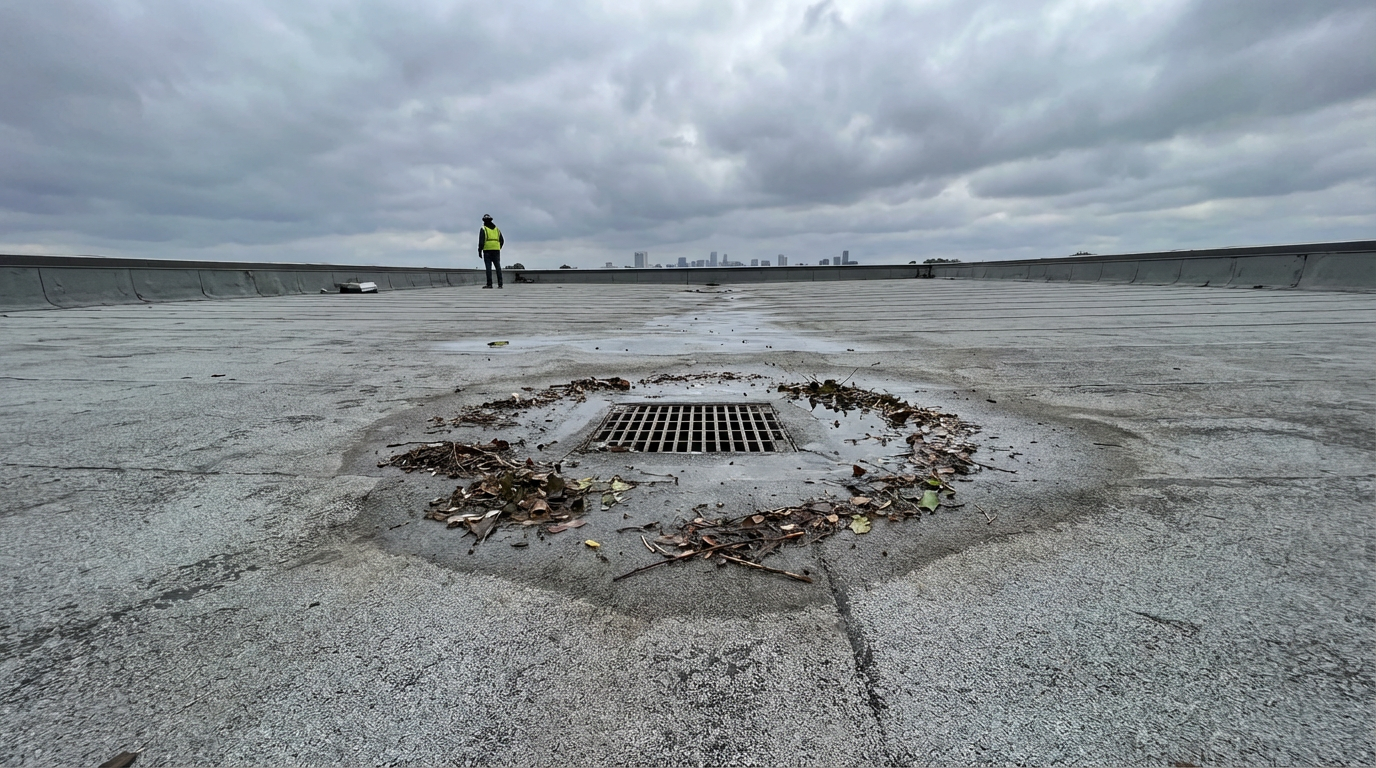
Debris removal: Clearing leaves, branches, and trash from drains and gutters is straightforward maintenance any building owner can handle. Do this monthly to prevent water buildup.
Basic inspections: Walking your roof quarterly to spot obvious issues like ponding water, visible tears, or loose flashing helps you catch problems early. But once you find an issue, call a professional.
Emergency temporary measures: If you discover an active leak during a storm, applying a temporary tarp or emergency sealant can limit damage until professional help arrives. This isn't a repair—it's damage control.
Even these activities require safety precautions. Flat roofs can be slippery and structurally compromised in ways that aren't immediately obvious.
The Real Risks of DIY Flat Roof Repair
Flat roofs fail differently than pitched roofs. Water doesn't run off quickly, so every imperfection becomes a potential leak point. Professional flat roof repair addresses these unique challenges with proven techniques.
Material Compatibility Issues
Different membrane types require specific repair materials and techniques. EPDM, TPO, PVC, and modified bitumen each have unique properties. Use the wrong patch material or adhesive, and you'll create a weak point that fails under thermal expansion and contraction.
Professionals know these compatibility requirements. They also understand how weather conditions affect installation—applying certain materials in cold weather or high humidity can cause immediate failure.
Structural Concerns
That small leak might indicate a bigger problem. Water can travel along structural members before appearing as interior damage, making the actual entry point difficult to locate. Professionals use moisture meters and thermal imaging to identify the true extent of damage.
DIY repairs often address symptoms rather than causes. You might seal a visible crack while missing the underlying structural movement that caused it, guaranteeing the problem will return.
Safety Hazards
Commercial flat roofs present serious safety risks. The surface can be unstable, especially around damaged areas. Professional roofers use proper safety equipment and understand load distribution. They also know how to identify hazardous conditions like compromised decking or hidden structural damage.
How Professional Flat Roof Repair Actually Works
Professional commercial flat roof repair follows a systematic process that ensures lasting results:
Comprehensive Assessment
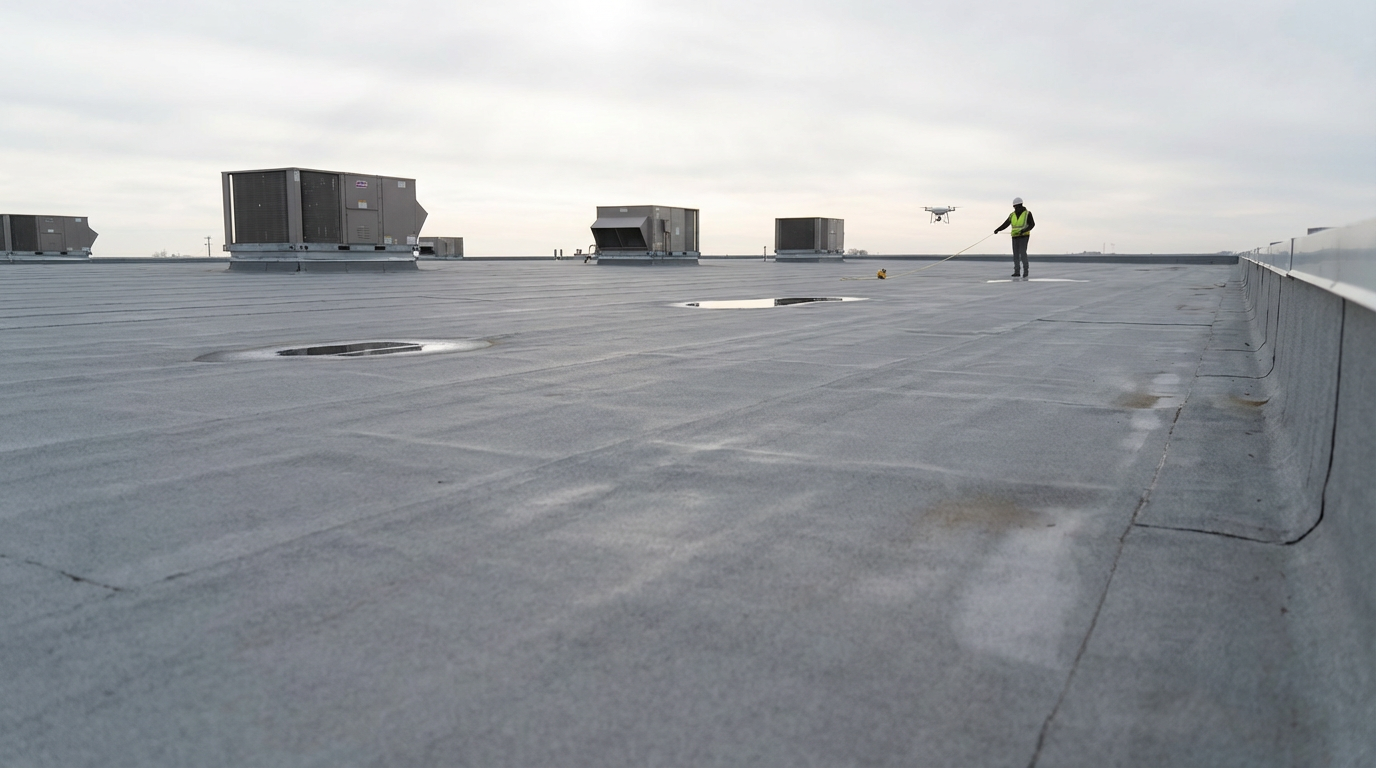
The repair starts with thorough inspection using moisture meters, core samples, and thermal imaging when necessary. This identifies not just the visible damage, but underlying issues that could cause future problems.
Professionals document their findings with photos and detailed reports. This documentation becomes valuable for insurance claims and future maintenance planning.
Proper Material Selection
Based on your existing roof system, local climate conditions, and building use, professionals select materials that will integrate seamlessly with your current roof. They source commercial-grade products with proper warranties.
Expert Installation
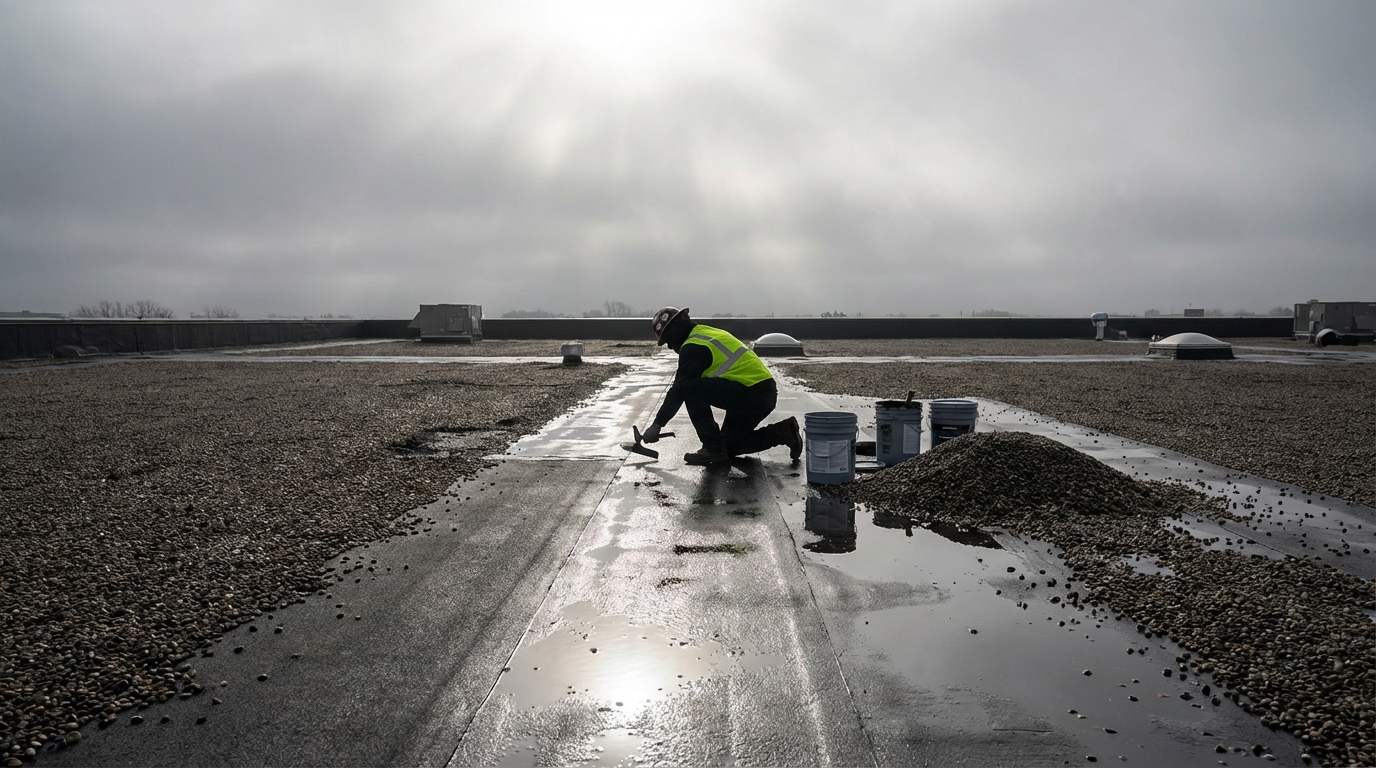
Professional installation involves proper surface preparation, precise material application, and quality control checks. Contractors understand how environmental conditions affect installation and will reschedule work if conditions aren't optimal.
They also coordinate with other building systems. If repairs require cutting into the roof deck, they ensure proper vapor barriers and insulation replacement.
Post-Repair Inspection
Quality contractors perform flood testing or other verification methods to ensure repairs are watertight before considering the job complete. They also provide maintenance recommendations to extend the repair's lifespan.
The Economics of Professional vs. DIY
Let's examine the real numbers for a typical small commercial roof repair:
DIY Costs:
Materials: $200-400 (retail pricing for inferior products)
Tool rental: $100-200
Your time: 8-16 hours at your hourly value
Risk of mistakes: Potentially thousands in additional damage
Professional Costs:
Complete repair: $400-800 (including materials, labor, warranty)
Your time: 1-2 hours for initial consultation and final walkthrough
Risk: Covered by contractor's insurance and warranty
The professional option often costs less when you factor in your time value and risk mitigation. More importantly, it delivers reliable results that protect your building investment.
Choosing the Right Professional
Not all roofing contractors understand flat roof systems. When selecting a professional for emergency flat roof repair or planned maintenance, look for:
Flat roof specialization: Contractors who focus on commercial flat roofing understand the unique challenges and have the right equipment and materials.
Local experience: Northern Indiana and Southwest Michigan weather patterns create specific challenges. Local contractors understand how thermal cycling, ice dams, and severe storms affect flat roof performance.
Proper licensing and insurance: Verify current licenses and adequate insurance coverage. This protects you from liability and ensures the contractor meets professional standards.
Manufacturer certifications: Certified installers receive ongoing training and can offer enhanced warranties on materials and workmanship.
Maintenance That Prevents Major Repairs
The best repair strategy is prevention. Professional maintenance programs catch small issues before they become major problems:
Quarterly inspections: Professional inspections identify potential issues early when repairs are simple and inexpensive.
Drain cleaning: Keeping drains clear prevents water backup that can overwhelm roof systems.
Membrane maintenance: Professional cleaning and minor repairs extend membrane life significantly.
Documentation: Professional maintenance creates detailed records that help with warranty claims and future planning.
Emergency Situations: When to Call Immediately
Some situations require immediate professional intervention:
Active leaks during storms: Professional emergency flat roof repair services can provide temporary solutions that prevent catastrophic damage while planning permanent repairs.
Ponding water: Standing water indicates drainage problems that can quickly escalate to structural damage.
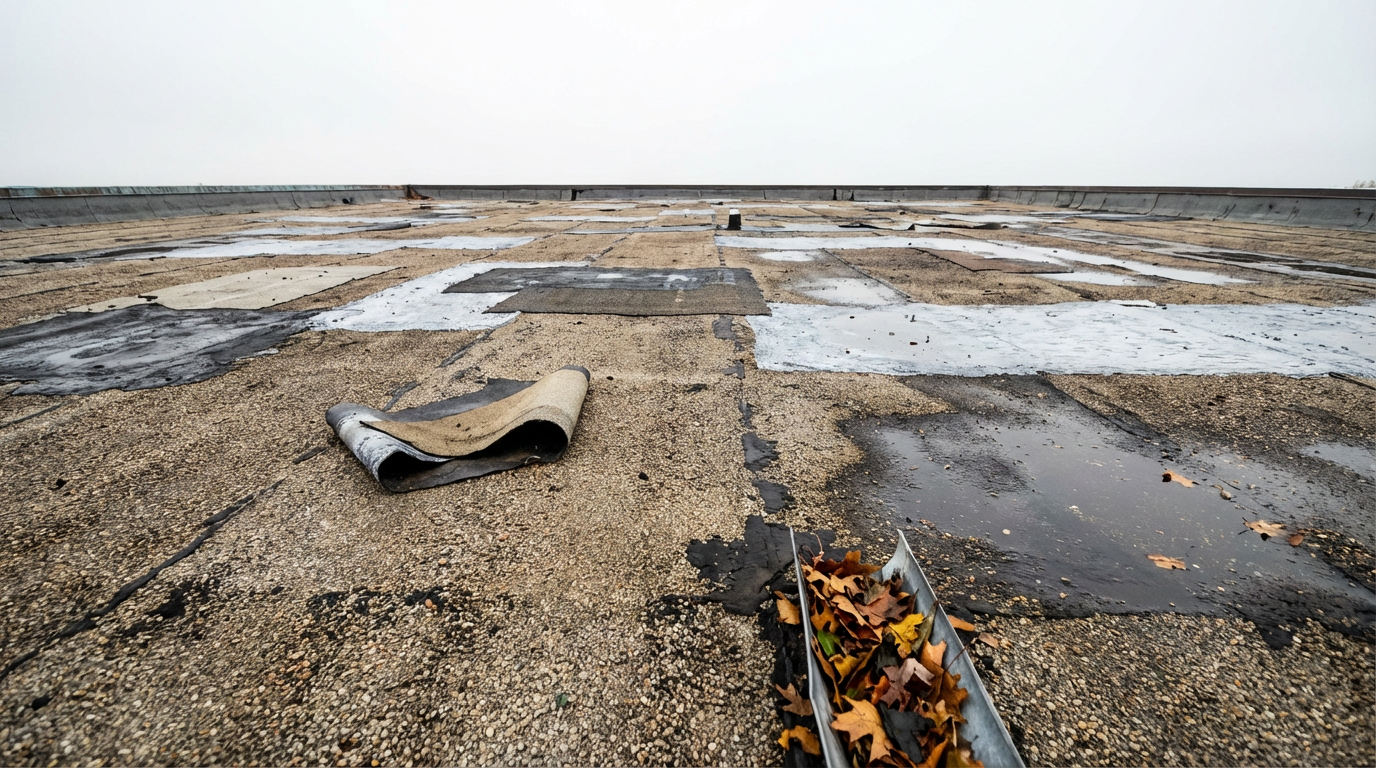
Membrane lifting or tearing: Wind damage can rapidly worsen, especially during storm seasons.
Interior water damage: Visible interior damage often indicates extensive hidden damage that requires professional assessment.
Frequently Asked Questions
Can I temporarily patch a leak myself until a professional arrives?
Yes, but only as emergency damage control. Use a tarp secured with sandbags or temporary roofing cement to limit water entry. Don't attempt permanent repairs—temporary measures can interfere with proper professional repairs if not done correctly.
How do I know if my flat roof damage requires professional repair?
Any puncture, tear, or separation in the membrane requires professional repair. If you can see the underlying substrate or if water is ponding in new areas, call a professional. When in doubt, have it inspected—small problems become expensive quickly on flat roofs.
Will my insurance cover professional flat roof repairs?
Coverage depends on the cause of damage and your policy terms. Storm damage is typically covered, while maintenance issues may not be. Professional contractors can document damage properly for insurance claims and work with adjusters to ensure accurate assessments.
How long do professional flat roof repairs last?
Quality professional repairs using compatible materials typically last 10-15 years or more when properly maintained. The key factors are using the right materials for your roof system and following proper installation procedures that only experienced professionals understand.
What's the difference between repair and replacement?
Repairs address localized damage while preserving the existing roof system. Replacement involves removing and installing new roofing materials. Professional assessment determines which approach makes economic sense based on the extent of damage and remaining roof life.
How much does professional flat roof repair typically cost?
Small repairs range from $400-1200, while larger repairs can cost $2000-5000. The investment protects your building and often costs less than the potential damage from failed DIY attempts. Professional contractors provide detailed estimates that break down materials, labor, and warranty coverage.
Professional flat roof repair isn't just about fixing immediate problems—it's about protecting your building investment with solutions that last. The expertise, proper materials, and accountability that professionals bring far outweigh any perceived savings from DIY approaches.
Your flat roof is a complex system that deserves professional attention. When you need reliable flat roof leak repair or comprehensive maintenance, working with experienced contractors ensures your building stays protected and your business operations remain uninterrupted.