Estimated Reading Time: 10 minutes
Professional flat roof inspections reveal hidden drainage issues, membrane deterioration, and structural problems that could cost you tens of thousands in emergency repairs—problems most building owners miss during their routine walk-throughs. The difference between a $500 preventive repair and a $15,000 emergency replacement often comes down to catching these issues early through systematic professional assessment.
As someone responsible for maintaining commercial property in Northern Indiana and Southwest Michigan, you need to understand what professional flat roof inspection actually uncovers versus what appears obvious from ground level or a quick roof walk.
The Critical Difference Between Owner Inspections and Professional Assessment
Most building owners check for obvious signs: visible leaks, standing water, or damaged equipment. But professional inspectors from experienced commercial roofer in Elkhart Indiana teams use systematic approaches that reveal problems months or years before they become emergencies.
Professional inspectors examine your roof in sections, documenting conditions with thermal imaging, moisture meters, and core sampling when necessary. They're looking for failure patterns that predict where problems will emerge next—not just where they exist today.
Your maintenance team might notice a small leak near the HVAC unit. A professional inspector identifies that the leak stems from improper flashing installation that's creating moisture infiltration across a 20-foot section of roof deck.
Hidden Drainage Problems That Destroy Flat Roofs
Drainage issues cause 80% of premature flat roof failures, yet most building owners only notice problems when water backs up during heavy storms. Professional inspections reveal subtle drainage compromises that create long-term damage.
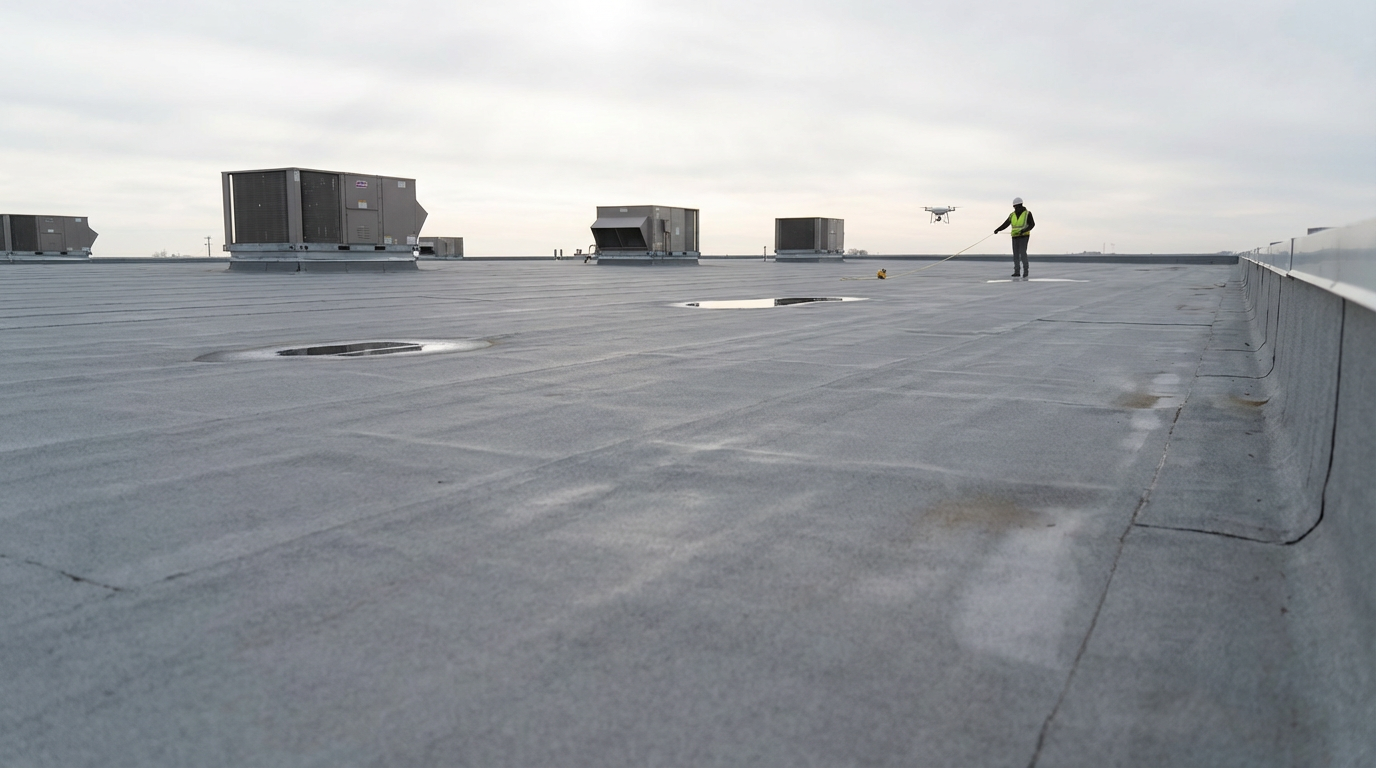
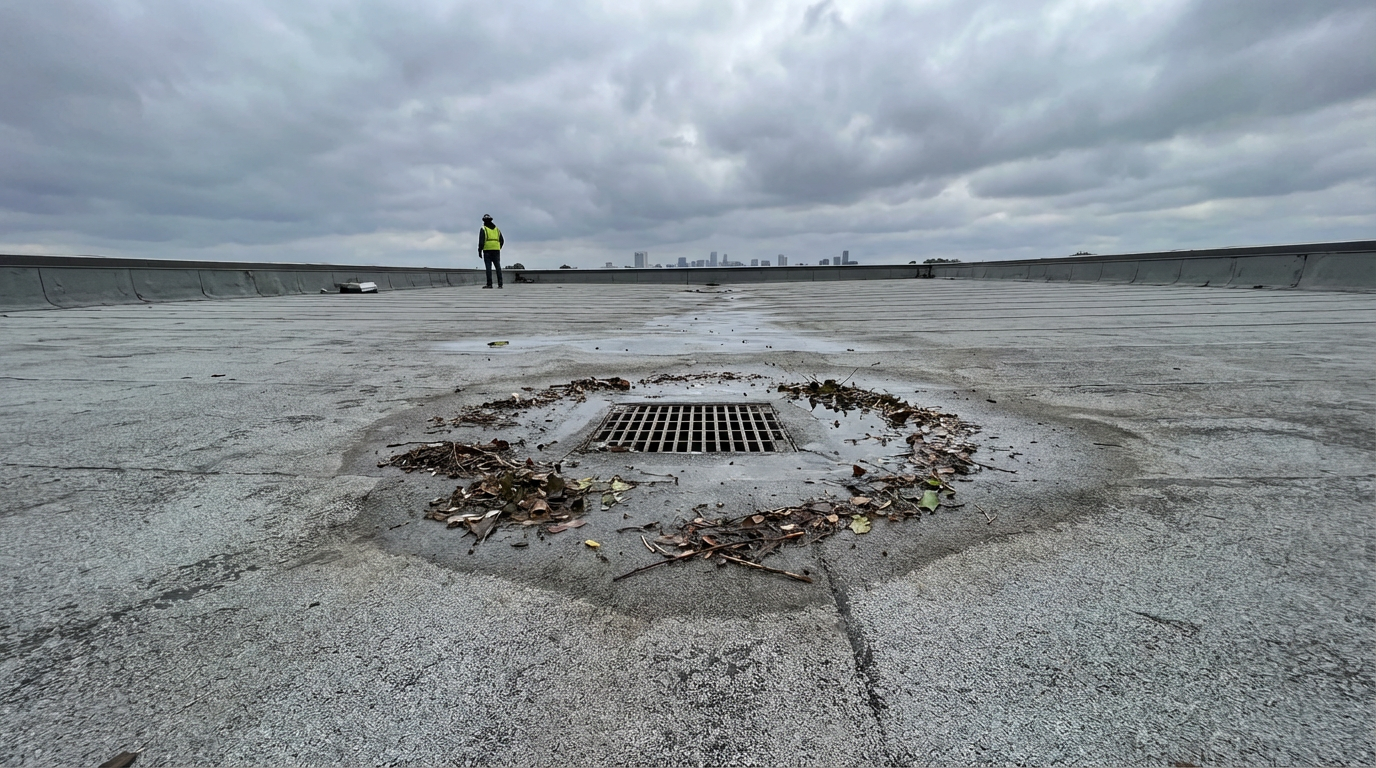
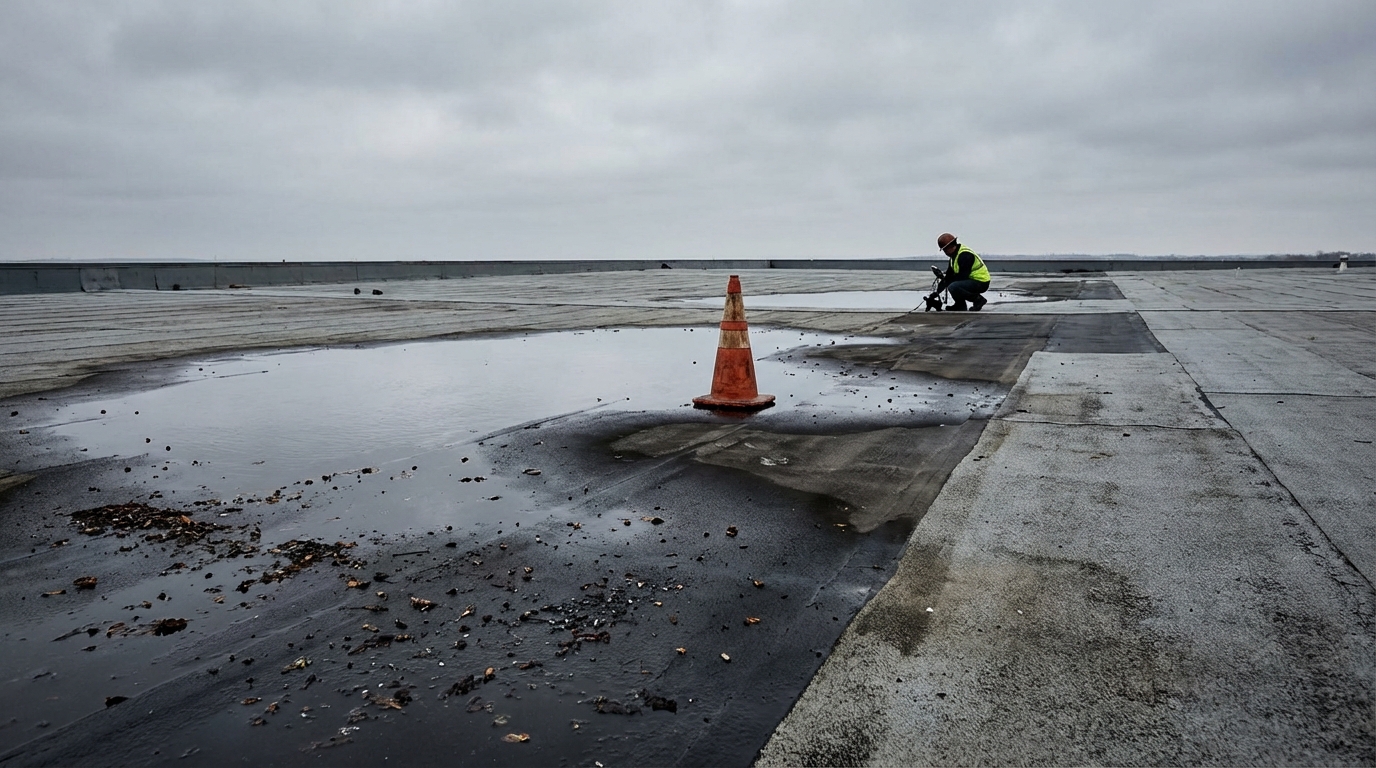
Ponding water assessment goes beyond obvious standing water. Inspectors identify areas where water sits for more than 48 hours after rainfall—the threshold where membrane degradation accelerates. These areas aren't always visible during dry weather, but they leave telltale signs in membrane discoloration and debris accumulation patterns.
Drain and scupper functionality receives detailed evaluation. Inspectors check for proper slope toward drains, adequate drain sizing for roof area, and potential blockage points. They also examine overflow systems that prevent catastrophic water backup during extreme weather events.
Interior drainage systems often hide problems until major damage occurs. Professional assessment includes checking roof drain connections through the building structure, identifying potential separation or blockage in drain lines, and verifying that interior gutters and downspouts can handle design water loads.
Membrane Deterioration Patterns Owners Miss
Flat roof membranes fail in predictable patterns, but early warning signs require trained recognition. Professional inspectors identify these deterioration stages before they progress to leak conditions.
UV degradation appears as surface chalking, color changes, or brittleness in membrane materials. Different membrane types show different degradation patterns—EPDM develops surface checking, while TPO shows chalking and potential shrinkage. Professional assessment determines whether surface degradation indicates need for coating, partial replacement, or full membrane renewal.
Thermal cycling damage creates stress patterns around roof penetrations, expansion joints, and equipment connections. These stress concentrations lead to membrane splitting or separation, but early stages appear as minor surface irregularities that untrained observers dismiss as normal wear.
Chemical exposure from HVAC condensate, kitchen exhaust, or industrial processes creates localized membrane degradation that spreads outward from contamination sources. Professional inspectors identify contamination patterns and assess whether membrane damage requires localized repair or indicates broader system compromise.
Structural Issues That Start Small
Structural problems in flat roof systems often begin as minor deflection or settlement issues that compound over time. Professional inspection identifies these problems before they compromise building integrity or require emergency intervention.
Deck deflection appears as subtle changes in roof plane that affect drainage patterns and create stress on membrane systems. Inspectors use laser levels and string lines to identify deflection that might not be obvious during casual observation but indicates potential structural concerns requiring engineering evaluation.
Fastener backing out or corrosion creates localized membrane lifting that appears minor but indicates broader attachment system problems. Professional assessment determines whether fastener issues result from normal thermal cycling, inadequate initial installation, or structural movement requiring comprehensive repair.
Expansion joint performance affects both membrane integrity and building structure. Inspectors evaluate joint sealant condition, membrane termination details, and underlying structural movement to determine whether joint maintenance prevents problems or indicates need for system redesign.
Insulation and Energy Performance Problems
Insulation problems in flat roof systems create both energy efficiency losses and moisture-related damage that building owners rarely connect to roof performance. Professional inspection identifies these interconnected issues.
Wet insulation loses thermal performance and creates conditions for membrane degradation and structural damage. Thermal imaging during professional inspection identifies wet insulation areas that aren't obvious from surface observation, allowing targeted repair before widespread replacement becomes necessary.
Thermal bridging through roof structure creates energy losses and potential condensation problems that affect both operating costs and building durability. Professional assessment identifies thermal bridge locations and recommends solutions that address both energy performance and moisture control.
Vapor barrier performance affects both insulation effectiveness and membrane longevity. Inspectors evaluate vapor barrier continuity, proper installation details, and potential compromise from roof penetrations or structural movement.
Equipment and Penetration Issues
Roof-mounted equipment and penetrations create the highest-risk areas for flat roof failure, yet these areas receive inadequate attention during routine maintenance inspections. Professional assessment focuses intensive evaluation on these critical details.
HVAC equipment support requires evaluation beyond obvious vibration or settlement issues. Inspectors check equipment pad levelness, drain pan functionality, condensate disposal systems, and membrane termination details around equipment bases. They also assess whether equipment modifications or additions have compromised original roof design.
Penetration flashing represents the most common failure point in flat roof systems. Professional inspection evaluates flashing material condition, sealant performance, membrane termination details, and potential stress concentration from building movement or thermal cycling.
Electrical and plumbing penetrations often receive inadequate initial installation or maintenance attention. Inspectors verify proper flashing installation, adequate sealant application, and membrane integration that prevents water infiltration around utility connections.
Documentation and Maintenance Planning
Professional flat roof inspection provides documentation that enables strategic maintenance planning rather than reactive emergency response. This documentation approach distinguishes professional assessment from basic condition observation.
Condition mapping creates visual records of roof conditions that track deterioration patterns over time. Professional inspectors photograph and document specific areas, creating baseline records for future comparison and maintenance planning.
Priority ranking helps building owners allocate maintenance budgets effectively. Professional assessment identifies which issues require immediate attention, which can be scheduled for routine maintenance, and which represent long-term planning considerations.
Maintenance recommendations include specific repair procedures, material specifications, and timing considerations that enable property managers to plan maintenance activities and budget allocation effectively.
Weather and Environmental Impact Assessment
Weather-related damage to flat roofs often accumulates gradually rather than appearing as obvious storm damage. Professional inspection identifies weather impact patterns that predict future problems and guide preventive maintenance strategies.
Hail damage assessment requires trained recognition of impact patterns that might not penetrate membrane immediately but create stress concentrations that lead to premature failure. Professional inspectors identify hail impact evidence and assess whether damage requires immediate repair or monitoring for future development.
Wind damage evaluation extends beyond obvious membrane lifting or equipment displacement. Inspectors check for subtle membrane stress, fastener loading, and edge detail compromise that indicates wind exposure problems requiring attention.
Freeze-thaw cycling creates expansion and contraction stress that accumulates over multiple weather cycles. Professional assessment identifies areas where freeze-thaw damage creates ongoing deterioration requiring preventive intervention.
Cost Analysis of Professional Inspection vs. Emergency Repair
Professional flat roof inspection costs typically range from $300-800 for commercial buildings, while emergency flat roof repair averages $5,000-15,000 per incident. The return on inspection investment becomes clear when comparing preventive maintenance costs to emergency replacement expenses.
Preventive repair timing allows scheduling maintenance during favorable weather conditions with planned material procurement and contractor availability. Emergency repairs require immediate response regardless of weather conditions, material availability, or contractor scheduling, typically increasing costs 200-400% over planned maintenance.
Insurance considerations favor documented maintenance programs that include professional inspection. Many commercial property insurance policies require documented maintenance programs, and professional inspection records support claim documentation when weather-related damage occurs.
Budget planning benefits from professional inspection recommendations that identify maintenance needs 12-24 months in advance. This planning horizon enables capital budget allocation, contractor selection, and maintenance scheduling that minimizes building disruption and maximizes cost effectiveness.
Technology and Tools in Professional Inspection
Modern professional flat roof inspection incorporates technology that reveals problems impossible to identify through visual observation alone. These tools distinguish professional assessment from basic maintenance inspection.
Thermal imaging identifies moisture infiltration, insulation problems, and membrane deterioration patterns not visible to surface observation. Thermal cameras detect temperature differences that indicate wet insulation, air leakage, or thermal bridging problems affecting both energy performance and roof longevity.
Moisture meters provide quantitative assessment of moisture content in roof systems, enabling precise identification of wet areas and monitoring of drying progress after repair. Electronic moisture detection eliminates guesswork in determining extent of moisture infiltration and repair requirements.
Core sampling allows direct examination of roof system components when surface observation cannot determine internal conditions. Professional inspectors use core sampling strategically to verify moisture infiltration extent, insulation condition, and deck integrity without unnecessary roof disturbance.
Seasonal Inspection Considerations
Professional flat roof inspection timing affects both problem identification accuracy and repair scheduling efficiency. Different seasons reveal different types of roof system problems and create varying opportunities for maintenance intervention.
Spring inspection identifies winter damage from freeze-thaw cycling, ice dam formation, and snow load stress. Spring timing allows summer maintenance scheduling when weather conditions favor roof work and material performance.
Fall inspection prepares roof systems for winter weather exposure by identifying problems that could worsen during cold weather. Fall timing enables winter repair planning and emergency preparation for severe weather events.
Post-storm inspection assesses weather-related damage while enabling insurance claim documentation and emergency repair prioritization. Professional post-storm assessment distinguishes between immediate safety concerns and damage that can be addressed through planned maintenance.
Frequently Asked Questions
How often should commercial flat roofs receive professional inspection?
Commercial flat roofs require professional inspection twice yearly—spring and fall—with additional inspection after severe weather events. This schedule enables early problem identification and strategic maintenance planning that prevents emergency repairs.
What's the difference between professional inspection and routine maintenance checks?
Professional inspection uses systematic evaluation procedures, specialized equipment, and documentation standards that identify problems before they become obvious. Routine maintenance checks focus on immediate operational issues rather than predictive problem identification.
Can building owners perform adequate roof inspection themselves?
Building owners can monitor obvious problems like standing water or visible damage, but professional inspection requires specialized knowledge and equipment to identify early-stage deterioration patterns that predict future failures.
How much does professional flat roof inspection cost compared to repair expenses?
Professional inspection costs $300-800 for most commercial buildings, while emergency repairs average $5,000-15,000 per incident. Early problem identification through professional inspection typically reduces repair costs by 60-80% compared to emergency intervention.
What happens if inspection reveals major problems?
Professional inspection provides priority ranking and repair recommendations that enable strategic planning rather than panic response. Most problems identified through inspection can be addressed through planned maintenance rather than emergency replacement.
Do insurance companies require professional roof inspection?
Many commercial property insurance policies require documented maintenance programs including professional inspection. Insurance companies favor proactive maintenance programs that reduce claim frequency and provide documentation supporting weather-related damage claims.
Taking Action on Professional Inspection Insights
Professional flat roof inspection reveals hidden problems that cost building owners thousands in emergency repairs when left unaddressed. The systematic evaluation approach used by experienced Industrial Roofing Services Michiana contractors identifies deterioration patterns, drainage issues, and structural problems months before they become obvious to routine observation.
Your flat roof represents a significant building system investment that requires professional assessment to maintain performance and prevent premature failure. Professional inspection provides the documentation and strategic planning information necessary for effective maintenance budget allocation and emergency prevention.
Don't wait for obvious problems to appear before seeking professional evaluation. The difference between a $500 preventive repair and a $15,000 emergency replacement often comes down to early problem identification through systematic professional assessment.