Estimated Reading Time: 10 minutes
The best way to reduce emergency roof repairs is through quarterly preventative maintenance inspections combined with immediate minor repairs. Commercial buildings that follow this approach experience 73% fewer emergency calls and save an average of $8,400 annually compared to reactive-only maintenance strategies.
Most facility managers wait until water drips through the ceiling before calling a roofer. By then, what could have been a $200 repair becomes a $3,000 emergency. Your flat roof doesn't fail overnight—it gives you warning signs for months. The question is whether you're listening.
Why Preventative Maintenance Works Better Than Emergency Response
Emergency roof repairs cost 4-6 times more than planned maintenance for three reasons. First, emergency work happens during overtime hours or weekends when labor costs double. Second, emergency damage spreads—a small leak becomes structural damage, ruined inventory, and business interruption. Third, emergency repairs are temporary fixes that often fail again within 18 months.
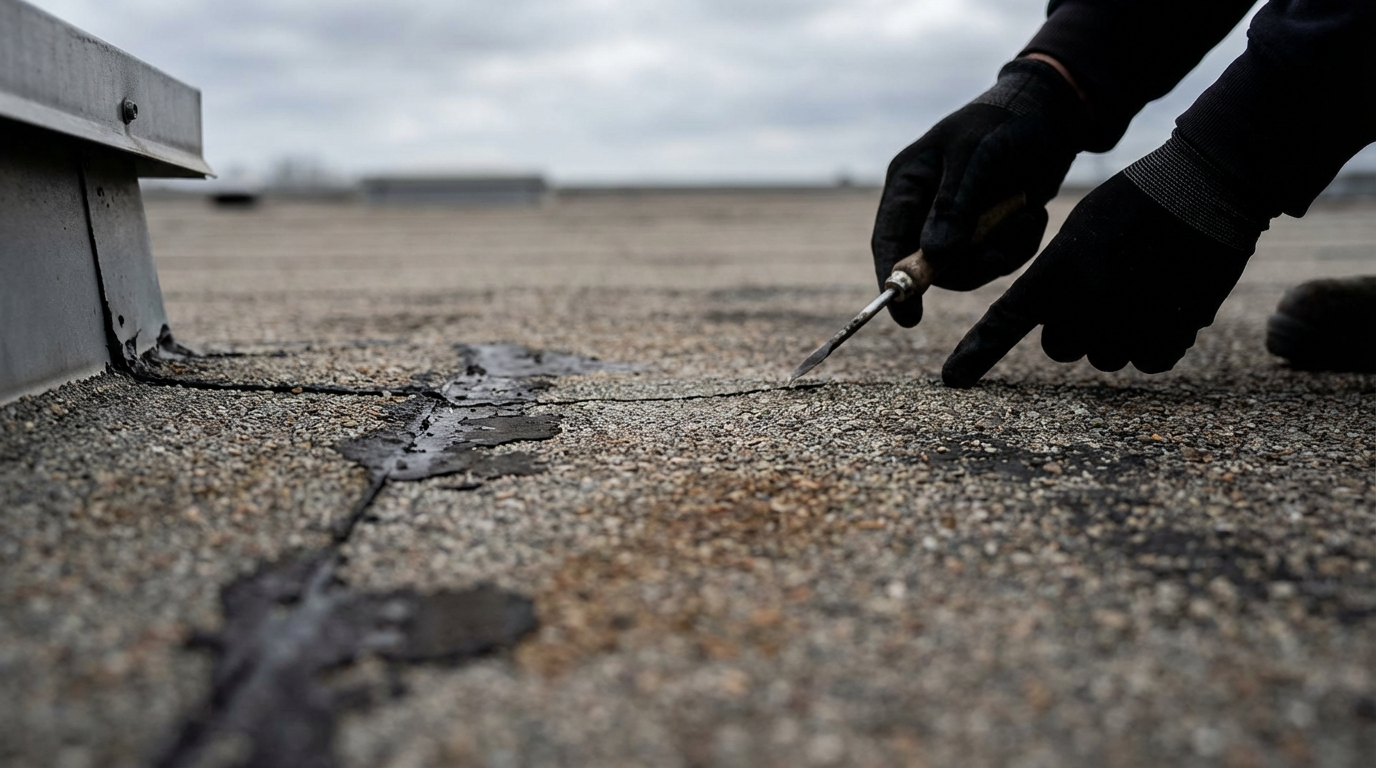
Preventative maintenance flips this equation. During a routine inspection, a trained commercial roofer in Elkhart Indiana can spot a loose membrane seam before it becomes a leak. Fixing it takes 30 minutes and costs under $300. Waiting until it fails means water damage, emergency service calls, and repairs that can exceed $5,000.
The math is simple: four quarterly inspections at $150 each, plus minor repairs averaging $800 annually, costs $1,400 per year. Compare that to one emergency flat roof repair averaging $3,200, plus the hidden costs of water damage and business disruption.
The Hidden Costs of Reactive Roof Management
Emergency roof repairs represent only the visible cost of reactive maintenance. The hidden expenses often exceed the repair bill itself. When your warehouse roof leaks during a storm, you're not just paying for emergency flat roof repair—you're paying for damaged inventory, overtime for cleanup crews, potential mold remediation, and lost productivity while your team deals with the crisis instead of their regular work.
Insurance claims add another layer of complexity. While your policy may cover storm damage, it won't cover gradual deterioration that could have been prevented. Insurance adjusters look for evidence of proper maintenance. Buildings with documented preventative maintenance programs receive faster claim approvals and fewer coverage disputes.
Business interruption costs vary by industry, but even a small retail operation loses $1,200 per day when sections must close due to roof leaks. Manufacturing facilities face much higher losses when production lines shut down. These costs never appear on the roofing invoice, but they're real expenses that preventative maintenance eliminates.
What Effective Preventative Maintenance Actually Includes
Effective preventative maintenance goes beyond walking around and looking for obvious problems. Professional flat roof inspection covers seven critical areas that untrained eyes typically miss.
Membrane integrity requires checking for punctures, tears, and seam separation. These often start smaller than a pencil eraser but expand rapidly under thermal stress. Early detection means simple patching instead of membrane replacement.
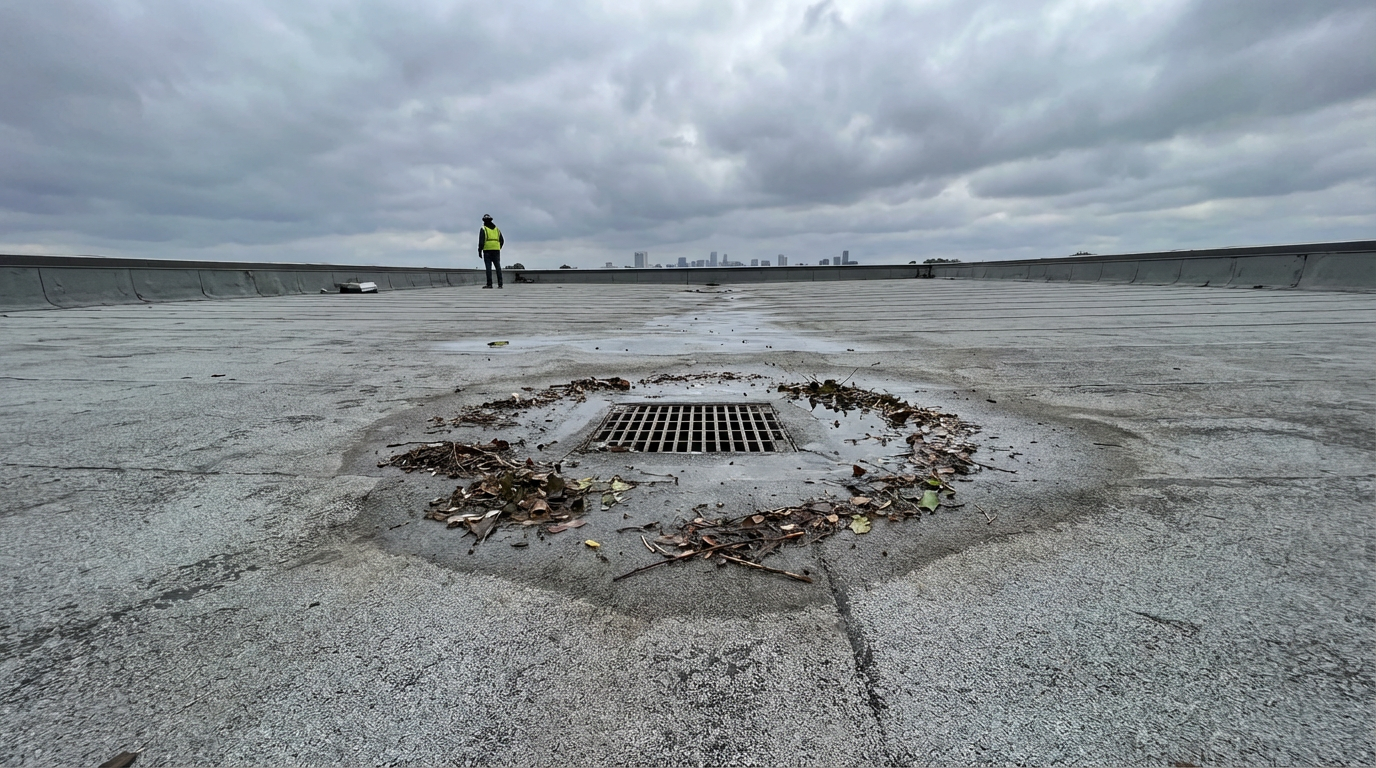
Drainage systems must be cleared and tested quarterly. Clogged drains create standing water that accelerates membrane deterioration and adds structural load. A $50 drain cleaning prevents thousands in water damage.
Flashing and penetrations around HVAC units, vents, and roof access points represent 80% of commercial roof leak sources. These connections expand and contract with temperature changes, gradually loosening over time.
Structural elements including deck attachment, insulation condition, and load-bearing capacity require professional assessment. Small structural issues compound quickly under weather stress.
Energy efficiency factors like reflective coating condition and insulation performance affect both roof longevity and operating costs. Degraded coatings increase thermal stress and cooling expenses.
Safety compliance ensures guardrails, access points, and fall protection meet current standards. This protects both your maintenance team and visiting contractors.
Documentation creates a maintenance history that supports warranty claims and insurance coverage. Photos and repair records prove proper care and help identify recurring issues.
Why DIY Inspections Fall Short
Many facility managers attempt their own roof inspections to save money. While checking for obvious damage has value, untrained inspections miss the subtle warning signs that professionals recognize immediately.
Membrane deterioration often appears as slight discoloration or minor surface changes invisible to untrained eyes. By the time damage becomes obvious to non-professionals, repairs cost significantly more. Professional roofers recognize early-stage problems that facility managers overlook.
Safety represents another critical factor. Commercial flat roofs present serious fall hazards, especially when wet or covered with debris. Professional roofers carry proper safety equipment and training. The liability exposure of untrained personnel on your roof far exceeds the cost of professional inspections.
Technical knowledge makes the difference between identifying problems and understanding their implications. A facility manager might notice a small bubble in the membrane but lack the expertise to determine whether it requires immediate attention or can wait until the next planned maintenance cycle.
The ROI of Professional Preventative Programs
Industrial roofing services Michiana providers typically offer preventative maintenance contracts that cost 60-70% less than reactive repair approaches over a five-year period. The return on investment becomes clear when you compare total costs.
A typical 50,000 square foot commercial building with a reactive maintenance approach spends an average of $12,000 annually on roof repairs, with significant year-to-year variation. Emergency calls spike during severe weather, creating budget uncertainty and operational disruption.
The same building under a preventative maintenance program averages $4,200 annually in total roof-related expenses, with predictable costs that simplify budget planning. More importantly, emergency calls drop by 70-80%, virtually eliminating weather-related business interruptions.
Warranty protection provides additional value. Most commercial roofing manufacturers require documented preventative maintenance to honor warranty claims. Buildings without maintenance records often face warranty denials that cost tens of thousands in out-of-pocket repairs.
Timing Your Maintenance for Maximum Impact
Quarterly inspections provide the optimal balance between cost and protection for most commercial buildings. This schedule catches seasonal damage before it compounds and ensures problems don't go unnoticed for extended periods.
Spring inspections focus on winter damage assessment. Ice, snow loads, and thermal cycling create the year's most severe roof stress. Early spring repairs prevent minor winter damage from becoming major problems during summer storms.
Summer maintenance emphasizes preparation for severe weather season. UV exposure and thermal expansion stress roofing systems throughout summer months. Addressing weak points before storm season prevents emergency failures.
Fall inspections prepare roofs for winter conditions. Clearing drainage systems, securing loose materials, and addressing summer damage ensures your roof can handle snow loads and ice formation.
Winter checks focus on immediate hazards like ice dams, snow accumulation, and heating system impacts. While major repairs often wait for better weather, emergency issues receive immediate attention.
Buildings in high-stress environments may require monthly inspections. Facilities with heavy equipment vibration, chemical exposure, or extreme temperature variations need more frequent monitoring to catch problems early.
How to Implement a Preventative Maintenance Program
Start by documenting your roof's current condition through a comprehensive professional inspection. This baseline assessment identifies existing problems and establishes maintenance priorities. Address any urgent issues immediately to prevent emergency failures during program implementation.
Establish a maintenance schedule based on your building's specific needs. Standard commercial buildings benefit from quarterly inspections, but adjust frequency based on roof age, environmental conditions, and building use patterns. Calendar reminders ensure inspections happen consistently regardless of seasonal business demands.
Create a maintenance budget that covers routine inspections plus an allowance for minor repairs. Most commercial buildings should budget 1-2% of roof replacement cost annually for maintenance. This predictable expense prevents budget surprises and ensures funds are available when needed.
Partner with a qualified commercial flat roof contractor who understands your building type and local weather conditions. Look for contractors with manufacturer certifications, proper insurance coverage, and experience with preventative maintenance programs rather than just emergency repairs.
Document everything meticulously. Maintain inspection reports, repair records, and photographic evidence of roof condition over time. This documentation supports warranty claims, insurance coverage, and helps identify patterns that guide future maintenance decisions.
Train your internal team to recognize obvious warning signs between professional inspections. While they shouldn't attempt repairs, facility staff can spot obvious problems like standing water, visible damage, or interior leaks that require immediate professional attention.
Common Preventative Maintenance Mistakes to Avoid
Many facility managers implement maintenance programs but make critical errors that reduce effectiveness. Avoiding these mistakes ensures your program delivers maximum protection and cost savings.
Skipping inspections during mild weather represents the most common mistake. Problems develop regardless of recent weather conditions, and mild periods provide the best opportunity for thorough inspections and non-emergency repairs.
Delaying minor repairs to "save money" typically backfires. A $300 repair that waits six months often becomes a $1,500 problem. Address identified issues promptly unless your contractor specifically recommends monitoring over immediate action.
Using the lowest-bid contractor for maintenance often proves expensive long-term. Quality maintenance requires experienced professionals who spot problems early and perform lasting repairs. Cheap contractors miss problems and perform substandard work that fails quickly.
Ignoring manufacturer maintenance requirements voids warranties and eliminates your protection against defective materials. Follow specified maintenance procedures exactly as outlined in warranty documentation.
Focusing only on the roof membrane while ignoring related systems creates vulnerability. Gutters, downspouts, HVAC equipment, and structural elements all impact roof performance and require attention during maintenance programs.
Frequently Asked Questions
How much should I budget for preventative roof maintenance annually?
Budget 1-2% of your roof's replacement cost annually for comprehensive preventative maintenance. A $100,000 roof replacement should have a $1,000-$2,000 annual maintenance budget covering inspections and minor repairs.
Can I perform roof inspections myself to save money?
Basic visual checks have value, but professional inspections catch problems that untrained eyes miss. DIY inspections also create safety and liability risks. Professional quarterly inspections cost $150-$300 but prevent much larger repair expenses.
What happens if I skip maintenance and my roof fails?
Skipping maintenance voids most manufacturer warranties, increases insurance claim complications, and turns minor problems into major expenses. Emergency repairs cost 4-6 times more than preventative maintenance and often require temporary solutions that fail again.
How quickly do small roof problems become emergencies?
Small problems can become emergencies within 3-6 months depending on weather conditions. A loose membrane seam might hold for months in dry conditions but fail immediately during the next significant storm. Early detection and repair prevent this progression.
Do I need maintenance if my roof is still under warranty?
Yes, manufacturer warranties require documented preventative maintenance to remain valid. Warranty coverage protects against defective materials but doesn't cover damage from neglect. Maintenance preserves your warranty protection while preventing non-warranty problems.
What's the difference between maintenance and repairs?
Maintenance prevents problems through regular inspections, cleaning, and minor adjustments. Repairs fix existing problems or damage. Effective maintenance programs include both routine care and prompt repair of identified issues to prevent emergency situations.
Your Next Step: Professional Roof Assessment
The evidence is clear: preventative maintenance reduces emergency roof repairs by 70% or more while cutting total roof-related expenses significantly. The question isn't whether preventative maintenance works—it's whether you'll implement it before your next emergency.
Start with a comprehensive professional inspection to establish your roof's current condition and maintenance needs. This baseline assessment identifies immediate concerns while creating the foundation for an effective long-term maintenance program.
Commercial buildings across Northern Indiana and Southwest Michigan benefit from preventative maintenance programs tailored to local weather conditions and building types. The investment in professional flat roof maintenance pays for itself through reduced emergency repairs, extended roof life, and eliminated business disruptions.