Estimated Reading Time: 9 minutes
Commercial flat roofs in Northern Indiana need TPO or EPDM membrane systems with reinforced insulation to survive the region's extreme temperature swings, heavy snow loads, and severe storms. After 40+ years serving Michiana's commercial properties, we've seen which systems fail and which endure through decades of punishing weather.
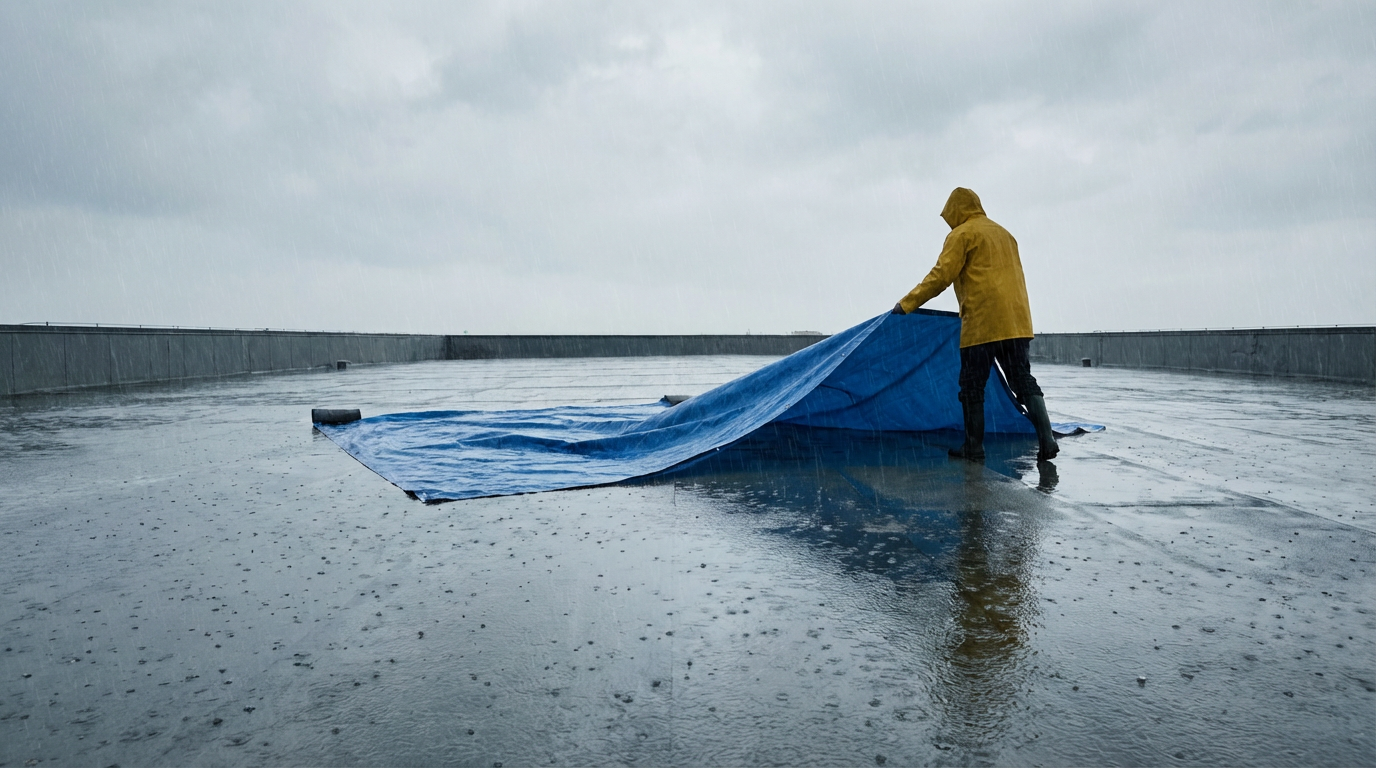
Your flat roof faces a perfect storm of challenges here. Winter temperatures plummet to -10°F, then summer heat soars past 90°F. That's a 100-degree swing that makes roofing materials expand and contract like an accordion. Add 40+ inches of annual snowfall, ice dams, and severe thunderstorms with hail, and you understand why generic roofing advice doesn't work in our climate.
Why Northern Indiana Weather Destroys Most Commercial Roofs
The Michiana region sits in a weather convergence zone where Arctic air masses collide with warm, humid systems from the Gulf. This creates the most challenging roofing environment in the Midwest.
Temperature extremes cause thermal shock. When your roof membrane heats up to 160°F in July sun, then drops to sub-zero in January, inferior materials crack like old rubber bands. We've measured temperature differentials of 180 degrees between summer surface temps and winter air temperatures.
Freeze-thaw cycles destroy weak points. Water penetrates tiny membrane cracks, freezes, expands, and tears the opening wider. One small breach becomes a major leak within a single winter. Commercial buildings with large flat expanses are especially vulnerable because thermal movement is magnified across hundreds of square feet.
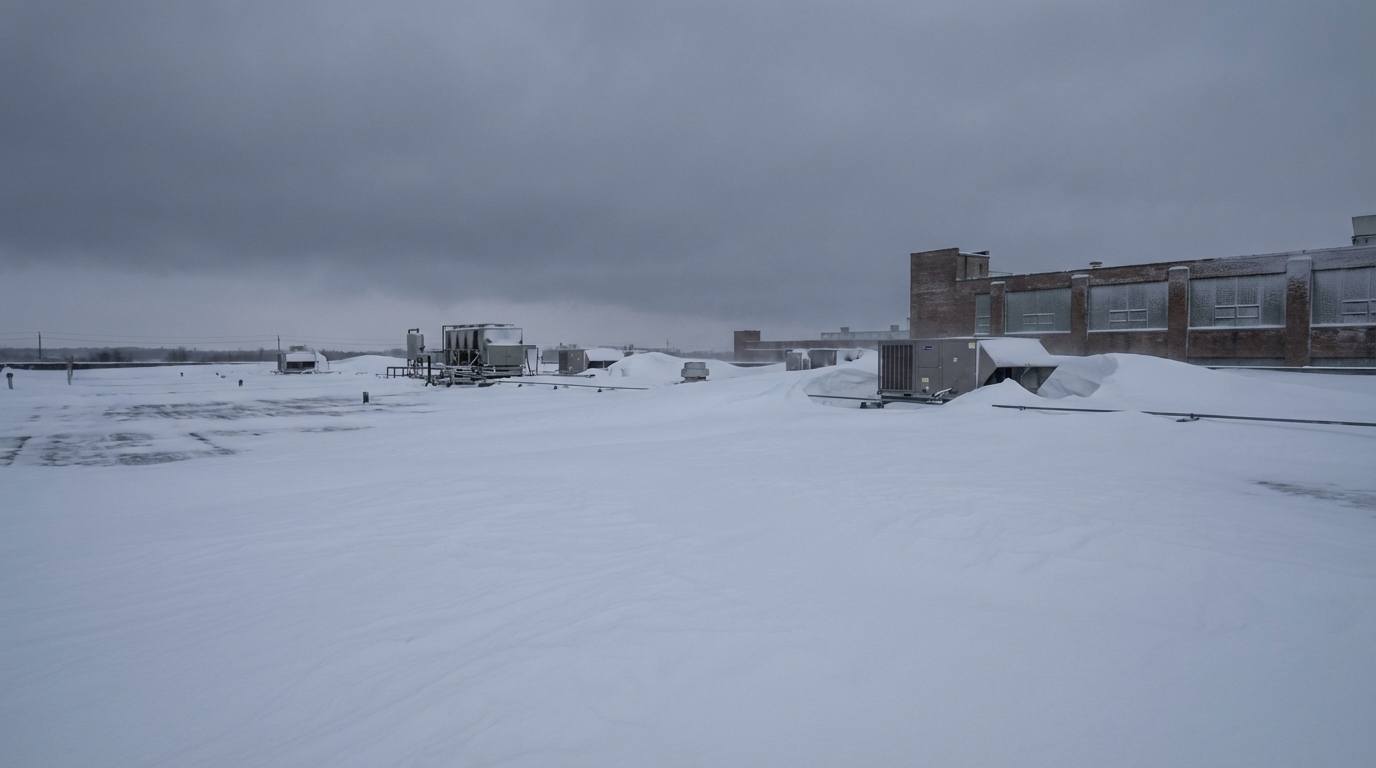
Snow loading exceeds design limits. Northern Indiana receives lake-effect snow that can dump 2-3 feet overnight. We've measured snow loads exceeding 40 pounds per square foot on commercial roofs - enough to stress structural components and compress insulation permanently.
Ice dams create standing water. When snow melts and refreezes at roof edges, it creates dams that force water under membrane seams. This is why so many commercial buildings develop leaks around drains and perimeter areas during winter months.
The TPO and EPDM Solution for Michiana Commercial Buildings
After installing thousands of commercial roofs across Northern Indiana and Southwest Michigan, two membrane systems consistently outperform all others: TPO (Thermoplastic Polyolefin) and EPDM (Ethylene Propylene Diene Monomer).
TPO handles thermal movement better than any alternative. Its thermoplastic nature allows the membrane to expand and contract without cracking. We've seen 20-year-old TPO roofs with zero thermal stress cracks, while PVC and modified bitumen systems show failure within 10-12 years.
EPDM provides unmatched durability in extreme cold. This synthetic rubber membrane remains flexible at -40°F while other materials become brittle. For warehouses and industrial buildings that experience rapid temperature changes, EPDM's flexibility prevents catastrophic splitting.
Both systems resist UV degradation. Northern Indiana's intense summer sun destroys organic materials quickly. TPO and EPDM maintain their physical properties for 20+ years without significant UV damage.
Why Other Commercial Roofing Systems Fail in Our Climate
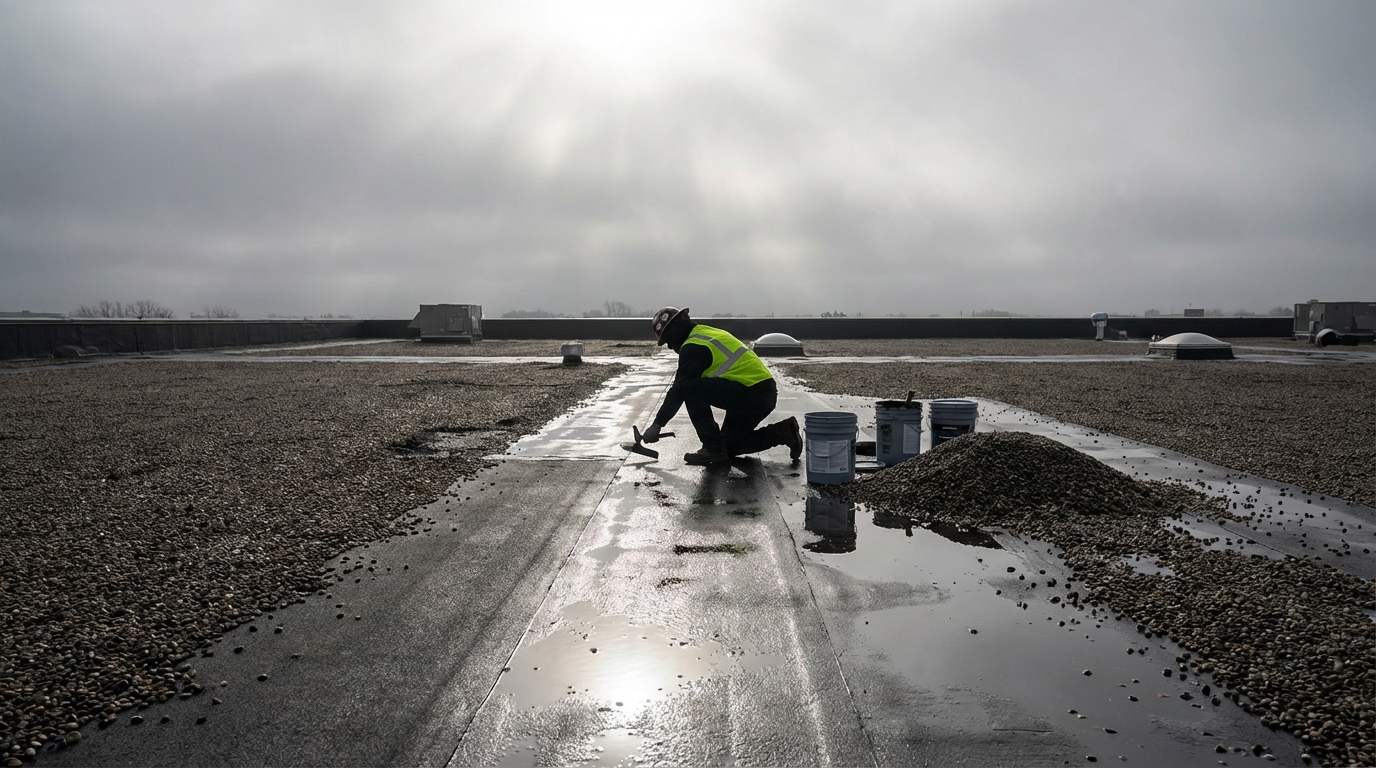
Built-up roofing (BUR) with asphalt and gravel was the old standard, but it can't handle modern weather extremes. Asphalt becomes brittle in cold and soft in heat. We regularly replace 15-year-old BUR systems that should last 25 years.
Modified bitumen offers better flexibility than BUR but still suffers thermal stress cracking. The polymer modifiers break down under UV exposure faster in our climate than manufacturers predict.
PVC membranes seem ideal on paper - they're heat-weldable and chemically resistant. But PVC becomes brittle in extreme cold. We've documented membrane failures on PVC roofs during polar vortex events that left EPDM and TPO systems intact.
Metal roofing works for some applications but requires extensive insulation and vapor barriers. Thermal bridging through fasteners creates condensation problems in our humid summers and cold winters.
The Critical Role of Insulation in Flat Roof Performance
Your membrane is only as good as what's underneath it. Northern Indiana's temperature extremes demand specific insulation strategies that most contractors ignore.
Polyisocyanurate (polyiso) insulation loses R-value in cold weather. At 20°F, polyiso provides 30% less insulation than rated. For commercial buildings that need consistent energy performance, this creates heating cost spikes and potential condensation issues.
XPS (extruded polystyrene) maintains R-value across temperature ranges. Unlike polyiso, XPS insulation performs consistently from -40°F to 180°F. This stability prevents thermal bridging that leads to membrane stress and ice dam formation.
Tapered insulation systems prevent ponding water. Flat roofs aren't actually flat - they need 1/4 inch per foot slope to drains. Tapered insulation creates positive drainage while maintaining energy efficiency. Standing water freezes, expands, and damages membrane seams.
Vapor barriers prevent condensation disasters. Our climate's humidity swings create condensation within roof assemblies. Proper vapor barrier placement stops moisture from reaching the deck and causing rot, mold, and insulation degradation.
Insulation Thickness Requirements for Energy Efficiency
Commercial buildings in Northern Indiana need minimum R-30 roof insulation to meet energy codes, but smart building owners install R-40 or higher. The additional cost pays back through reduced HVAC loads and extended membrane life.
Thicker insulation reduces thermal stress on the membrane by moderating temperature swings. A properly insulated roof surface stays closer to ambient temperature, reducing expansion and contraction cycles that cause premature failure.
Drainage Design: The Make-or-Break Factor
Perfect membranes fail if water doesn't drain properly. Northern Indiana's intense storms dump 2+ inches per hour, overwhelming inadequate drainage systems.
Primary and secondary drainage is mandatory. Commercial flat roofs need drains sized for 100-year storm events plus overflow scuppers or secondary drains. We've seen buildings flood because owners skimped on drainage capacity.
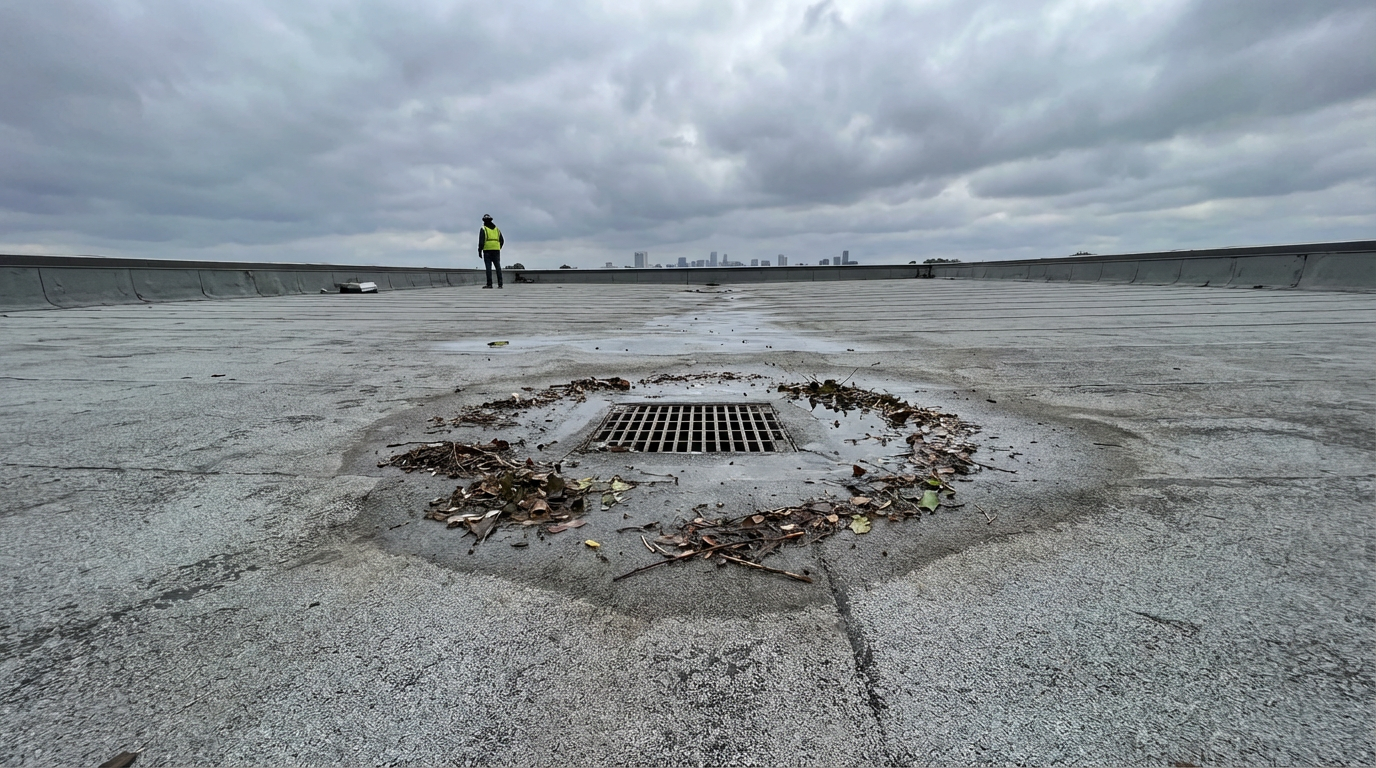
Drain placement affects membrane longevity. Drains in roof centers create valleys where debris accumulates and ice forms. Perimeter drainage with internal gutters performs better in our climate.
Sump areas around drains need reinforcement. The lowest points on your roof experience the most thermal stress and water exposure. Double-membrane reinforcement around drains prevents the most common leak points.
Maintenance Schedules That Extend Roof Life
Even perfect installations need maintenance to survive Northern Indiana weather. Most commercial roof failures happen because minor issues become major problems.
Spring inspections catch winter damage early. Ice, snow loading, and freeze-thaw cycles cause small membrane tears and fastener back-outs. Finding these in April prevents major leaks during summer storms.
Fall preparation prevents ice dam formation. Clean drains, clear debris, and inspect membrane seams before snow season. Blocked drains cause standing water that freezes and damages the membrane.
Semi-annual HVAC unit maintenance protects roof integrity. Rooftop equipment creates thermal stress points and potential leak sources. Vibration from poorly maintained units loosens fasteners and stresses membrane penetrations.
Immediate storm damage assessment saves money. After severe weather, small punctures from hail or debris become major leaks if ignored. Professional inspection within 48 hours of storms prevents water damage to building contents and structure.
Warning Signs That Demand Immediate Attention
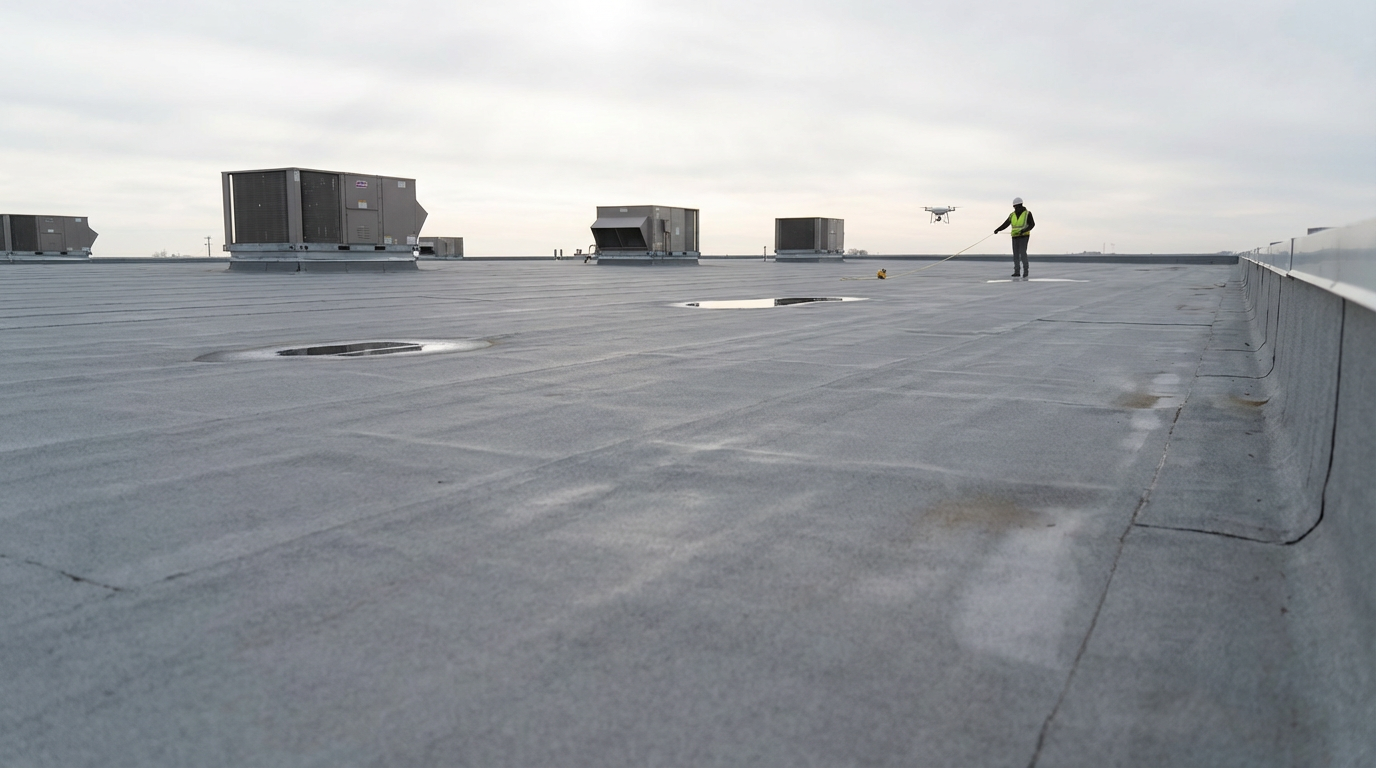
Ponding water that doesn't drain within 48 hours indicates slope problems or blocked drainage. This creates ice dam risks and membrane degradation.
Membrane bubbling or blistering shows moisture infiltration or adhesion failure. These areas will fail completely during the next thermal stress cycle.
Exposed fasteners or lifted membrane edges allow wind uplift that can destroy entire roof sections during storms.
Energy Efficiency Impact on Roof Performance
Energy-efficient roof systems last longer because they experience less thermal stress. Cool roof technology reduces membrane surface temperatures by 50-80°F during summer, dramatically reducing expansion and contraction cycles.
White TPO and EPDM membranes reflect solar heat. Dark roofs absorb heat and reach 180°F+ in summer sun. White membranes stay 50-60°F cooler, reducing thermal movement and extending membrane life.
Proper insulation reduces condensation risks. Well-insulated roofs maintain surface temperatures closer to ambient, preventing condensation that leads to membrane degradation and structural damage.
Energy savings offset higher installation costs. Cool roof systems reduce HVAC loads by 10-20% in commercial buildings. Lower energy costs and extended membrane life make premium systems cost-effective over 20-year lifecycles.
Installation Quality: Why Contractor Selection Matters
The best materials fail with poor installation. Northern Indiana's weather demands precision that many contractors can't deliver.
Seam welding quality determines system integrity. TPO and EPDM seams must be properly welded to withstand wind uplift and thermal movement. Poor seam work fails within 5 years instead of lasting 20+.
Fastener patterns affect wind resistance. Our region experiences 70+ mph winds during severe storms. Inadequate fastening allows membrane blow-off that destroys entire roof sections.
Detail work around penetrations prevents most leaks. HVAC units, vents, and roof drains create complex waterproofing challenges. Experienced commercial roofers know how to seal these critical areas permanently.
Manufacturer certifications ensure warranty coverage. Only certified installers can provide full manufacturer warranties. DIY repairs or uncertified contractors void warranty protection when you need it most.
Frequently Asked Questions
How long should a commercial flat roof last in Northern Indiana?
Properly installed TPO or EPDM systems last 20-25 years with regular maintenance. Modified bitumen and BUR systems typically need replacement after 15-18 years due to thermal stress damage from our climate extremes.
What's the best time of year to replace a commercial flat roof?
Late spring through early fall provides optimal installation conditions. Avoid winter installations when possible - membrane adhesives and sealants don't cure properly below 45°F, compromising long-term performance.
Can I add insulation to my existing flat roof?
Yes, but only if the existing deck can support additional weight. Adding 2-4 inches of rigid insulation typically adds 2-4 pounds per square foot. Structural analysis is required before adding insulation to older buildings.
How much snow load can a flat roof handle?
Most commercial buildings are designed for 20-30 pounds per square foot of snow load. Heavy, wet snow weighs more than light powder. Remove snow when accumulation exceeds 18 inches or after ice storms create dense layers.
Do cool roofs work in cold climates like Northern Indiana?
Yes, cool roofs provide year-round benefits. Summer cooling savings outweigh minimal winter heating increases. The reduced thermal stress extends membrane life significantly, making cool roofs cost-effective in all climates.
What warranty should I expect on a commercial flat roof?
Material warranties range from 15-20 years for membranes. Installation warranties should cover workmanship for minimum 5 years. Avoid contractors offering only 1-2 year installation warranties - this indicates quality concerns.
Taking Action to Protect Your Commercial Investment
Your commercial flat roof faces unique challenges in Northern Indiana's extreme climate. Temperature swings, heavy snow loads, and severe storms demand robust membrane systems with proper insulation and drainage design.
TPO and EPDM membranes with reinforced insulation provide the best long-term performance for Michiana commercial buildings. These systems handle thermal stress, resist UV damage, and maintain flexibility through decades of weather extremes.
Don't wait for leaks to force emergency repairs. Proactive replacement with climate-appropriate materials costs less than reactive fixes and prevents business disruption from water damage.