Estimated Reading Time: 3 minutes
Key Takeaways
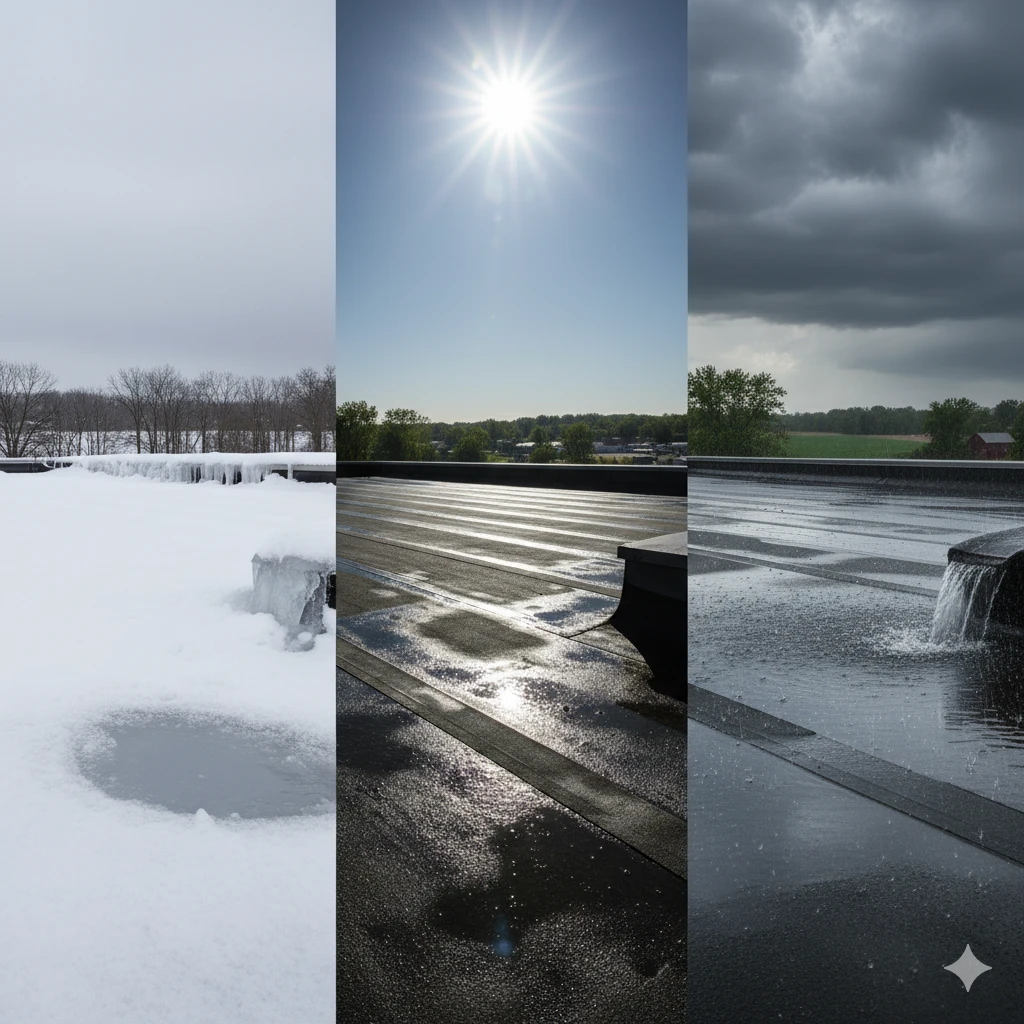
Snow, intense sun, and heavy rain each stress flat roofing materials in unique ways.
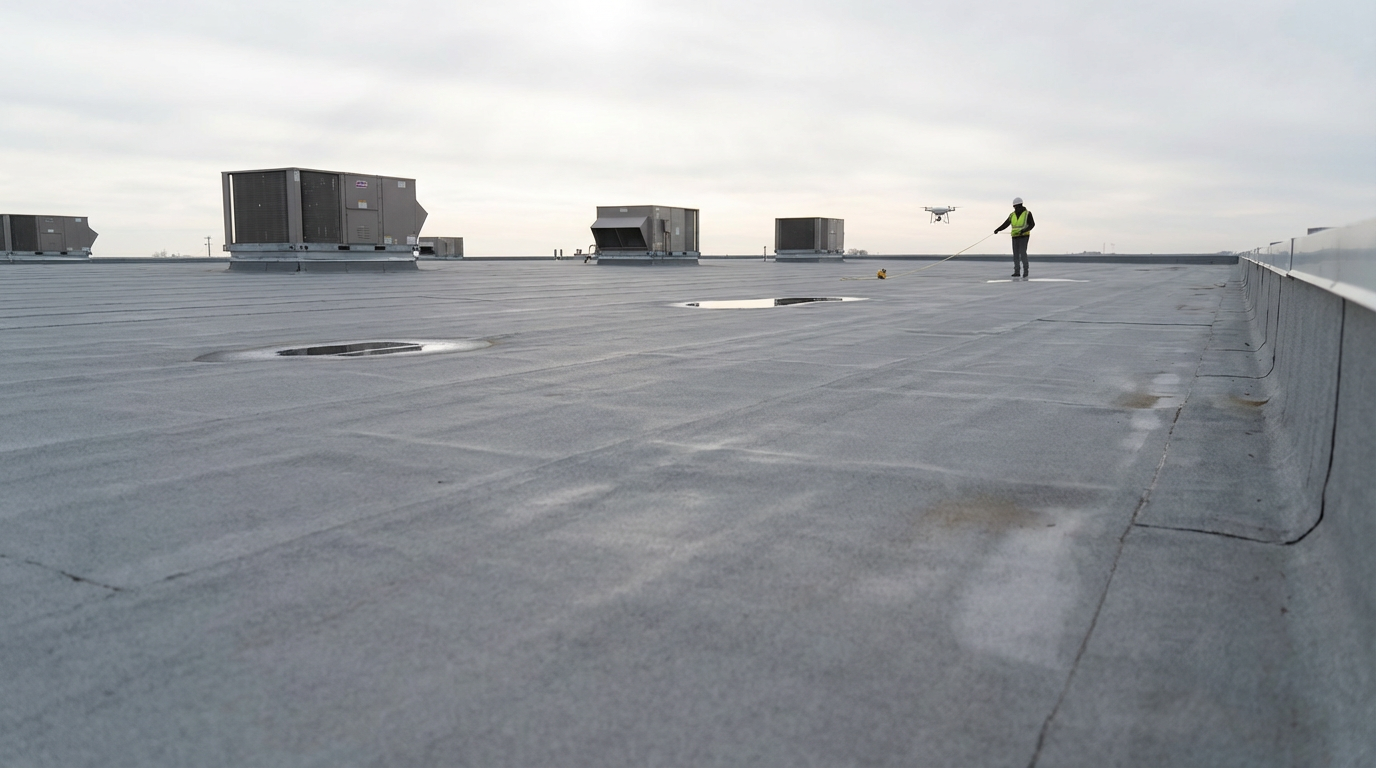
Regular inspections before and after extreme seasons are critical to maximizing service life.
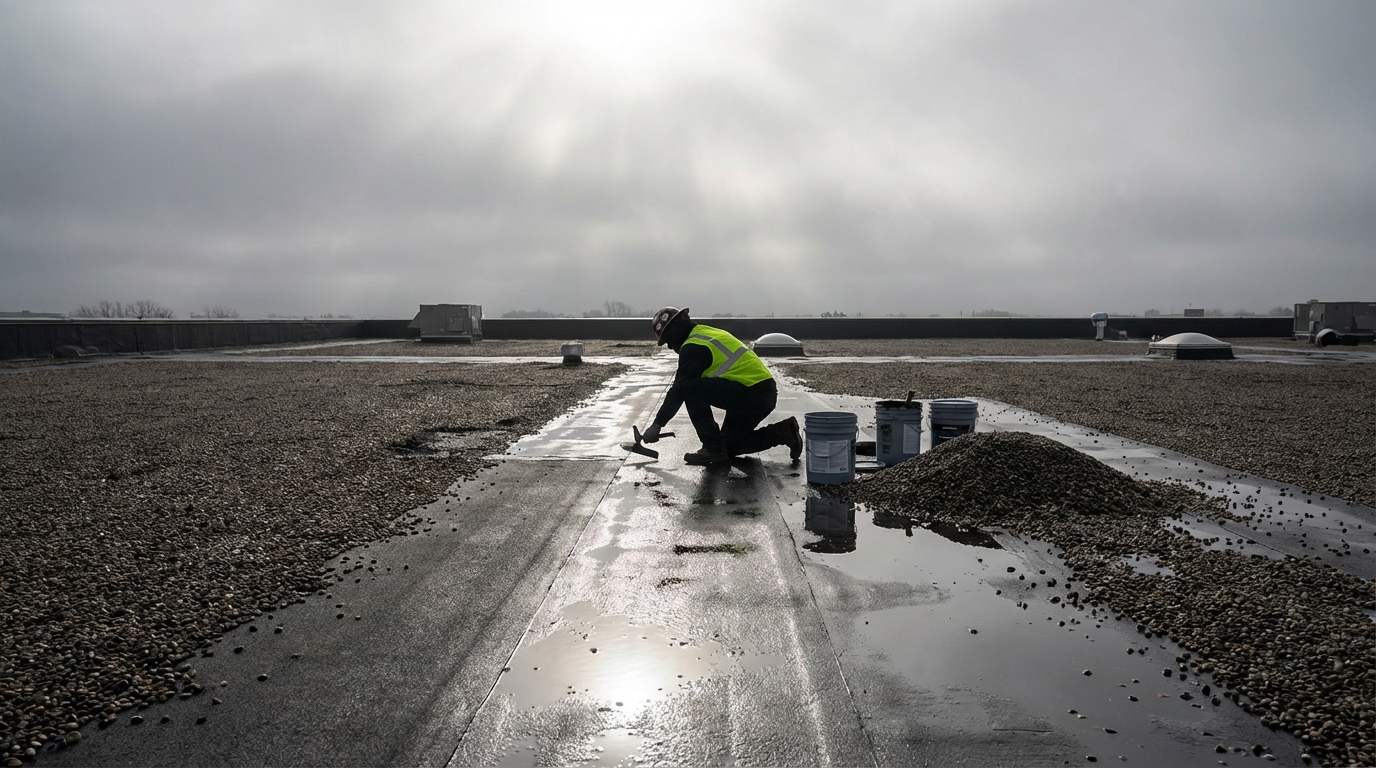
Proactive maintenance—like clearing drains, applying reflective coatings, and repairing flashing—can add years to a roof’s lifespan.
1. Introduction: Weather Is the Silent Roof Killer
Flat roofs are popular for commercial buildings because they’re economical and versatile, but their nearly level surface makes them more vulnerable to weather extremes. While high-quality membranes such as TPO, EPDM, PVC, or built-up roofing can last decades, constant exposure to snow, sun, and rain accelerates wear. Knowing how each season impacts your roof lets you plan targeted maintenance instead of reacting to costly leaks.
2. Winter: Snow, Ice, and Freeze–Thaw Cycles
Key Threats
Snow Load: Heavy accumulations add weight and stress to structural supports.
Ice Dams and Ponding: Partial melts refreeze at night, creating dams that force water under seams.
Freeze–Thaw Expansion: Repeated cycles expand tiny cracks in membranes and flashing.
Protective Tips
Schedule a pre-winter inspection to check seams, flashing, and drainage. Keep drains and scuppers clear so melting snow can flow freely. If storms drop more snow than your roof is rated for, hire professionals to remove it safely—DIY shoveling risks membrane punctures.
3. Summer: Intense Sun and UV Exposure
Key Threats
UV Degradation: Prolonged sunlight can dry out and crack certain membranes.
Thermal Expansion and Contraction: Daily temperature swings cause joints and fasteners to shift, stressing seams.
Heat Buildup: Poor insulation raises indoor cooling costs and accelerates roof aging.
Protective Tips
Apply reflective “cool roof” coatings to reduce surface temperatures and slow UV damage. Inspect for blistering or dried sealant mid-summer. Ensure rooftop ventilation is adequate to reduce heat-related stress on the membrane and interior.
4. Heavy Rain and Storm Seasons
Key Threats
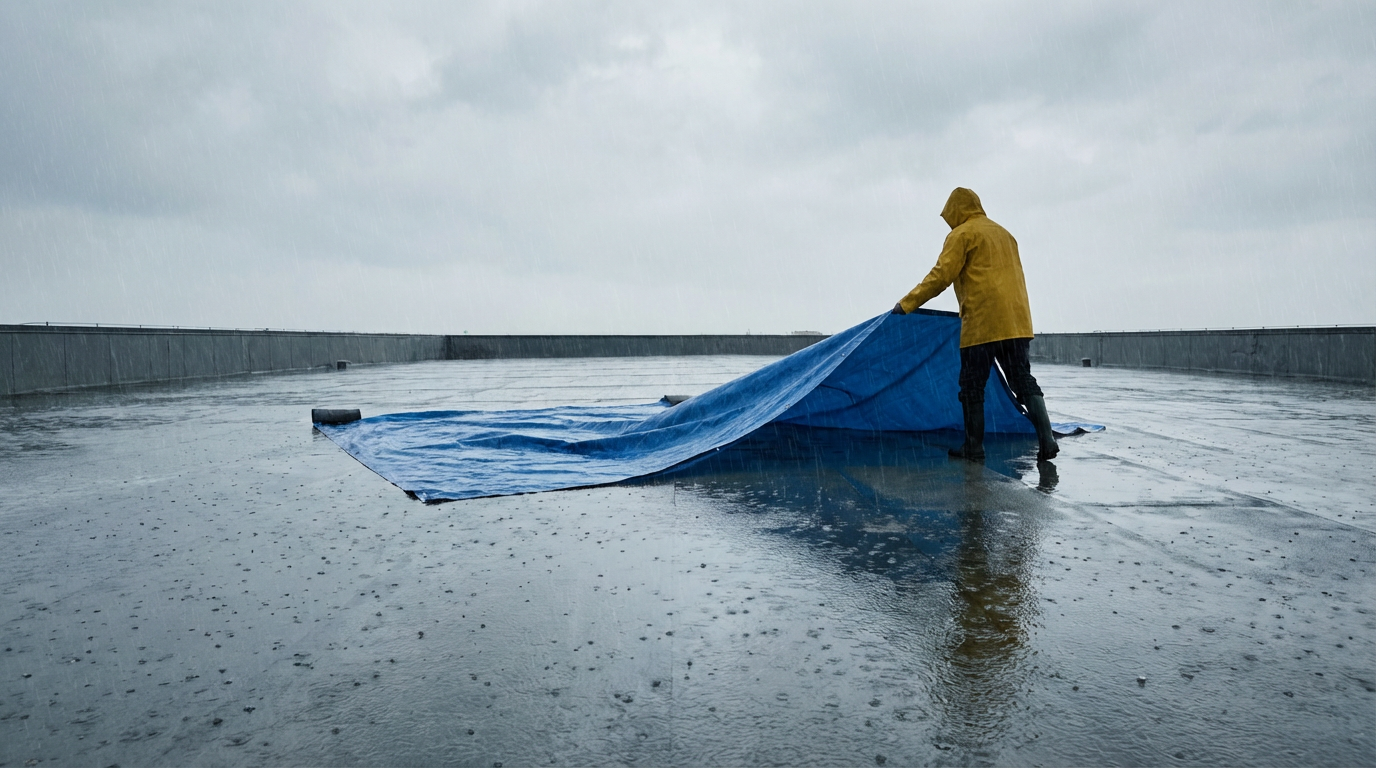
Ponding Water: Standing water degrades membranes and saturates insulation.
Wind-Driven Rain: Strong winds can lift flashing and drive water under edges.
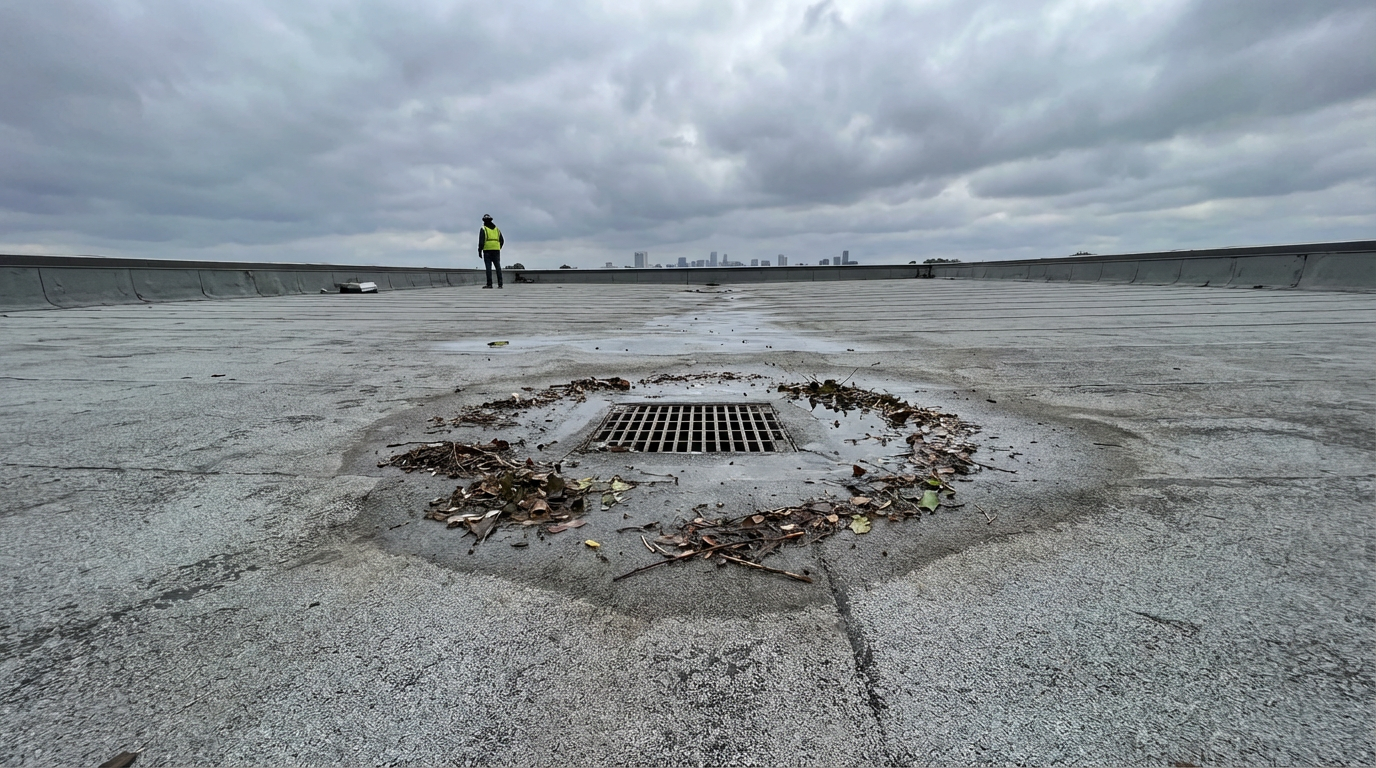
Drain Clogs: Leaves and debris block scuppers, causing overflow and leaks.
Protective Tips
Clean drains and gutters before rainy seasons begin and again after major storms. Consider tapered insulation or crickets to improve drainage on older roofs. After heavy rains, schedule a quick inspection to catch leaks before they reach interior spaces.
5. Year-Round Maintenance Strategy
To stay ahead of seasonal damage, create a maintenance calendar:
Spring Inspection: Check for winter freeze–thaw damage, clear debris, and repair flashing.
Fall Inspection: Prepare for winter by confirming drainage and sealing seams.
Post-Storm Checks: Inspect after any significant hail, wind, or rain event.
Maintain a roof log documenting each inspection, repair, and contractor visit. This history helps track recurring issues and supports warranty claims.
6. When Weather Damage Signals It’s Time for Replacement
Even with diligent care, every roof reaches the end of its life. Warning signs include persistent leaks despite repairs, widespread membrane cracking, insulation saturation, or chronic ponding that resists fixes. If your roof is 20+ years old and shows multiple issues, start budgeting for a full replacement to avoid emergency shutdowns.
7. Conclusion & Call to Action
Seasonal weather is unavoidable, but its effects don’t have to shorten your roof’s life. By pairing regular inspections with preventive upgrades—like reflective coatings, tapered insulation, and professional snow removal—you can add years to your commercial flat roof’s service life and protect the investment in your building.
Next Step: Schedule semi-annual inspections with a trusted commercial roofing contractor. Proactive attention before and after each extreme season is the surest way to keep your roof performing well beyond its expected lifespan.