Estimated Reading Time: 6 minutes
Estimated Reading Time: 12 minutes
Summary
Choosing the right flat roofing material is one of the most important decisions a building owner can make. EPDM, TPO, and PVC are the three most common single-ply roofing systems used today—but each performs differently depending on your climate, building use, maintenance habits, and budget. This guide compares their lifespans, costs, strengths, weaknesses, and typical failure points to help you decide which system will last the longest and deliver the best value.
Main Points
EPDM, TPO, and PVC all offer long service lives, but each excels in different conditions.
EPDM lasts 20–30 years and works best in cold climates.
TPO also lasts around 20–30 years but performs best in hot, sunny regions.
PVC can exceed 30 years and handles chemicals, grease, and harsh environments extremely well.
Costs, maintenance needs, and durability vary significantly between the materials.
Improper installation is the top cause of early roof failure—no matter which material you choose.
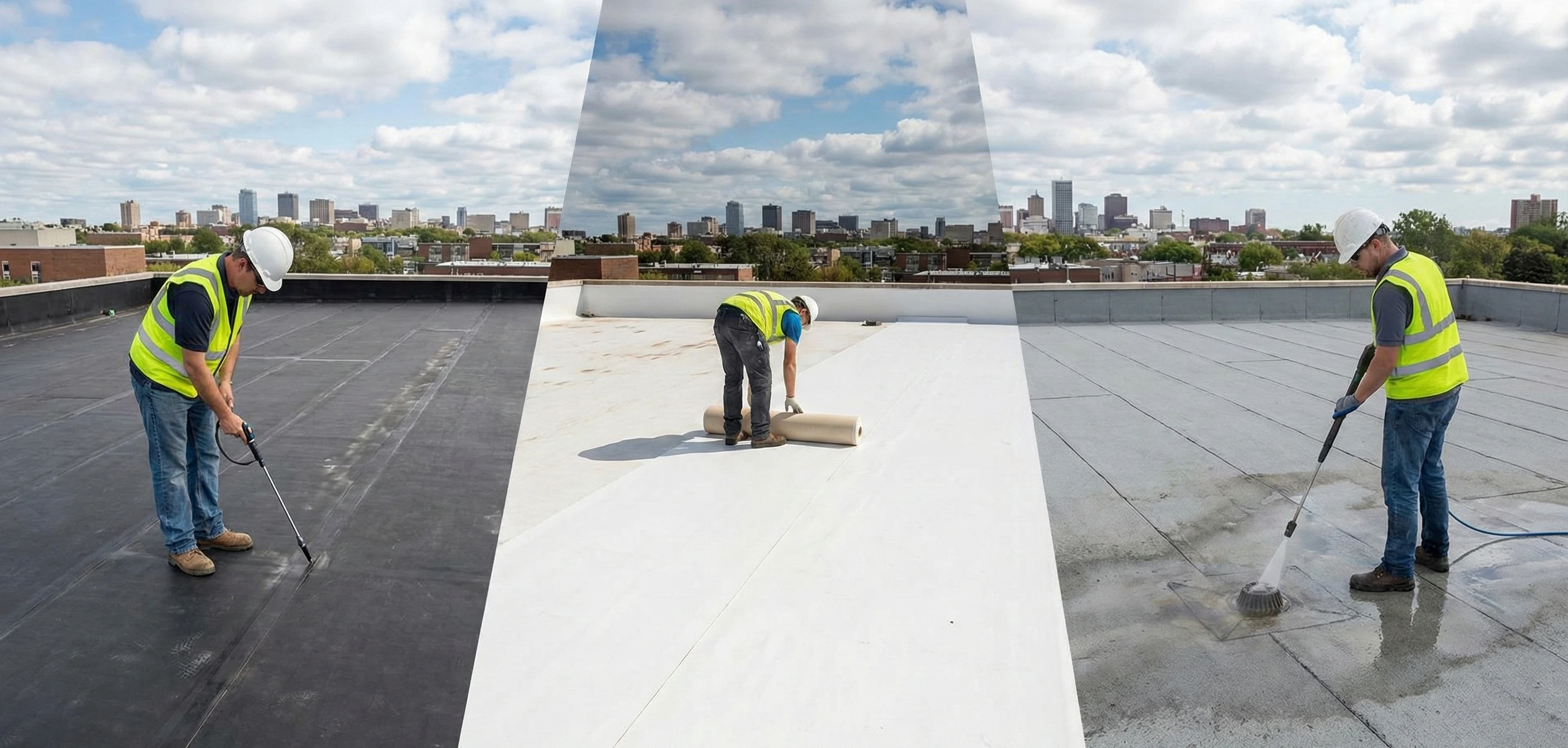
When selecting a commercial flat roof, you’re doing more than choosing a material—you’re making a major investment that affects your building’s future maintenance costs, energy efficiency, and long-term durability. EPDM, TPO, and PVC are the three most common flat roof systems, and while they may look similar from a distance, they perform very differently.
If you're trying to decide which one lasts the longest—or which one is the best fit for your specific building—this guide breaks it all down in clear, simple terms.
Understanding What These Roofing Materials Are
Here’s a quick, easy-to-understand explanation of each material.
EPDM (Rubber Roofing)
EPDM is a heavy-duty rubber membrane. It’s known for:
Flexibility
UV resistance
Strong performance in cold climates
It’s been used for decades, which means there's a long track record of success.
TPO (Thermoplastic Polyolefin)
TPO is a bright-white, reflective roofing membrane. It’s popular because:
It reflects heat and lowers cooling costs
It’s lightweight
It’s affordable
Most newer warehouses and commercial buildings use TPO because of its energy efficiency.
PVC (Polyvinyl Chloride)
PVC is a strong, heat-welded membrane known for:
Chemical resistance
Long lifespan
Excellent waterproofing
It’s often used on restaurants, food processing buildings, and facilities with rooftop grease or harsh chemicals.
Lifespan Comparison: Which Lasts the Longest?
Commercial building owners often ask one key question: Which roof will last me the longest?
Here’s how the three materials compare.
EPDM Lifespan: 20–30 Years
Highly resistant to sun damage
Holds up well in cold climates
Known for long-term reliability
TPO Lifespan: 20–30 Years
Performs best when welded well and installed professionally
Lifespan varies by manufacturer (quality differences matter)
Good for hot climates
PVC Lifespan: 20–30+ Years
Very durable
Excellent chemical resistance
Strong seams that last decades
Lifespan Summary
EPDM → long and predictable life
TPO → long life but depends on welding quality
PVC → longest proven track record overall
Cost Per Square Foot: What Building Owners Can Expect
Costs vary by region, building size, and insulation, but here’s a simple breakdown:
EPDM Costs
Typically the least expensive option
Strong value for long lifespan
TPO Costs
Usually mid-range
Higher cost for thicker or premium versions
PVC Costs
Generally the highest upfront cost
Often worth it for buildings with chemicals, grease, or heavy foot traffic
Cost Overview
Lowest cost: EPDM
Mid-range: TPO
Highest cost: PVC
Climate Suitability: What Works Best Where?
No roofing material performs best in every climate. Here’s how they compare:
EPDM in Different Climates
Excellent in cold-weather regions
Handles freeze–thaw cycles without cracking
Dark surface absorbs heat → good in winter, less ideal in hot climates
TPO in Different Climates
Designed for hot, sunny areas
Reflective white surface reduces cooling costs
Older versions sometimes cracked in high heat—newer versions are improved
PVC in Different Climates
Strong in both hot and cold environments
Great for coastal buildings or areas with harsh weather
Performs exceptionally well where chemicals, grease, or industrial residue are present
Climate Summary
Cold climates → EPDM
Hot climates → TPO
Harsh or chemical-heavy climates → PVC
Maintenance Requirements: What Each System Needs
Each roofing type has different maintenance expectations.
EPDM Maintenance
Simple and predictable
Occasional seam checks
Monitor for punctures from tools or debris
TPO Maintenance
More dependent on seam quality
Watch for weak welds or surface cracking
Needs routine inspections for UV wear
PVC Maintenance
Generally low maintenance
Check seams and corners
Monitor areas near rooftop equipment
Maintenance Summary
EPDM → low-to-moderate maintenance
TPO → moderate maintenance (seams matter most)
PVC → low maintenance
Pros, Cons, and Common Failure Points
A head-to-head comparison helps clarify which system fits your needs.
EPDM Pros & Cons
Pros
Long lifespan
Performs in cold climates
Affordable
Easy to repair
Cons
Absorbs heat
Can be punctured more easily
Seams may weaken over time
Common Failure Points
Tool punctures
Shrinkage along edges
Aging adhesives in seams
TPO Pros & Cons
Pros
Highly reflective
Energy-efficient
Lightweight
Affordable
Cons
Performance varies by brand
Requires precise installation
Older versions were vulnerable to heat damage
Common Failure Points
Seams from improper welding
UV cracking
Installation errors
PVC Pros & Cons
Pros
Excellent chemical resistance
Long lifespan
Durable seams
Performs well in extreme conditions
Cons
Higher upfront cost
Can shrink slightly over time
Some lower-quality versions become brittle in extreme cold
Common Failure Points
Stress at corners
Expansion near rooftop equipment
How to Choose the Right Material for Your Building
Here are a few simple questions to help you decide:
1. What climate is your building in?
Cold → EPDM
Hot → TPO
Unpredictable or coastal → PVC
2. Do you have rooftop equipment?
PVC handles mechanical stress well.
3. Are there chemicals, grease, or restaurants in the building?
PVC is the safest choice.
4. Is energy efficiency a priority?
TPO offers excellent cooling performance.
5. What is your long-term budget?
EPDM gives strong lifespan at a lower cost.
Conclusion: So, Which Roof Lasts the Longest?
All three systems—EPDM, TPO, and PVC—can reach 20–30 years or more when installed and maintained properly. The real difference comes from choosing the material that fits your building’s specific needs.
Best overall durability: PVC
Best value for long life at a lower cost: EPDM
Best for hot climates and energy savings: TPO
If you're unsure which material is best for your building, a professional roofing inspection can give you personalized recommendations based on your climate, roof condition, and goals.