Estimated Reading Time: 7 minutes
Summary
Most flat roof failures don’t happen suddenly—they develop slowly through visible clues, subtle warning signs inside the building, and recurring problems that become more frequent over time. This guide helps building owners identify the most common symptoms of a failing commercial flat roof, understand what each symptom likely means, and determine whether a repair or full replacement is the smarter, safer option. With the diagnostic checklists and scorecard included, you can evaluate your roof’s condition with confidence and know when it’s time to call a professional.
Main Points
Warning signs show up both on the roof surface and inside the building.
Issues like blisters, sagging, seam failures, and ponding water often point to bigger underlying problems.
Interior symptoms—stains, odors, humidity, rising energy bills—may signal hidden moisture inside the roof system.
Multiple small symptoms usually indicate a roof nearing the end of its lifespan.
A repair vs. replacement scorecard helps you predict whether your roof still has useful life left.
A professional inspection provides clarity and prevents emergencies.
A commercial flat roof is built to last for decades, but even the strongest roofing system eventually reaches a point where repairs stop being effective. The challenge for most building owners is knowing when that point has arrived. Do you repair one more leak? Or is it time to start planning for a replacement?
The good news: commercial roofs almost always reveal signs before they fail. And you don’t need technical roofing expertise to spot them. This guide uses a simple, symptom-based approach—just like a health check—to help you interpret what your roof is trying to tell you.
1. Visual Symptoms on the Roof Surface
Most early signs of trouble can be seen simply by walking the roof (safely) and knowing what to look for. Below are the most common visual issues and what they usually mean.
1.1 Blisters or Bubbles
What you see: Raised or ballooned areas on the roof surface.
What it likely means:
Moisture or air has become trapped beneath the membrane. This is usually caused by aging, poor installation, or water intrusion.
Risks:
Membrane separation
Hidden leaks spreading beneath the surface
Next steps:
Avoid stepping on blisters. Document with photos and schedule a professional inspection.
1.2 Cracks, Tears, or Splits
What you see: Visible openings in the membrane—small or large.
What it likely means:
The roof is aging or has been damaged by weather, UV exposure, or foot traffic. Temperature swings may also cause membranes to contract and split.
Risks:
Immediate water entry
Insulation saturation
Mold growth inside the roof system
Next steps:
Small cracks may be repairable, but widespread splitting usually signals end-of-life conditions.
1.3 Seam Failures (Loose, Open, or Unsealed)
What you see: Seams pulling apart, lifted edges, or debris stuck inside seam openings.
What it likely means:
The adhesive or welded seams are breaking down due to age or installation issues.
Risks:
High likelihood of leaks
Water intrusion under the membrane
Rapid system deterioration
Next steps:
If only one seam is affected, repair may be possible. Multiple failing seams often indicate a failing system.
1.4 Sagging or Soft Spots
What you see: Areas of the roof that dip, feel spongy, or visibly hold weight wrong.
What it likely means:
Water has soaked into the insulation, or the roof deck is weakening.
Risks:
Structural damage
Worsening ponding water
Faster membrane deterioration
Next steps:
Requires immediate professional evaluation. Sagging rarely resolves with simple repairs.
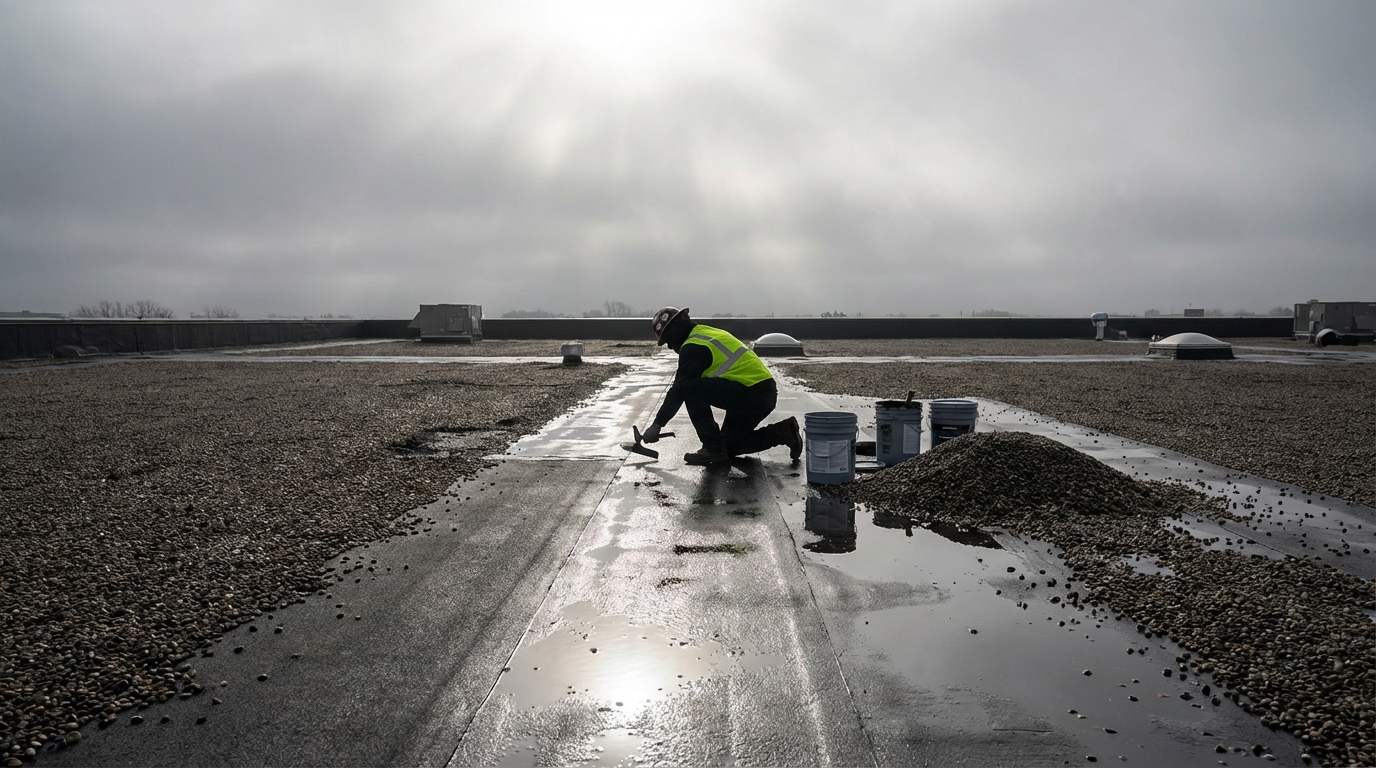
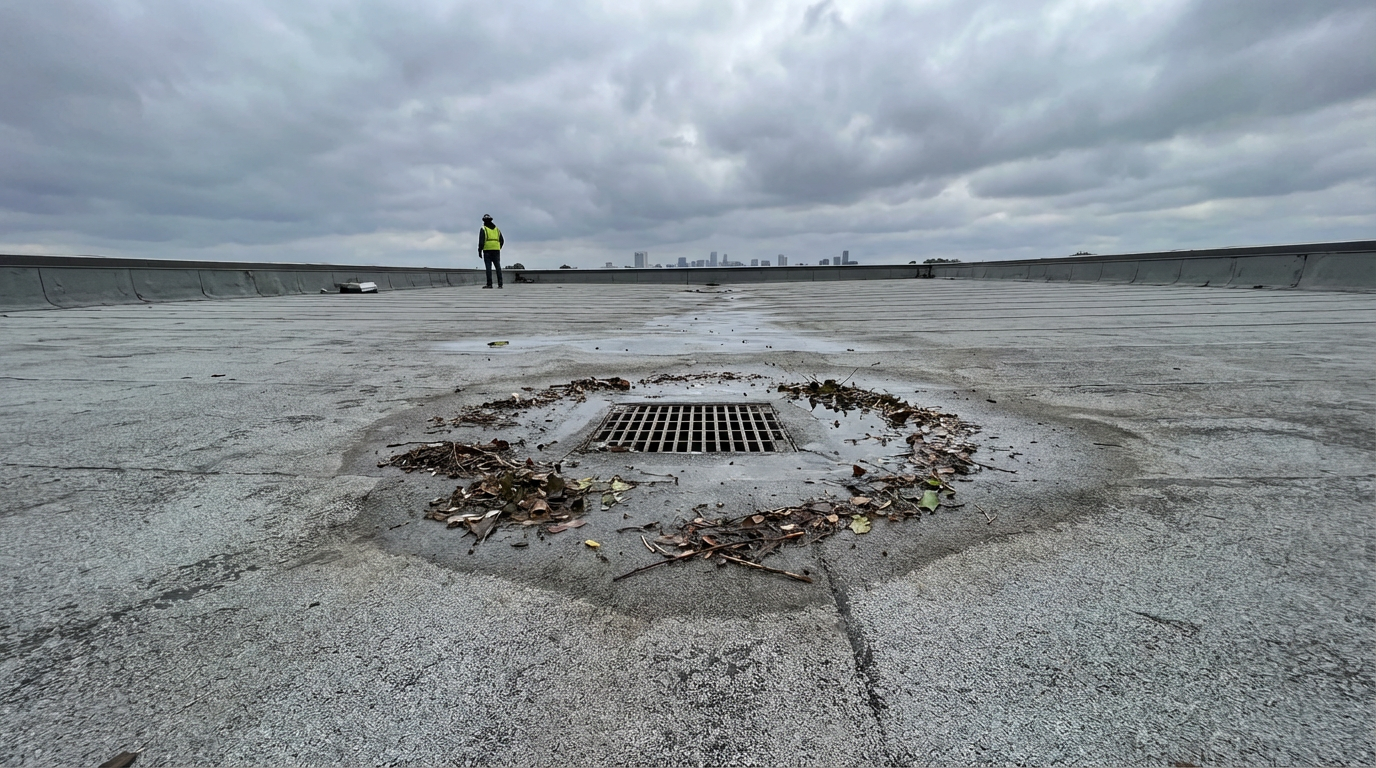
1.5 Ponding Water (Stays 24–48 Hours After Rain)
What you see: Pools of water that linger long after rainfall.
What it likely means:
Drainage is insufficient due to clogged drains, poor slope, or structural settling.
Risks:
Membrane breakdown
Algae growth
Freeze–thaw damage
Roof overloading during winter
Next steps:
Clear drains first. If ponding continues, a replacement or redesign may be needed.
2. Interior Warning Signs Inside the Building
Sometimes the most serious roof problems show up inside long before you notice them on the roof surface.
2.1 Ceiling Stains or Water Drips
What you see: Brown stains, wet ceiling tiles, bubbling paint, or active dripping.
What it likely means:
Water is penetrating the roofing membrane or flashing and reaching the building interior.
Risks:
Mold
Electrical hazards
Interior damage
Next steps:
Leaks rarely fix themselves. Immediate professional attention is needed.
2.2 Musty Smells or Unexplained Humidity
What you see: Persistent odors or humidity spikes inside the building.
What it likely means:
Moisture is trapped in insulation layers beneath the roof, even if you don’t see visible leaks.
Risks:
Mold contamination
Air quality issues
Damaged insulation
Next steps:
Moisture mapping or thermal imaging may be needed to determine the extent.
2.3 Mold, Wall Damage, or Peeling Paint
What you see: Wall discoloration, peeling surfaces, damp drywall.
What it likely means:
Water intrusion has been happening for some time—and may be spreading.
Risks:
Structural damage
Costly restoration
Indoor air health issues
Next steps:
Internal and roof inspections are required. Repairs may not be enough.
2.4 Rising Energy Bills
What you see: Unexpected increases in heating or cooling costs.
What it likely means:
Insulation is wet and no longer insulating properly.
Risks:
Ongoing energy loss
Roof deck deterioration
Hidden moisture pockets
Next steps:
Have insulation checked. If large areas are saturated, replacement is typically recommended.
3. When Multiple Small Symptoms Add Up
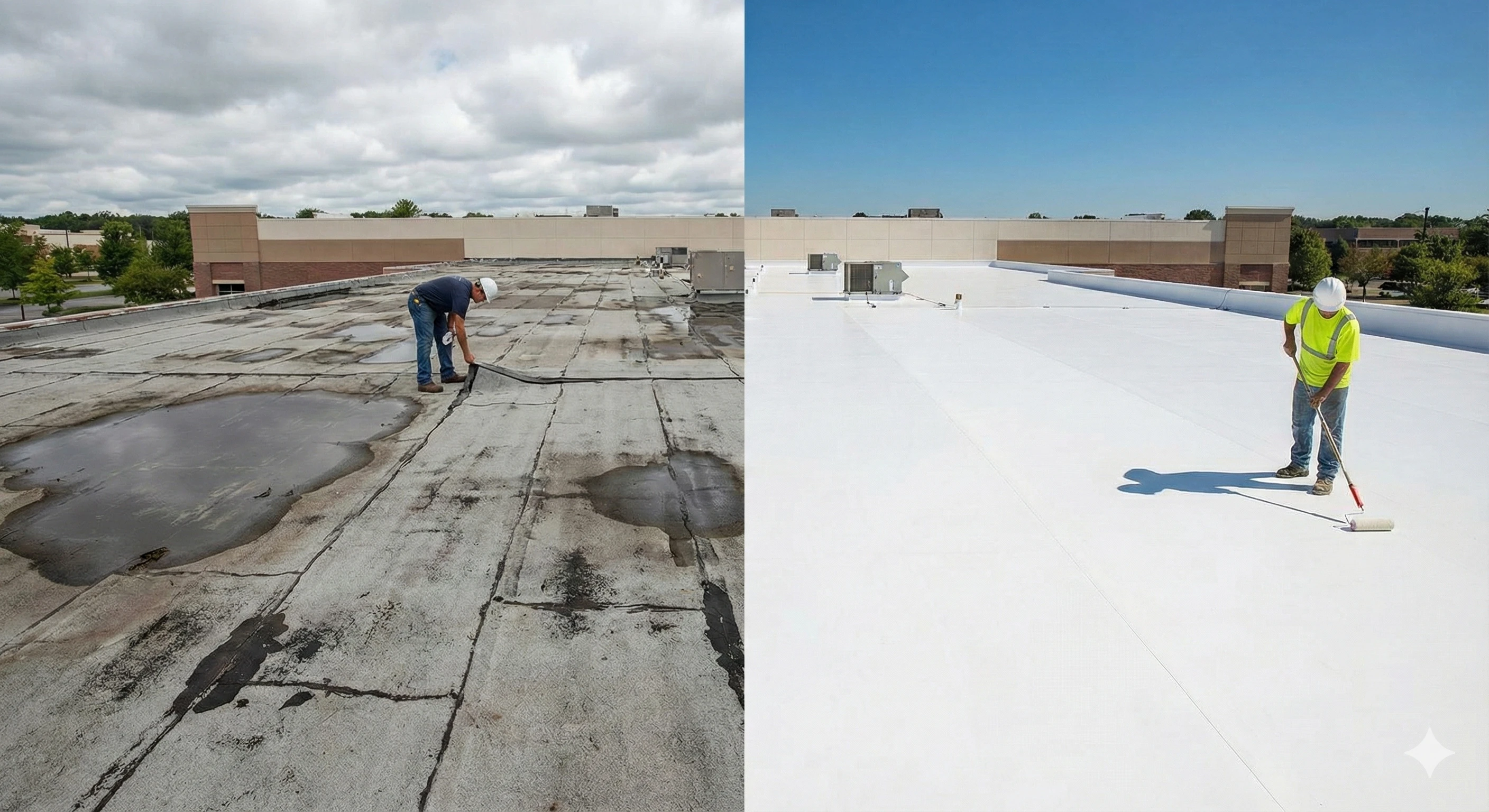
A single symptom might be manageable. But when several appear together, it often indicates that the roof has reached the end of its useful life.
Common patterns that signal replacement:
Several failing seams + ponding water
Multiple interior leaks
Widespread cracking or blistering
Sagging combined with energy spikes
Frequent repairs that don’t fully resolve issues
Most failing roofs don’t show just one symptom—they show many.
4. Repair vs. Replacement Scorecard
Use this simple scorecard to evaluate your roof.
Score 1 point for each “Yes”
Do you see more than two areas of ponding water?
Are seams failing in multiple sections?
Are there soft or sagging spots?
Are there multiple interior leak points?
Is the roof older than 20 years?
Do you need more than two repairs each year?
Has insulation been confirmed or suspected to be wet?
Are there widespread cracks or blisters?
Your Results
0–2 points → Likely Repairable
Localized issues, roof still has useful life.
3–5 points → Repairable but declining
Begin budgeting for replacement within 1–3 years.
6+ points → Replacement Recommended
Repairs are no longer cost-effective; the roof is at or near failure.
The scorecard is not a substitute for an inspection, but it helps owners identify when to bring in a professional.
5. What a Professional Inspection Includes
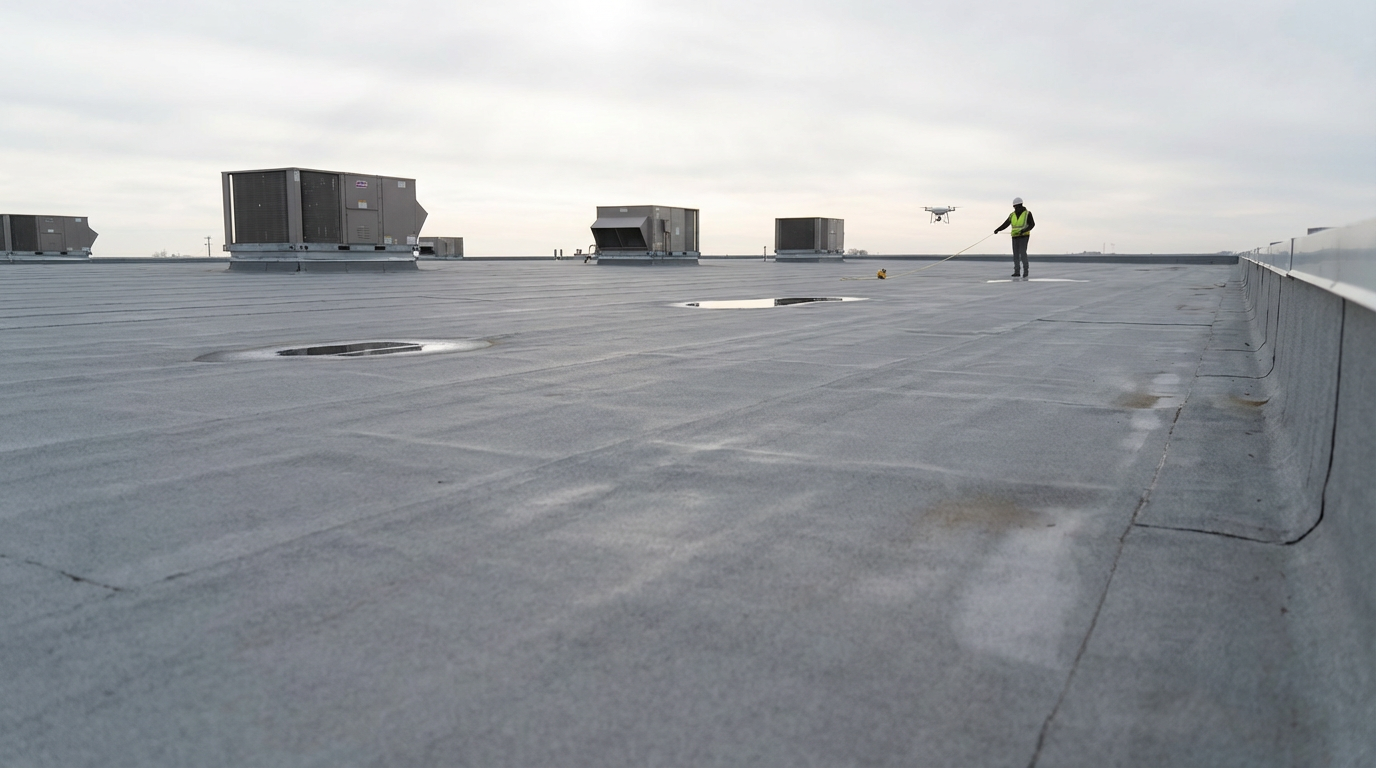
A professional commercial roof inspection typically involves:
Checking seams, flashings, edges, and roof surface
Inspecting drainage components and water flow
Testing for hidden moisture using meters or thermal imaging
Evaluating insulation condition
Assessing structural concerns like sagging areas
Documenting all findings with photos
Providing a written condition report
Offering repair and replacement recommendations
This gives you a clear snapshot of your roof’s health and helps you plan ahead financially.
Conclusion: Trust the Warning Signs Before They Become Emergencies
A failing roof rarely appears suddenly—it reveals clues over months or even years. By paying attention to the warning signs, taking photos, and performing regular roof checks, you can protect your building from costly damage and avoid surprise emergencies.
If your roof is showing several of the symptoms listed in this guide, or if you scored high on the repair vs. replacement scorecard, it may be time to schedule a professional inspection. Acting early can save your building from major repairs and give you the confidence to plan for the future.